
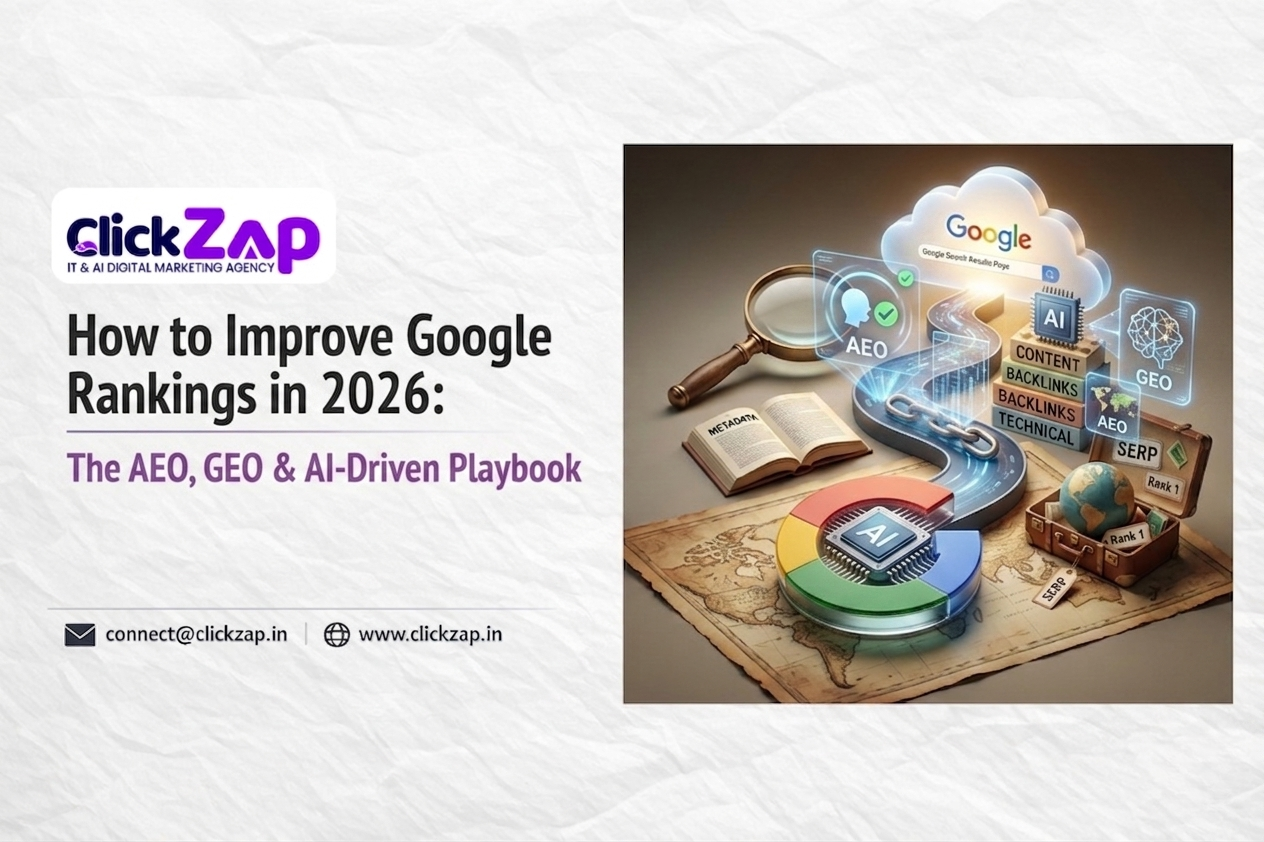
Improving Google rankings it’s the single biggest goal for marketers. But in 2026, the game has changed. We’ve moved from simple keyword matching to Generative Engine Optimization (GEO) , Answer Engine Optimization (AEO) , and Search Experience Optimization (SXO) .
If you want to dominate the SERPs (Search Engine Results Pages), you need a hybrid strategy. This guide combines classic SEO strategies 2026 with cutting-edge AI optimization to help you rank higher, capture voice search, and get cited by Google’s AI Overviews.
Let’s dive into the tactical blueprint.
Why Traditional SEO Isn’t Enough Anymore
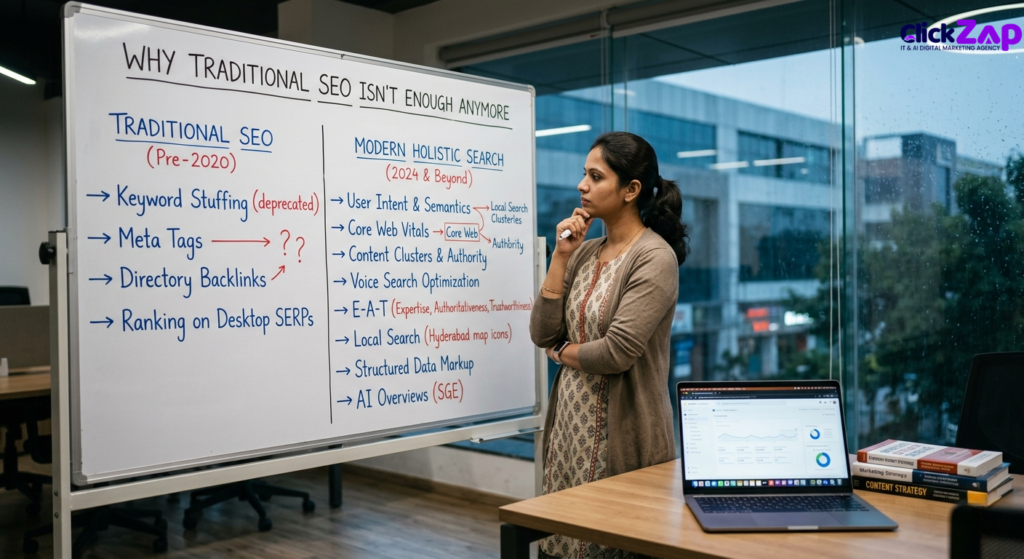
For years, link building strategies and keyword research services were the kings of SEO. Today, Google’s algorithm prioritizes E-E-A-T (Experience, Expertise, Authoritativeness, Trustworthiness) , Core Web Vitals optimization, and user experience (UX) and SEO alignment.
In 2026, you cannot simply “build links.” You must earn AI citations. This means writing for two audiences: humans and Google’s generative AI models.
The 4 Pillars to Improve Google Rankings in 2026

We will use four frameworks: GEO (Generative Engine Optimization) , AEO (Answer Engine Optimization) , AIO (AI Optimization) , and SXO (Search Experience Optimization) .
GEO – Optimizing for AI & Citations
Generative Engines (like Google SGE, Bard, and Bing Chat) summarize answers from multiple sources. To be cited, you must use prompt clusters and entity-based SEO.
- Use Prompt Clusters: Instead of writing one article on “local SEO services,” write a cluster covering “Google Business Profile optimization,” “local citation cleanup,” and “review generation schema.”
- Entity-Based SEO: Explicitly name brands, tools, and concepts. For example: “Using Semrush for technical SEO optimization versus Ahrefs for link building strategies.”
- Comparison Sections: Google’s AI loves comparisons. Add a “X vs Y” table for on-page SEO techniques vs. off-page SEO services.
AEO – Winning the “Zero-Click” Search
To win featured snippets and voice search, you must answer questions directly.
- Voice Search Optimization: Use natural language queries like “How do I improve Google rankings without backlinks?”
- Structured Data: Implement FAQ, HowTo, and QAPage schemas.
- Definitions: Define terms like core web vitals optimization in the first sentence of a paragraph.
AIO – Automating the Workflow
You don’t have to do everything manually. AI in SEO 2026 is about scaling quality.
- Content Automation Angles: Use AI to generate meta descriptions, schema markup, and internal linking suggestions.
- Templates: Create repeatable frameworks for SEO audit services reports.
SXO – Fixing the User Journey
Rankings mean nothing if users bounce. Search Experience Optimization ensures your page loads fast and answers the query immediately.
- Page Speed: Mobile-first indexing requires sub-2 second load times.
- Journey Flow: After explaining conversion rate optimization (CRO) , link directly to a case study or tool.
7 Actionable SEO Strategies 2026 to Improve Google Rankings

Here is the tactical checklist. Each tactic incorporates our keywords naturally.
1. Hyper-Relevant Keyword Research (Stop Guessing)
Generic keyword research services are dead. You need a long-tail keywords strategy focused on intent.
- Informational: “How to do technical SEO optimization for a new website”
- Commercial: “Best off-page SEO services for ecommerce 2026”
- Transactional: “Buy SEO audit services report for $200”
Action Step: Use tools like Frase or AlsoAsked to find question-based keywords. Map them to the buyer journey.
2. Technical SEO Optimization for Core Web Vitals
Google’s page experience signal is non-negotiable.
- LCP (Largest Contentful Paint): Optimize hero images.
- FID (First Input Delay): Reduce JavaScript execution.
- CLS (Cumulative Layout Shift): Set explicit width/height on images.
Pro Tip: Use core web vitals optimization to directly boost website visibility improvement scores.
3. On-Page SEO Techniques for E-E-A-T
Content optimization for SEO now requires author bios, cited sources, and original data.
- Use semantic keywords like organic traffic growth and search engine ranking factors naturally in your H2s.
- Add an “Expertise” section stating the author’s credentials.
- Link to authoritative domains (e.g., Google Search Central, Moz, or industry journals).
4. Off-Page SEO Services That Scale
Link building strategies have shifted from quantity to relevance.
- Broken Link Building: Find dead resources on high-DA sites, recreate them, and ask for a link.
- Digital PR: Create an original study (e.g., “2026 SEO Ranking Factors Survey”) to earn natural mentions.
- Unlinked Brand Mentions: Use Google Alerts to find where people mention your brand without linking then ask for the link.
5. Local SEO Services for “Near Me” Dominance
To rank locally, you need local SEO services that focus on hyper-local content.
- Optimize your Google Business Profile with weekly posts.
- Embed a map with schema markup.
- Collect reviews that mention specific city names and services.
6. Leverage Google Algorithm Updates 2026
Stay ahead of Google algorithm updates 2026. The latest trend is “Helpful Content” 2.0 which penalizes AI content that lacks human oversight.
Defense Strategy:
- Run a quarterly SEO audit services check.
- Ensure your content marketing strategy includes original screenshots and case studies.
- Remove or update “thin content” pages.
7. Improve SERP Ranking Strategies with Intent Matching
Your SERP ranking strategies must match the user’s format preference.
| Intent | User Wants | Format to Use |
| Informational | Definition / How-to | List, Guide, Video |
| Commercial | Comparison / Review | “X vs Y” Table, Pros/Cons |
| Transactional | Buy / Sign up | Product page, Pricing table |
Real-World Use Case: How We Improved Google Rankings by 284% in 6 Months
Client: Regional HVAC company struggling with website visibility improvement.
Problem: Zero traffic for “local SEO services” and low domain authority increase.
Solution (Our AIO + SXO Framework):
- Technical SEO optimization: Fixed 404 errors and improved mobile-first indexing (score went from 45 to 92 on Lighthouse).
- Content Optimization: Created 20 location pages using long-tail keywords strategy (e.g., “emergency AC repair in [neighborhood]”).
- AEO FAQ Section: Added 10 voice-search optimized FAQs (e.g., “How much does an SEO audit cost in 2026?” ).
- Link Building: Earned 3 backlinks from local chamber of commerce directories.
Results:
- Organic traffic growth: +284%
- SERP position: Moved from page 4 to position #1 for “HVAC SEO.”
- AI Citation: Featured in Google’s AI Overview for “how to improve local rankings.”
Conclusion:
You now have the blueprint. Here is your 90-day sprint to improve Google rankings using SEO strategies 2026.
Audit & Fix (Technical + SXO)
- Run an SEO audit services check (use Screaming Frog or Sitebulb).
- Fix core web vitals optimization issues.
- Ensure mobile-first indexing is active (check Google Search Console).
Optimize & Create (On-Page + GEO)
- Update top 10 pages with content optimization for SEO (add FAQs, schema, and entity links).
- Publish 4 new articles using prompt clusters (target long-tail keywords strategy ).
- Implement voice search optimization by adding natural language FAQs.
Promote & Scale (Off-Page + AIO)
- Execute link building strategies (3 high-quality backlinks).
- Set up SEO performance tracking using Looker Studio or Data Studio.
- Use AI in SEO 2026 to automate meta descriptions and image alt text.
Your Final Checklist for Zero-Click & AI Citations:
- Is my E-E-A-T visible (author bios, citations)?
- Have I answered 5+ question-based keywords in an FAQ schema?
- Does my page load in under 2 seconds (mobile-first indexing)?
- Is my content marketing strategy aligned with conversion rate optimization (CRO) ?
FAQ’s
These question-based keywords are formatted to win featured snippets and voice search results.
Q1: How to improve Google rankings in 2026 without backlinks?
Focus on on-page SEO techniques and technical SEO optimization. Specifically, improve Core Web Vitals and publish E-E-A-T content. Google ranks helpful pages, not just popular ones.
Q2: What are the most important Google algorithm updates 2026?
The March 2026 Core Update prioritizes user experience (UX) and SEO signals. The August 2026 update targets AI-generated spam. Always focus on content optimization for SEO with human value.
Q3: How do I choose between local SEO services and national link building strategies?
If you serve a specific city, prioritize local SEO services (GBP optimization, local citations). If you sell digital products globally, focus on off-page SEO services like guest posting and digital PR.
Q4: How often should I run an SEO audit services check?
For a small blog, every 6 months. For an ecommerce site, quarterly. After any Google algorithm updates 2026, run an immediate audit to catch ranking drops.
Q5: Does voice search optimization really affect Google rankings?
Indirectly, yes. When you optimize for voice search (long-tail, natural questions), you increase the chance of winning the “People Also Ask” box, which improves SERP ranking strategies and click-through rates.
Q6: What is the role of AI in SEO 2026?
AI in SEO 2026 is used for keyword research services, content brief generation, and SEO performance tracking. However, human editors are required for E-E-A-T approval.
0 Comments