
In today’s digital world, marketing is no longer based on guesswork. Businesses that rely on intuition alone often struggle to understand their customers and optimize their campaigns. This is where Data Analytics in Marketing becomes a game-changer.
Every click, website visit, purchase, and interaction creates valuable data. When businesses analyze this data correctly, they can uncover powerful insights about customer behavior, marketing performance, and growth opportunities.
For small businesses and startups, using data analytics for marketing can mean the difference between wasting marketing budgets and achieving measurable success. With the right marketing analytics tools, companies can understand what works, what doesn’t, and how to improve their strategies.
In this guide, we’ll explore how marketing data analysis helps businesses make smarter marketing decisions and build stronger data driven marketing strategies.
What is Data Analytics in Marketing?
Data Analytics in Marketing refers to the process of collecting, analyzing, and interpreting marketing data to improve marketing strategies and business outcomes.
It involves studying different types of data such as:
- Website traffic
- Customer behavior
- Social media engagement
- Campaign performance
- Sales conversions
Using digital marketing data analysis, businesses can understand how customers interact with their brand and identify opportunities to improve marketing performance.
For example, tools like Google Analytics allow businesses to track website visitors, user behavior, and traffic sources. This information helps marketers make better data driven marketing decisions.
In simple terms, marketing data insights help businesses answer questions like:
- Which marketing channels bring the most customers?
- What type of content attracts the most engagement?
- Which campaigns generate the highest ROI?
- What do customers really want?
When businesses use customer data analytics, they can build more targeted and effective marketing strategies.
Why Data Analytics is Important for Marketing
Marketing without data is like driving with your eyes closed. You may move forward, but you don’t know where you’re going.
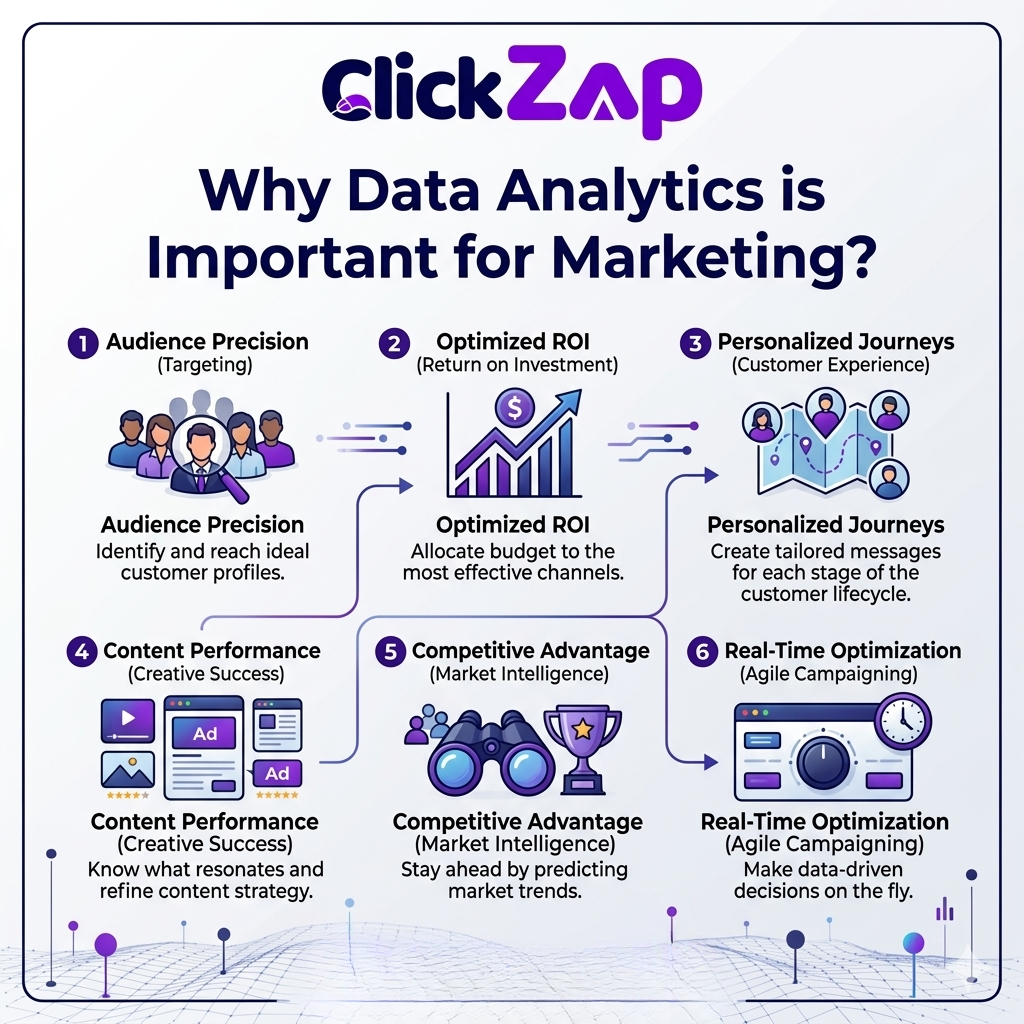
Here’s why Data Analytics in Marketing is essential for modern businesses:
1. Better Understanding of Customer Behavior
Through customer behavior analysis, businesses can understand:
- What customers are searching for
- Which products they prefer
- How they interact with websites and ads
This information helps companies create personalized marketing experiences.
2. Improved Marketing ROI
One of the biggest benefits of data analytics in marketing is better marketing ROI measurement. Businesses can track exactly where their marketing budget is going and which campaigns generate results.
3. Smarter Decision Making
Using marketing performance analytics, businesses can make informed decisions based on real data rather than assumptions.
4. More Effective Campaigns
With marketing campaign analysis, marketers can test different strategies and improve campaign performance over time.
5. Competitive Advantage
Businesses that use big data in marketing gain insights that competitors may miss, helping them stay ahead in the market.
Key Benefits of Data Analytics in Marketing
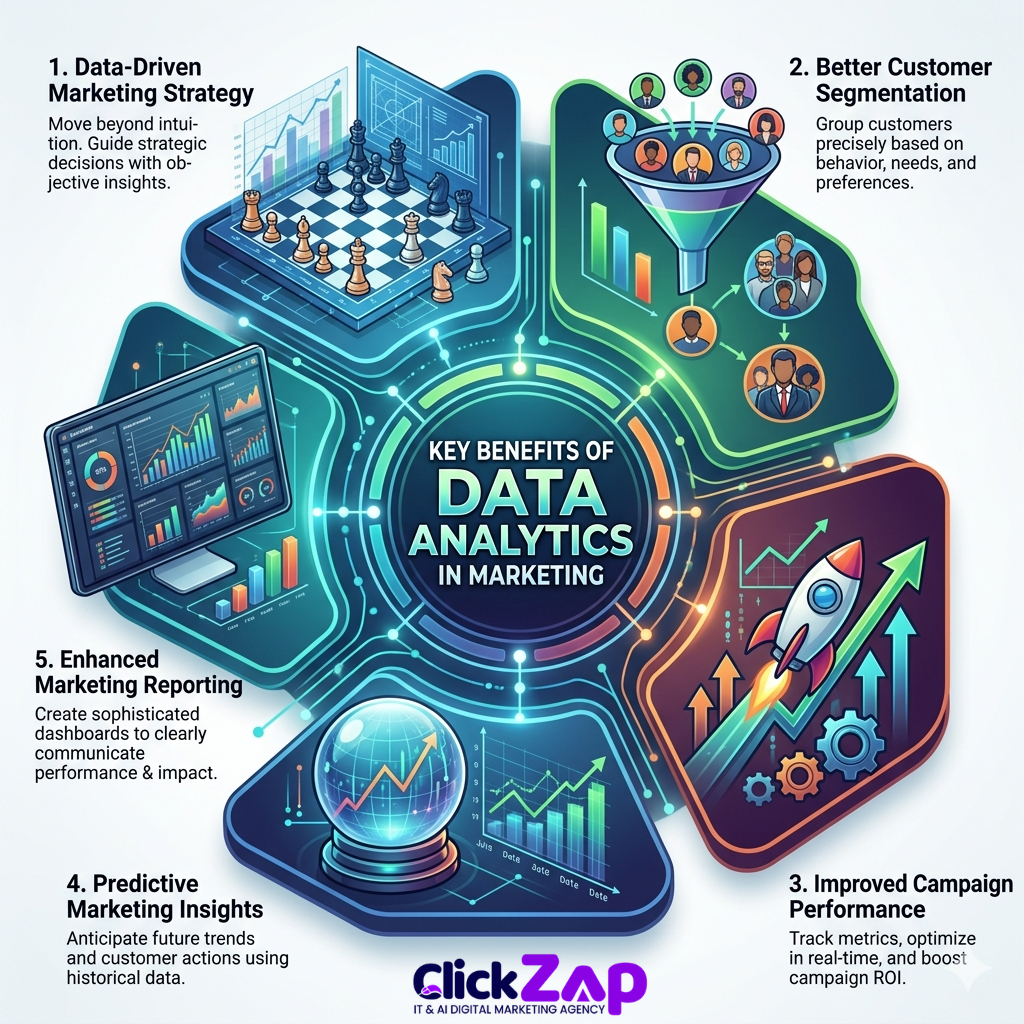
Using Data Analytics in Marketing provides several powerful advantages for businesses.
1. Data-Driven Marketing Strategy
Instead of relying on assumptions, businesses can build a data driven marketing strategy based on real insights from customers and campaigns.
This improves decision making and reduces marketing risks.
2. Better Customer Segmentation
With customer segmentation analysis, businesses can divide customers into groups based on:
- Age
- Location
- Interests
- Buying behavior
This allows marketers to create more personalized marketing campaigns.
3. Improved Campaign Performance
By analyzing marketing performance metrics, businesses can identify which campaigns work best and optimize their marketing strategies.
4. Predictive Marketing Insights
With predictive analytics in marketing, businesses can forecast future trends and customer behavior.
This helps companies:
- Predict demand
- Optimize marketing campaigns
- Improve customer targeting
5. Enhanced Marketing Reporting
Modern marketing reporting dashboards allow businesses to monitor campaign performance in real time.
Tools like Tableau and Microsoft Power BI help transform complex marketing data into easy-to-understand visual reports.
How Businesses Use Data Analytics in Marketing
Businesses use marketing data analysis in many ways to improve their marketing strategies.
1. Customer Behavior Analysis
Companies analyze customer interactions to understand:
- What customers search for
- How they navigate websites
- Which products they prefer
This helps improve user experience and increase conversions.
2. Marketing Campaign Analysis
Using marketing campaign analysis, businesses evaluate the success of marketing campaigns by tracking:
- Click-through rates (CTR)
- Conversion rates
- Engagement levels
- Cost per acquisition (CPA)
These insights help optimize future campaigns.
3. Personalization and Targeting
With customer data analytics, businesses can create personalized marketing messages for different audiences.
For example:
- Personalized emails
- Targeted ads
- Customized product recommendations
4. Content Performance Analysis
Through digital marketing data analysis, businesses can understand which content performs best.
This includes analyzing:
- Blog engagement
- Video views
- Social media interactions
These marketing data insights help businesses create more effective content strategies.
5. Marketing ROI Measurement
Using marketing performance analytics, companies can track how much revenue each marketing channel generates.
This helps businesses allocate budgets more effectively.
Popular Marketing Analytics Tools
To successfully implement Data Analytics in Marketing, businesses use various marketing analytics tools.
Here are some of the most popular tools used by marketers.
1. Google Analytics
One of the most widely used tools for digital marketing data analysis.
It helps track:
- Website traffic
- User behavior
- Traffic sources
- Conversion rates
2. HubSpot
HubSpot offers powerful marketing performance analytics features including:
- Marketing automation
- Lead tracking
- Customer journey analysis
- Marketing campaign insights
3. SEMrush
SEMrush helps businesses analyze:
- SEO performance
- Keyword rankings
- Competitor strategies
- Content performance
4. Tableau
Tableau helps convert complex marketing data insights into interactive dashboards and visual reports.
5. Microsoft Power BI
Power BI helps businesses integrate business intelligence for marketing and analyze marketing performance data easily.
Challenges of Using Data Analytics in Marketing
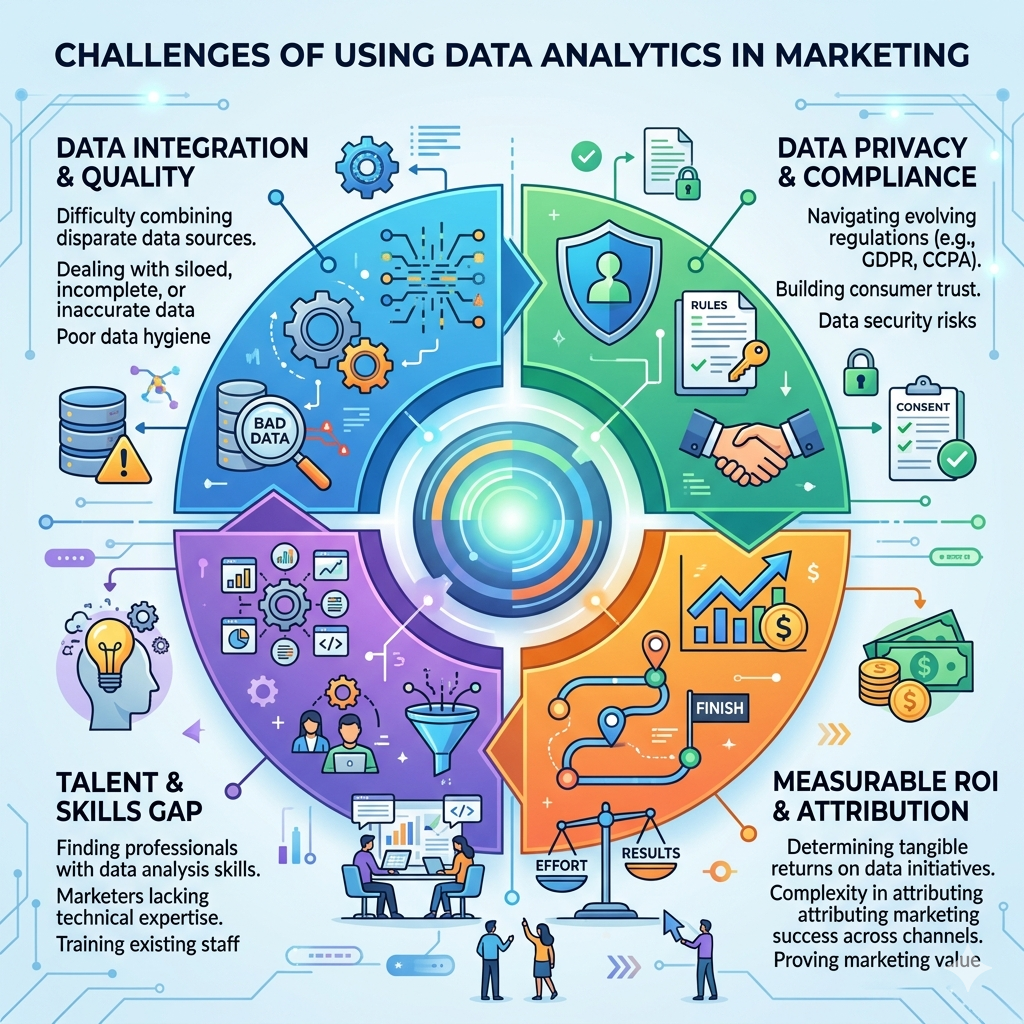
While Data Analytics in Marketing offers many benefits, businesses may also face some challenges.
1. Data Overload
Businesses often collect large volumes of data but struggle to extract meaningful insights from it.
This is a common challenge in big data in marketing.
2. Lack of Skilled Professionals
Effective marketing data analysis requires skilled professionals who understand analytics tools and data interpretation.
3. Data Privacy Concerns
Businesses must follow data privacy regulations when collecting and analyzing customer data.
4. Integration Challenges
Marketing data often comes from multiple sources such as:
- Social media
- Websites
- Email marketing
- CRM systems
Integrating this data into a single system can be difficult.
Future of Data Analytics in Marketing
The future of Data Analytics in Marketing is rapidly evolving as new technologies emerge.
Here are some trends shaping the future of marketing analytics.
1. AI-Powered Marketing Analytics
Artificial intelligence will automate marketing performance analytics and deliver deeper insights.
2. Real-Time Data Analysis
Businesses will increasingly rely on real-time marketing reporting dashboards to monitor campaigns instantly.
3. Predictive and Prescriptive Analytics
Advanced predictive analytics in marketing will help businesses forecast customer behavior and recommend marketing actions.
4. Hyper-Personalization
With advanced customer data analytics, businesses will create highly personalized customer experiences.
5. Integration of Business Intelligence
More companies will adopt business intelligence for marketing to connect marketing data with overall business performance.
Ready to Grow Your Business with Data-Driven Marketing?
If you want to leverage Data Analytics in Marketing to improve your marketing performance, generate leads, and increase revenue, the experts at ClickZap are here to help.
Our team specializes in:
- Data-driven digital marketing strategies
- SEO and content marketing
- Marketing analytics and reporting
- Performance-focused campaigns
Contact ClickZap today and start making smarter marketing decisions with data!
FAQs
1. What is Data Analytics in Marketing?
Data Analytics in Marketing is the process of analyzing marketing data to understand customer behavior, measure campaign performance, and improve marketing strategies.
2. Why is data analytics important in marketing?
Data analytics helps businesses make data driven marketing decisions, improve marketing ROI, and understand customer behavior.
3. What are marketing analytics tools?
Marketing analytics tools are platforms used to collect and analyze marketing data. Examples include Google Analytics, HubSpot, and SEMrush.
4. How does data analytics improve marketing ROI?
By analyzing marketing performance metrics, businesses can identify which campaigns generate the highest returns and optimize marketing budgets accordingly.
5. What is a data driven marketing strategy?
A data driven marketing strategy uses marketing data insights and analytics to guide marketing decisions and campaign planning.
Conclusion
In the modern digital landscape, Data Analytics in Marketing has become essential for businesses that want to grow and stay competitive.
By using marketing data analysis, businesses can understand customer behavior, measure campaign performance, and make smarter marketing decisions.
The key benefits of data analytics in marketing include:
- Better customer insights
- Improved marketing ROI
- More effective campaigns
- Smarter marketing strategies
- Competitive business advantage
For startups and small businesses, adopting a data driven marketing strategy can significantly improve marketing performance and long-term growth.
However, success requires the right tools, expertise, and a clear strategy to turn data into actionable insights.


0 Comments