
Introduction
In today’s fast-evolving digital landscape, businesses are constantly searching for the best ways to build a strong online business presence. With the rapid growth of digital platforms, one common question continues to dominate discussions: Website vs Social Media, which is better for your business in 2026?
Both websites and social media platforms play a crucial role in shaping a brand’s identity, improving brand visibility, and driving customer engagement. However, choosing the right platform or finding the right balance can significantly impact your success.
In this blog, we’ll explore the website vs social media marketing debate, analyze their advantages and disadvantages, and help you determine the best strategy for your business in 2026.
Understanding Website vs Social Media
What is a Business Website?
A website is your brand’s digital home. It represents your business in a controlled environment where you can showcase products, services, and content while maintaining full ownership.
A well-designed website focuses on:
- User experience (UX)
- Mobile-friendly website design
- Conversion rate optimization
- Generating organic search traffic
What is Social Media for Business?
Social media platforms like Instagram, Facebook, LinkedIn, and X (Twitter) are powerful tools for customer engagement online. They allow businesses to connect with audiences in real time, build relationships, and increase reach.
Social media focuses on:
- Engagement and interaction
- Quick content sharing
- Audience targeting strategies
- Running paid advertising campaigns
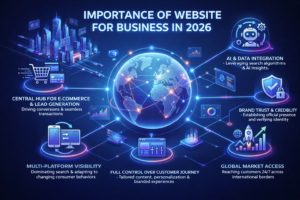
Importance of Website for Business in 2026
A website remains a cornerstone of any digital branding strategy. Here’s why:
1. Full Control Over Your Brand
Unlike social media, your website is completely owned by you. You decide the design, content, and structure.
2. Builds Trust and Credibility
Customers trust businesses with professional websites more than those relying only on social platforms.
3. Drives Organic Search Traffic
Websites are essential for SEO. Ranking on search engines helps bring in high-quality organic search traffic.
4. Better Conversion Opportunities
With strong conversion rate optimization, websites can turn visitors into customers effectively.
5. Supports Lead Generation Strategies
Websites allow you to collect emails, inquiries, and leads, making them critical for long-term growth.
Social Media Marketing Benefits for Business
Social media plays a vital role in modern marketing. Let’s explore its benefits:
- Instant Customer Engagement
Social media excels in customer engagement online, allowing real-time communication.
- High Brand Visibility
With billions of users, social media increases your brand visibility quickly.
- Cost-Effective Marketing
Running paid advertising campaigns on social media is often more affordable than traditional ads.
- Targeted Marketing
Using advanced audience targeting strategies, businesses can reach specific demographics.
5. Supports Content Marketing Strategy
Social media is ideal for sharing blogs, videos, and updates as part of your content marketing strategy.
Website vs Social Media Pros and Cons
Website Pros
- Full ownership and control
- Better for SEO and organic search traffic
- High credibility
- Strong lead generation strategies
- Customizable user experience (UX)
Website Cons
- Higher initial cost
- Requires maintenance
- Takes time to rank
Social Media Pros
- Easy to use
- Fast audience growth
- High customer engagement online
- Affordable marketing
- Great for brand awareness
Social Media Cons
- Limited control
- Algorithm dependency
- Lower conversion rates compared to websites
- Content lifespan is short
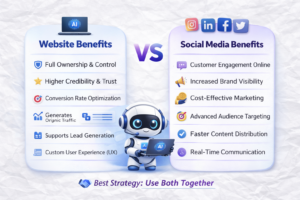
Website Benefits vs Social Media Benefits
Website Benefits
- Long-term asset
- Higher trust factor
- Better for sales and conversions
- Ideal for detailed content
Social Media Benefits
- Immediate reach
- Viral potential
- Direct interaction
- Strong for brand storytelling
Role of Social Media in Business Growth
Social media plays a crucial role in accelerating business growth by:
- Enhancing brand visibility
- Driving traffic to your website
- Improving customer engagement online
- Supporting digital marketing strategies for small business
In 2026, social media will continue to evolve with AI-driven algorithms and personalized content delivery.
Advanced Comparison: Website vs Social Media Marketing in 2026
Ownership vs Dependency
One of the biggest differences in the website vs social media marketing debate is ownership.
- A website is a long-term digital asset that you fully control.
- Social media platforms are rented spaces where algorithms decide your reach.
In 2026, algorithm changes are becoming more unpredictable. Businesses relying only on social media risk losing visibility overnight. This makes websites essential for maintaining a stable online business presence.
Data Control and Analytics
Website Analytics
Websites provide deep insights into:
- Visitor behavior
- Time spent on pages
- Conversion tracking
- Sales funnel performance
This helps in improving conversion rate optimization and refining your lead generation strategies.
Social Media Analytics
Social platforms offer:
- Engagement metrics (likes, shares, comments)
- Reach and impressions
- Audience demographics
However, data is limited compared to websites, making it harder to fully optimize your digital marketing strategies for small businesses.
Content Lifespan: Evergreen vs Short-Term
Website Content
- Blogs and landing pages generate organic search traffic for months or years
- Ideal for long-term content marketing strategy
Social Media Content
- Posts have a short lifespan (hours or days)
- Requires constant updates to stay relevant
This is why combining both platforms is crucial.
Customer Journey: Website vs Social Media
Understanding the digital customer journey is key.
Social Media
- Awareness stage
- Engagement and interaction
- Building trust
Website
- Consideration stage
- Product/service information
- Final conversion
Together, they create a seamless journey that boosts brand visibility and improves conversions.
Website vs Social Media for Lead Generation
Website Lead Generation
Websites are powerful tools for:
- Contact forms
- Email subscriptions
- Landing pages
These directly support lead generation strategies and business growth.
Social Media Lead Generation
Social media generates leads through:
- Ads
- Direct messages
- Lead forms
However, conversions are usually higher on websites due to better user experience (UX).
Cost Comparison in 2026
Website Costs
- Domain & hosting
- Development & design
- Maintenance
Social Media Costs
- Mostly free to start
- Paid ads for growth
- Content creation costs
While social media is cheaper initially, websites provide better ROI in the long run through organic search traffic.
Branding: Website vs Social Media
Website Branding
- Full customization
- Professional look
- Strong digital branding strategy
Social Media Branding
- Limited customization
- Platform-dependent design
- More informal
For serious businesses, websites are essential for building credibility and authority.
Mobile-Friendly Website vs Mobile Social Media Usage
In 2026, mobile usage dominates digital interactions.
Why Mobile-Friendly Website Matters
- Improves user experience (UX)
- Boosts SEO rankings
- Reduces bounce rate
Social Media Advantage
- Already optimized for mobile
- Easy access and usage
Businesses must ensure their website is fully optimized to compete with social platforms.
Audience Targeting Strategies
On Social Media
- Advanced targeting options
- Interests, behavior, demographics
- Retargeting campaigns
On Websites
- SEO-based targeting
- Content personalization
- User behavior tracking
Both platforms complement each other in building effective audience targeting strategies.
Conversion Rate Optimization: Website vs Social Media
Website CRO
Websites allow:
- A/B testing
- Landing page optimization
- Clear CTAs
This improves conversion rate optimization significantly.
Social Media CRO
- Limited optimization options
- Depends on platform algorithms
Websites clearly win when it comes to conversions.
Content Marketing Strategy for 2026
A strong content marketing strategy should include:
Website Content
- Blogs
- Case studies
- Product pages
Social Media Content
- Reels and videos
- Stories
- Short posts
Together, they maximize reach and engagement.
Paid Advertising Campaigns: Where to Invest?
Social Media Ads
- Quick results
- High engagement
- Targeted reach
Website Ads (Google, etc.)
- High intent users
- Better conversions
- Long-term ROI
The best strategy is combining both for maximum impact.
Real-Life Example Strategy
Imagine a small business using both platforms:
- Social media post attracts users
- User clicks link → visits website
- Website provides detailed information
- User fills form or makes purchase
This flow improves:
- Customer engagement online
- Lead generation strategies
- Conversion rate optimization
Common Mistakes to Avoid
Relying Only on Social Media
Risk of losing reach due to algorithm changes
Ignoring Website SEO
Missing out on organic search traffic
Poor User Experience
Bad user experience (UX) reduces conversions
No Content Strategy
Weak content marketing strategy leads to low engagement
Expert Tips for 2026
Build a Strong Website First
Focus on structure, speed, and mobile-friendly website design
Use Social Media for Traffic
Drive users to your website
Focus on SEO
Increase organic search traffic
Invest in Branding
Improve your digital branding strategy
Optimize Conversions
Use CRO techniques to boost results
Future of Website vs Social Media
In 2026 and beyond:
- Websites will become smarter with AI
- Social media will focus more on video content
- Integration between platforms will increase
- Personalization will dominate marketing
Businesses that adapt will succeed.
Why Businesses Need a Website in 2026
Despite the rise of social media, websites remain essential.
- Ownership and Stability
Social platforms can change algorithms anytime, but your website remains under your control.
- Central Hub for Marketing
All marketing efforts social media, ads, email campaigns lead back to your website.
- Better Analytics and Tracking
Websites provide deeper insights into user behavior and performance tracking.
- Professional Brand Image
A website strengthens your digital branding strategy and enhances credibility.
Digital Marketing Strategies for Small Business
To succeed in 2026, businesses should combine both platforms effectively.
- Integrated Approach
Use social media to drive traffic and your website to convert visitors.
- Content Marketing Strategy
Create blogs, videos, and guides that attract and educate customers.
- SEO Optimization
Focus on keywords to increase organic search traffic.
- Paid Advertising Campaigns
Run ads on social media to boost reach and visibility.
- Conversion Rate Optimization
Improve website design and CTAs to maximize conversions.
Website or Social Media for Business: Which Should You Choose?
The answer depends on your goals.
Choose a Website If:
- You want long-term growth
- You focus on sales and conversions
- You need credibility
Choose Social Media If:
- You want quick engagement
- You are building brand awareness
- You have a limited budget
Best Strategy: Use Both
The most effective approach is combining both platforms.
How to Combine Website and Social Media Effectively
- Drive Traffic from Social Media
Use social platforms to direct users to your website.
- Share Website Content
Promote blogs and pages through social media posts.
- Use Consistent Branding
Maintain a unified digital branding strategy across platforms.
- Optimize User Experience
Ensure your website is a mobile-friendly website with smooth navigation.
- Track Performance
Use analytics to improve campaigns and strategies.
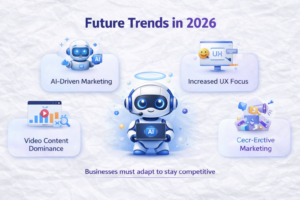
Future Trends in 2026
- AI-Driven Marketing
AI will enhance personalization and automation.
- Increased Focus on UX
Businesses will prioritize user experience (UX) more than ever.
- Video Content Dominance
Short-form videos will dominate social media.
- SEO Evolution
Search engines will prioritize quality content and user intent.
- Omnichannel Marketing
Businesses will adopt multi-channel approaches for better results.
Conclusion
The debate between Website vs Social Media is not about choosing one over the other—it’s about using both strategically.
A website provides stability, credibility, and conversion opportunities, while social media offers reach, engagement, and visibility. Together, they form a powerful combination that drives business success in 2026.
To stay competitive, businesses must:
- Build a strong online business presence
- Focus on lead generation strategies
- Improve conversion rate optimization
- Invest in a solid content marketing strategy
Ultimately, the key is balance. Use social media to attract and engage, and your website to convert and retain customers.
Click Zap IT is a dynamic digital solutions company dedicated to helping businesses grow in the online world. We specialize in creating powerful digital experiences through innovative strategies, cutting-edge technology, and result-driven marketing approaches.
From building high-performing websites to executing impactful social media campaigns, ClickZap IT focuses on enhancing your online business presence, improving brand visibility, and driving measurable results. Our expert team delivers tailored solutions that align with your business goals, ensuring long-term success in today’s competitive digital landscape.
Whether you are a startup or an established brand, Click Zap IT empowers you with the right tools and strategies to scale your business effectively.
Get in Touch with Us
📞 Call Us: +91 970 350 2727
📧 Email Us: connect@clickzap.in
Frequently Asked Questions
- Is a website better than social media for business?
A website is better for conversions and credibility, while social media is better for engagement and reach.
- Can social media replace a website?
No, social media cannot fully replace a website because it lacks ownership and control.
- What is the best strategy for 2026?
An integrated approach combining both platforms is the most effective.
- Why is a mobile-friendly website important?
A mobile-friendly website improves user experience and boosts search rankings.
- How does social media help business growth?
It increases brand visibility, drives traffic, and enhances customer engagement online.

0 Comments