
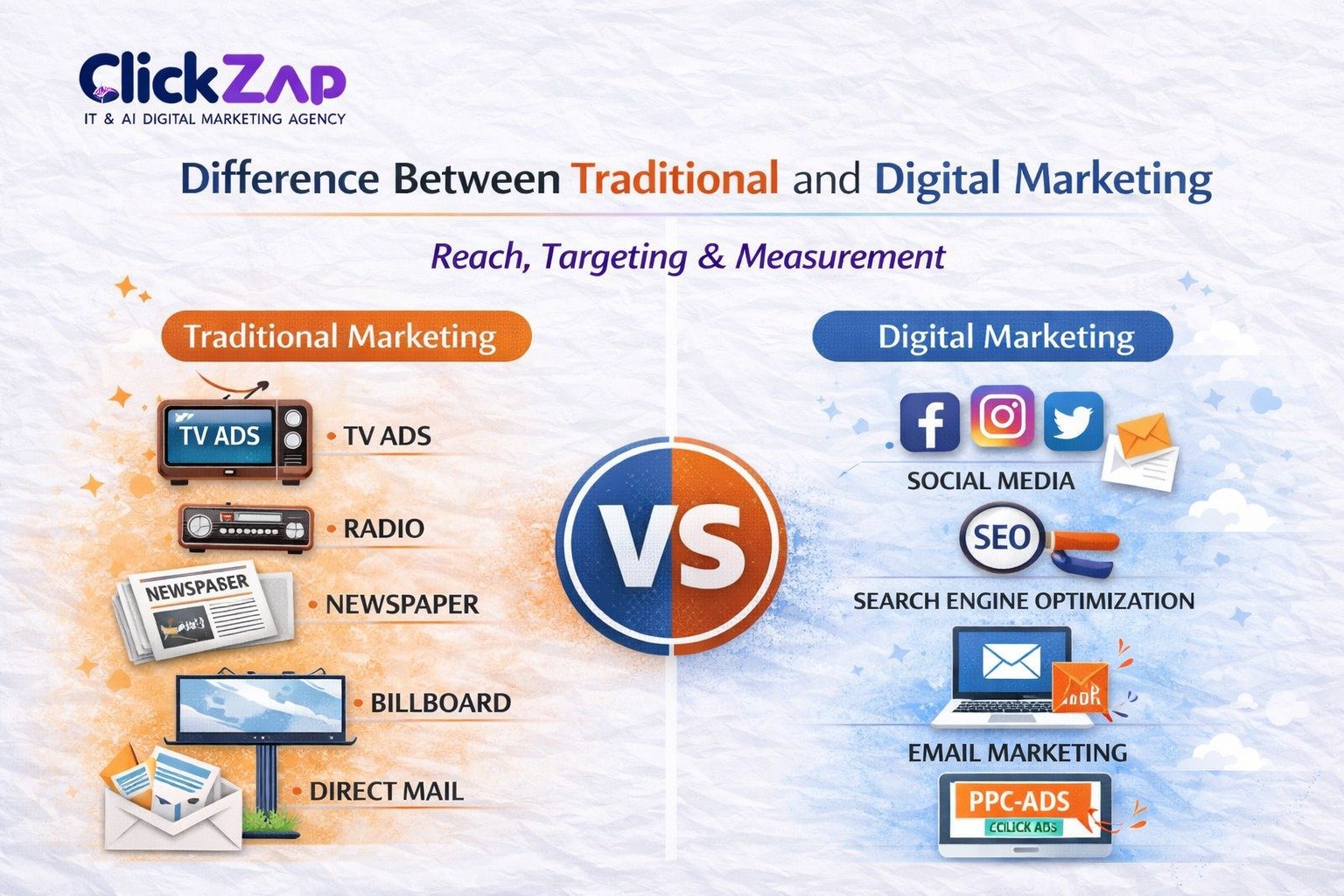
The difference between traditional and digital marketing is an important topic for businesses today. Companies use marketing strategies to promote products, attract customers, and increase revenue. Over the years, marketing methods have evolved significantly due to technological advancements and changes in consumer behavior.
In the past, businesses relied heavily on offline channels such as television, radio, newspapers, and billboards to communicate with customers. These methods are known as traditional marketing. However, with the rise of the internet and digital technologies, businesses now use online platforms such as search engines, websites, and social media to reach potential customers. This modern approach is known as digital marketing.
Understanding the Difference Between Traditional and Digital Marketing is essential for businesses that want to create effective marketing strategies. Both marketing approaches aim to increase brand awareness, attract potential customers, and generate sales. However, they differ in terms of communication channels, audience targeting, cost, flexibility, and performance measurement.
Companies like ClickZap IT help businesses adopt modern marketing strategies by combining traditional marketing methods with advanced digital marketing techniques. By integrating both approaches, organizations can improve brand visibility, analyze marketing performance using analytics tools, and achieve better return on investment.
This article explains traditional marketing, digital marketing strategies, and the Difference Between Traditional and Digital Marketing to help businesses choose the most effective marketing approach.
Understanding the Difference Between Traditional and Digital Marketing
The Difference Between Traditional and Digital Marketing lies mainly in the methods used to promote products and communicate with customers. Traditional marketing focuses on offline promotional channels, while digital marketing relies on internet-based platforms.
Traditional marketing methods have existed for decades and were once the primary way businesses reached customers. These methods include television advertisements, radio promotions, newspaper ads, and outdoor advertising. They are effective for building brand awareness and reaching large audiences.
Digital marketing, on the other hand, uses online platforms such as search engines, websites, social media, and email to promote products and services. It allows businesses to reach specific audiences, track campaign performance, and adjust marketing strategies based on data.
Understanding the Difference Between Traditional and Digital Marketing helps businesses choose the right marketing strategy depending on their goals, budget, and target audience.
What is Traditional Marketing
Traditional marketing refers to promotional strategies that use offline media channels to communicate with potential customers. These marketing techniques existed long before the internet became widely available and were the primary means by which businesses promoted products and services. Even today, many organizations continue to use traditional marketing methods to build brand awareness and reach local audiences. Companies like ClickZap IT also help businesses understand how traditional marketing works alongside modern strategies, enabling them to create effective marketing campaigns that combine both offline and digital approaches for better results.
Traditional marketing focuses on mass communication. It aims to reach a broad audience through physical or broadcast media such as television, radio, newspapers, magazines, and billboards.
Although digital marketing has gained popularity in recent years, traditional marketing methods are still widely used by many organizations. Businesses often use traditional marketing to target local audiences and build strong brand recognition within a particular region.
Traditional marketing can be highly effective when businesses want to reach audiences that may not actively use online platforms.
Common Traditional Marketing Methods
Several traditional marketing methods are still used by businesses around the world. These methods help companies promote their products and create brand awareness among large audiences.
Common traditional marketing methods include:
These marketing methods allow businesses to communicate their message to a large audience through physical or broadcast media.
Television Advertising
Television advertising is one of the most popular traditional marketing strategies. Businesses create commercials that are broadcast during television programs to reach a wide audience.
Television advertising can have a strong impact because it combines visual and audio elements to communicate a marketing message.
Advantages of television advertising include:
-
Ability to reach millions of viewers at once
-
Strong visual storytelling opportunities
-
High brand visibility
-
Increased brand recognition
However, television advertising can be expensive because it involves production costs and broadcasting fees. As a result, it is often used by large companies with bigger marketing budgets.
Radio Advertising
Radio advertising is another traditional marketing method that allows businesses to promote their products through audio messages broadcast on radio stations.
This type of marketing is particularly effective for targeting local audiences because radio stations often serve specific regions.
Benefits of radio advertising include:
-
Lower advertising costs compared to television
-
Ability to target local markets
-
Quick production and broadcasting
-
Frequent ad repetition for better recall
Although radio advertising lacks visual elements, it can still create strong brand awareness through engaging audio messages.
Print Advertising
Print advertising involves placing advertisements in physical publications such as newspapers and magazines. It has been a widely used marketing method for many years.
Businesses use print advertising to communicate promotional messages, showcase products, and provide detailed information to potential customers.
Common types of print advertising include:
-
Newspaper advertisements
-
Magazine advertisements
-
Flyers and brochures
-
Product catalogs
-
Promotional pamphlets
Print advertising is particularly useful for reaching audiences who regularly read newspapers and magazines. It also allows businesses to provide detailed information about products and services.
Outdoor Advertising
Outdoor advertising is another traditional marketing strategy that focuses on promoting products through public displays.
This method aims to attract the attention of people in busy areas such as highways, city centers, and shopping districts.
Examples of outdoor advertising include:
-
Billboards
-
Transit advertisements on buses and trains
-
Posters and banners
-
Digital outdoor screens
Outdoor advertising can be effective because it provides repeated exposure to people who pass by the advertisement frequently.
What is Digital Marketing
Digital marketing refers to the promotion of products and services through internet-based platforms and digital technologies. It allows businesses to connect with their target audience online and track marketing performance using data analytics tools.
Digital marketing has become an essential part of modern business strategies because most consumers use the internet to search for products and services.
Understanding the Difference Between Traditional and Digital Marketing helps businesses recognize how digital marketing provides new opportunities for reaching customers more effectively.
Digital marketing enables businesses to interact directly with customers, create personalized marketing campaigns, and measure campaign performance in real time.
Major Digital Marketing Channels
Digital marketing includes several online marketing channels that businesses use to promote products and services.
Some of the most popular digital marketing channels include:
-
Search engine optimization
-
Social media marketing
-
Email marketing
-
Content marketing
-
Pay-per-click advertising
-
Affiliate marketing
-
Influencer marketing
These strategies allow businesses to reach targeted audiences and increase online visibility.
Search Engine Optimization
Search engine optimization is one of the most important digital marketing strategies. It focuses on improving a website’s ranking in search engine results.
When a website appears higher in search results, it receives more traffic from users searching for related products or services.
The main goals of search engine optimization include:
-
Increasing website visibility
-
Driving organic traffic to websites
-
Improving search engine rankings
-
Attracting potential audiences
SEO plays an important role in the Difference Between Traditional and Digital Marketing because it allows businesses to reach customers who are actively searching for specific products or services.
Social Media Marketing
Social media marketing involves promoting products and services through social networking platforms.
Popular social media platforms used for marketing include:
-
Facebook
-
Instagram
-
LinkedIn
-
Twitter
-
Pinterest
Businesses use these platforms to connect with their audience, share content, and build strong customer relationships.
Benefits of social media marketing include:
Social media marketing highlights the Difference Between Traditional and Digital Marketing because it allows two-way communication between businesses and customers.
Pay Per Click Advertising
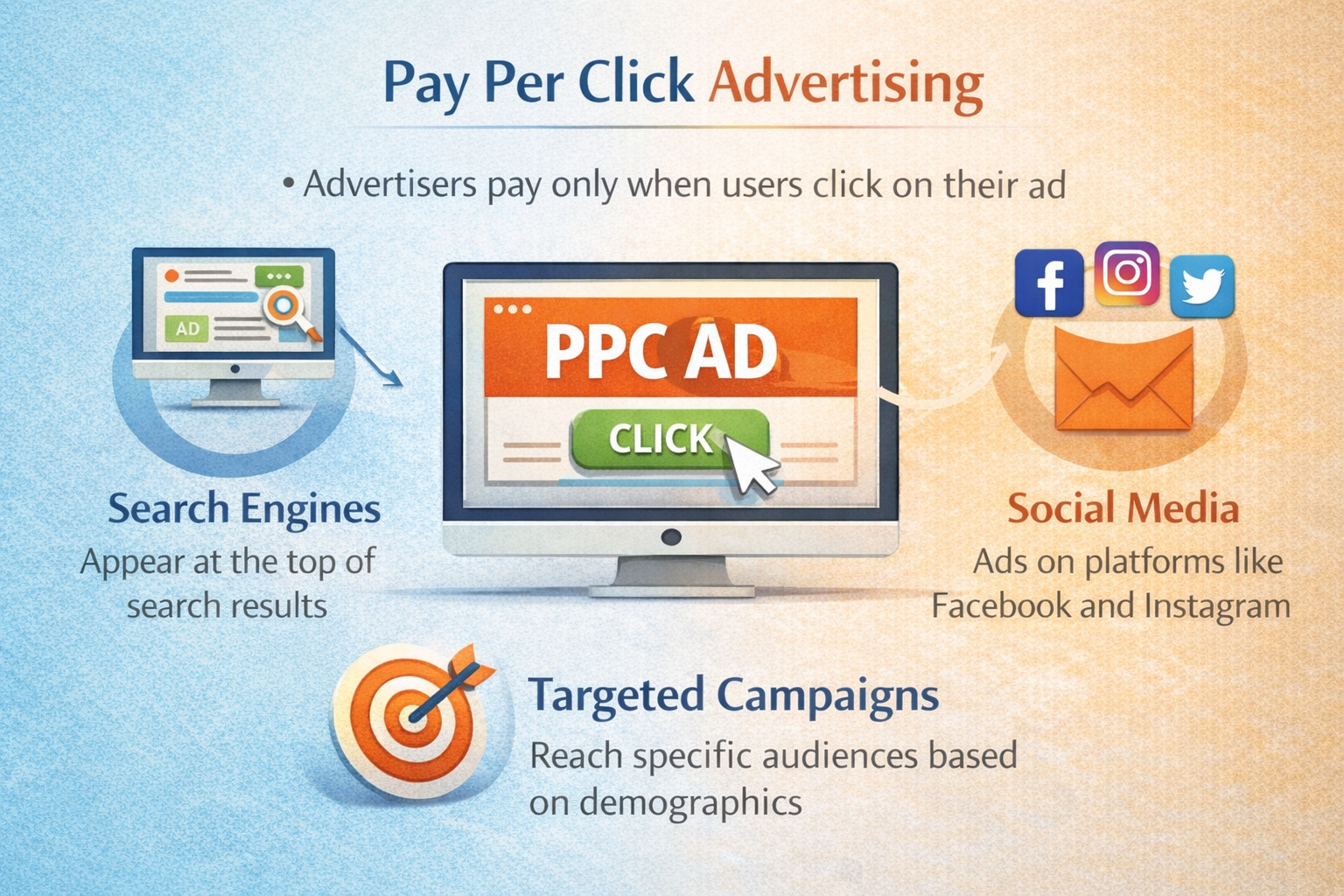
Pay-per-click advertising is a digital marketing strategy in which businesses pay only when users click on their advertisements.
These advertisements appear on search engines or websites and are designed to attract potential customers who are searching for related products or services.
Important features of PPC advertising include:
-
Businesses pay only when users click on their advertisement.
-
Ads appear on search engines and relevant websites.
-
Campaigns can target specific audiences based on demographics and interests.
-
Performance can be tracked using analytics tools.
PPC advertising is an important part of digital marketing because it can generate quick website traffic and leads.
Key Difference Between Traditional and Digital Marketing
Understanding the Difference Between Traditional and Digital Marketing helps businesses determine which marketing strategy is best suited for their goals.
Both marketing approaches aim to promote products and increase sales, but they differ in several important aspects.
Audience Targeting
One major Difference Between Traditional and Digital Marketing is the level of audience targeting.
Traditional marketing usually targets a broad audience without precise segmentation. For example, television advertisements are shown to anyone watching the program.
Digital marketing allows businesses to target specific audiences based on:
-
Age
-
Location
-
Interests
-
Online behavior
-
Demographics
This precise targeting improves marketing effectiveness.
Cost
Cost is another important factor in the Difference Between Traditional and Digital Marketing.
Traditional marketing campaigns often require higher budgets because of printing and broadcasting expenses.
Examples of traditional marketing costs include:
-
Television commercial production
-
Billboard rentals
-
Newspaper advertisement fees
Digital marketing campaigns can often be launched with smaller budgets. Businesses can adjust their spending based on campaign performance.
Performance Tracking
Performance measurement is a major Difference Between Traditional and Digital Marketing.
Traditional marketing provides limited data about campaign results.
For example:
-
Businesses may not know how many people saw a billboard.
-
It is difficult to measure the exact impact of television ads.
Digital marketing provides detailed performance data through analytics tools.
Businesses can track:
-
Website traffic
-
Click rates
-
Conversion rates
-
Customer behavior
This data helps marketers optimize their campaigns.
Customer Engagement
Another important difference Between Traditional and Digital Marketing is customer interaction.
Traditional marketing usually involves one-way communication where businesses deliver messages to audiences.
Digital marketing allows two-way communication between brands and customers.
Customers can:
-
Comment on social media posts
-
Share content
-
Send messages
-
Provide feedback
This interaction helps businesses build stronger relationships with their customers.
Campaign Flexibility
Campaign flexibility also highlights the Difference Between Traditional and Digital Marketing.
Traditional marketing campaigns are difficult to modify once they are launched.
For example:
-
Printed advertisements cannot be changed easily.
-
Television ads require additional costs for modifications.
Digital marketing campaigns can be adjusted quickly.
Businesses can:
-
Update advertisements instantly
-
Change targeting settings
-
Optimize campaigns based on data.
This flexibility improves marketing performance.
Advantages of Digital Marketing
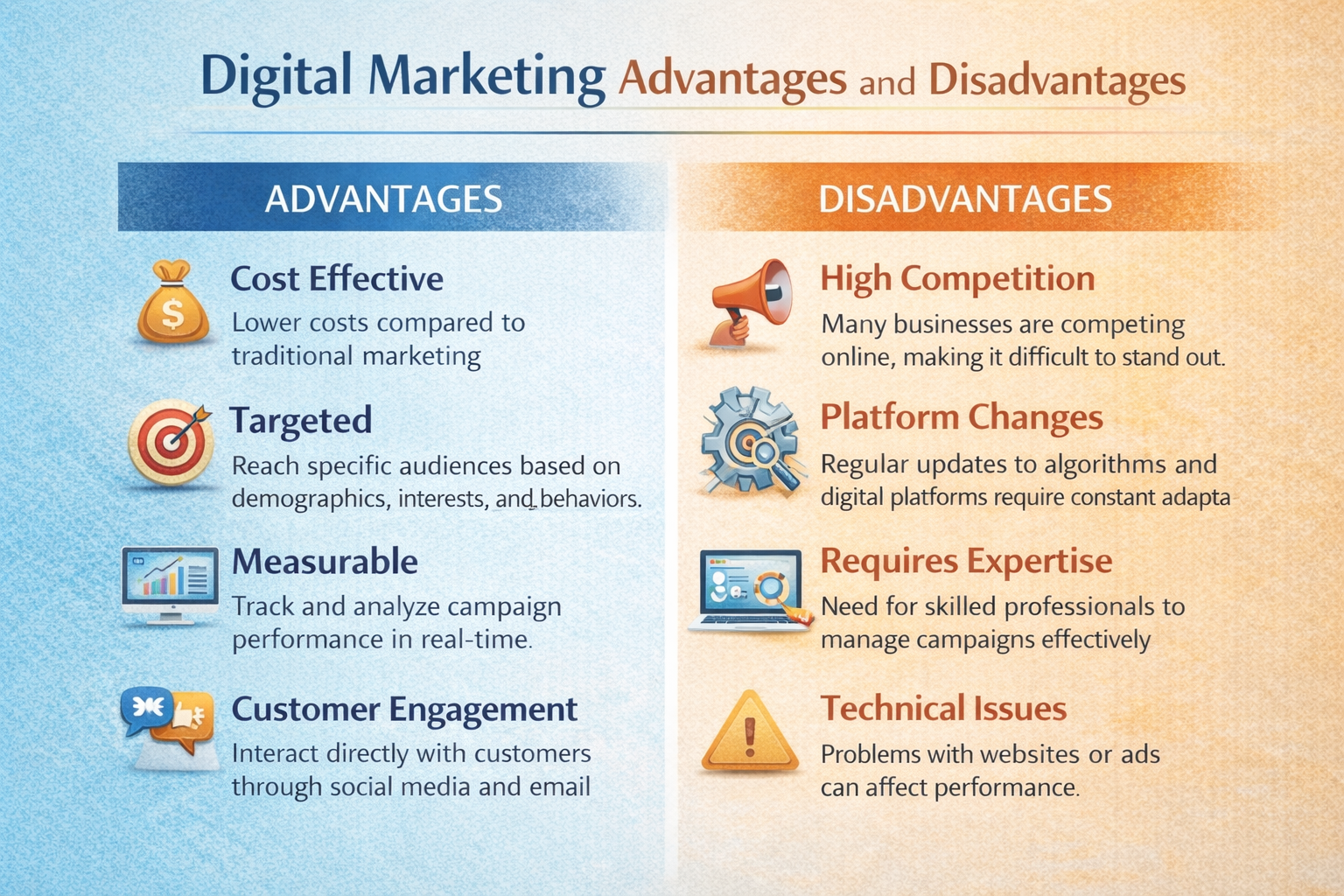
Digital marketing offers several advantages that make it attractive for modern businesses.
Key advantages include:
-
Lower marketing costs compared to traditional advertising
-
Ability to reach global audiences
-
Advanced targeting options
-
Measurable campaign performance
-
Improved customer engagement
These benefits highlight the growing importance of digital marketing in today’s business environment.
Disadvantages of Digital Marketing
Despite its advantages, digital marketing also has some challenges.
Common disadvantages include:
-
High competition in online markets
-
Frequent changes in search engine algorithms
-
Need for technical skills and expertise.
-
Dependence on internet connectivity
Businesses often rely on professional marketing agencies to manage digital marketing campaigns effectively.
Importance of Brand Awareness Marketing
Brand awareness marketing focuses on making customers familiar with a brand and its products.
Strong brand awareness helps businesses build trust and attract more customers.
Benefits of brand awareness marketing include:
-
Increased customer trust
-
Higher brand recognition
-
Improved customer loyalty
-
Stronger market presence
Both traditional and digital marketing strategies can contribute to brand awareness.
Role of Marketing Analytics Tools
Marketing analytics tools help businesses analyze the effectiveness of their marketing campaigns.
These tools provide valuable insights, such as:
-
Website traffic data
-
Customer behavior patterns
-
Campaign engagement metrics
-
Conversion rates
By using analytics tools, businesses can improve their marketing strategies and achieve better results.
Integrating Traditional and Digital Marketing
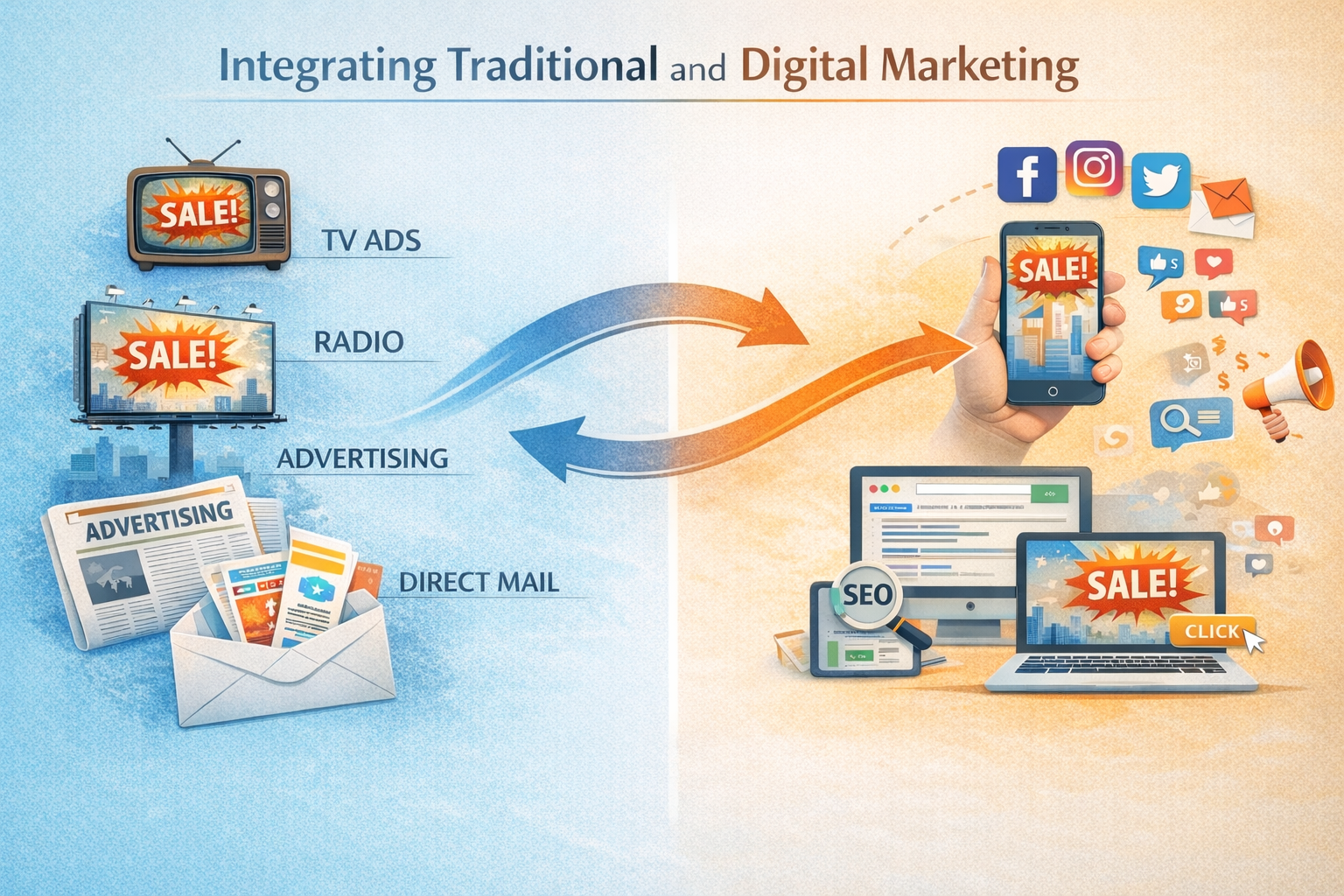
Many businesses achieve better results by combining traditional and digital marketing strategies.
Examples of integrated marketing include:
Promoting television advertisements through social media
Using print ads to drive traffic to websites
Combining event sponsorships with online promotions
This integrated approach allows businesses to reach wider audiences and maximize marketing impact.
Frequently Asked Questions.
1. What is the difference between traditional and digital marketing?
Traditional marketing uses offline channels like TV, radio, and newspapers, while digital marketing uses online platforms such as websites, search engines, and social media.
2. What are examples of traditional marketing?
Examples include television ads, radio ads, newspapers, magazines, billboards, and flyers.
3. What are common digital marketing methods?
Common methods include SEO, social media marketing, email marketing, content marketing, and pay-per-click advertising.
4. Why is digital marketing important?
Digital marketing helps businesses reach targeted audiences online, increase brand visibility, and track campaign performance.
5. Can businesses use both traditional and digital marketing?
Yes, combining both helps businesses reach wider audiences and improve overall marketing results.
Conclusion
The Difference Between Traditional and Digital Marketing lies mainly in the communication channels, technologies, and strategies used to reach customers.
Traditional marketing relies on offline media such as television, radio, newspapers, and billboards to promote products. Digital marketing uses online platforms such as search engines, websites, and social media to connect with targeted audiences.
Both marketing approaches have their own advantages. Traditional marketing is effective for reaching large audiences and building strong brand recognition. Digital marketing offers better targeting, lower costs, and measurable results.
Businesses that understand the Difference Between Traditional and Digital Marketing can create balanced marketing strategies that combine the strengths of both approaches. By integrating traditional and digital marketing methods, companies can improve brand awareness, attract more customers, and achieve long-term business success.
0 Comments