
How to rank on ChatGPT and Google AI Overviews for local business
If you run a local business in Hyderabad or anywhere in India, chances are your customers aren’t just Googling anymore; they’re asking ChatGPT, Perplexity, and Google’s AI Mode for recommendations. Learning how to rank on ChatGPT and Google AI Overviews for local business has become just as important as traditional SEO, and businesses that ignore this shift risk becoming invisible to an entire generation of AI-first searchers. This guide breaks down exactly how AI search works, why it matters for your bottom line, and what practical steps you need to take to get found in 2026.
What Are Google AI Overviews and ChatGPT Search?
Google AI Overviews are AI-generated summaries that appear at the top of search results, pulling information from multiple websites to answer a query directly often before the user clicks a single link. ChatGPT search, along with tools like Perplexity, works similarly: it crawls the web, synthesizes an answer, and cites sources inline, creating what’s known as a zero-click search experience.
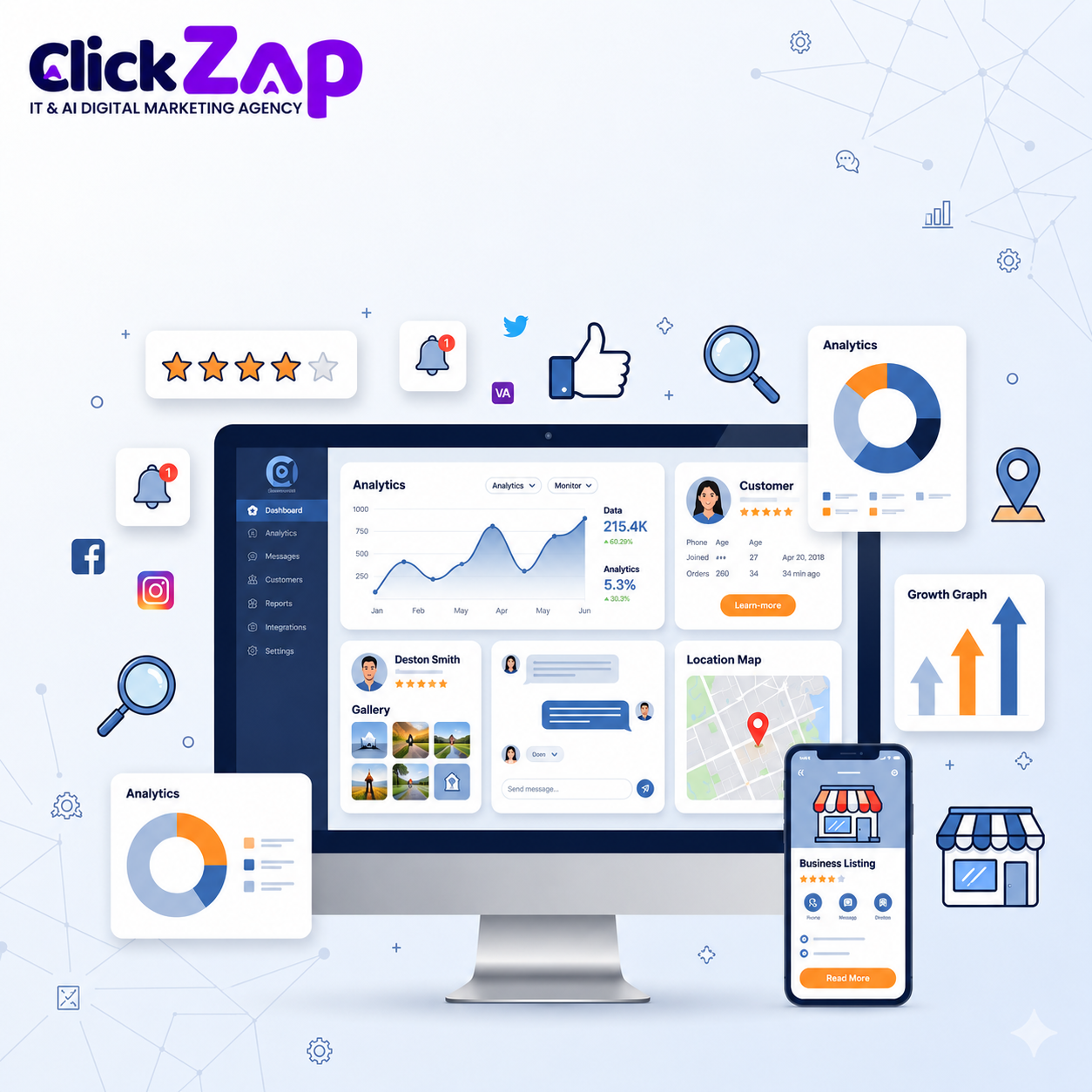
For local businesses, this is a fundamental shift in how visibility works. Instead of ten blue links competing for attention, customers now see one AI-generated answer and if your business isn’t part of that answer, you’re invisible, no matter how well you rank in traditional search results. Google AI Mode takes this even further, offering a full conversational search experience where users can ask follow up questions, and your business either stays in the conversation or drops out entirely.
Why This Matters More in 2026
By 2026, a growing share of local searches for things like “best bakery near me” or “AC repair in Gachibowli” will be resolved entirely within AI-generated answers, without the user ever scrolling to a traditional results list. If your business isn’t cited in that first answer, you lose that customer before they even see a search results page. This is why understanding Google AI Mode SEO tips is no longer optional for local business owners who want to stay competitive.
Why Local Businesses Need to Optimize for AI Search Now
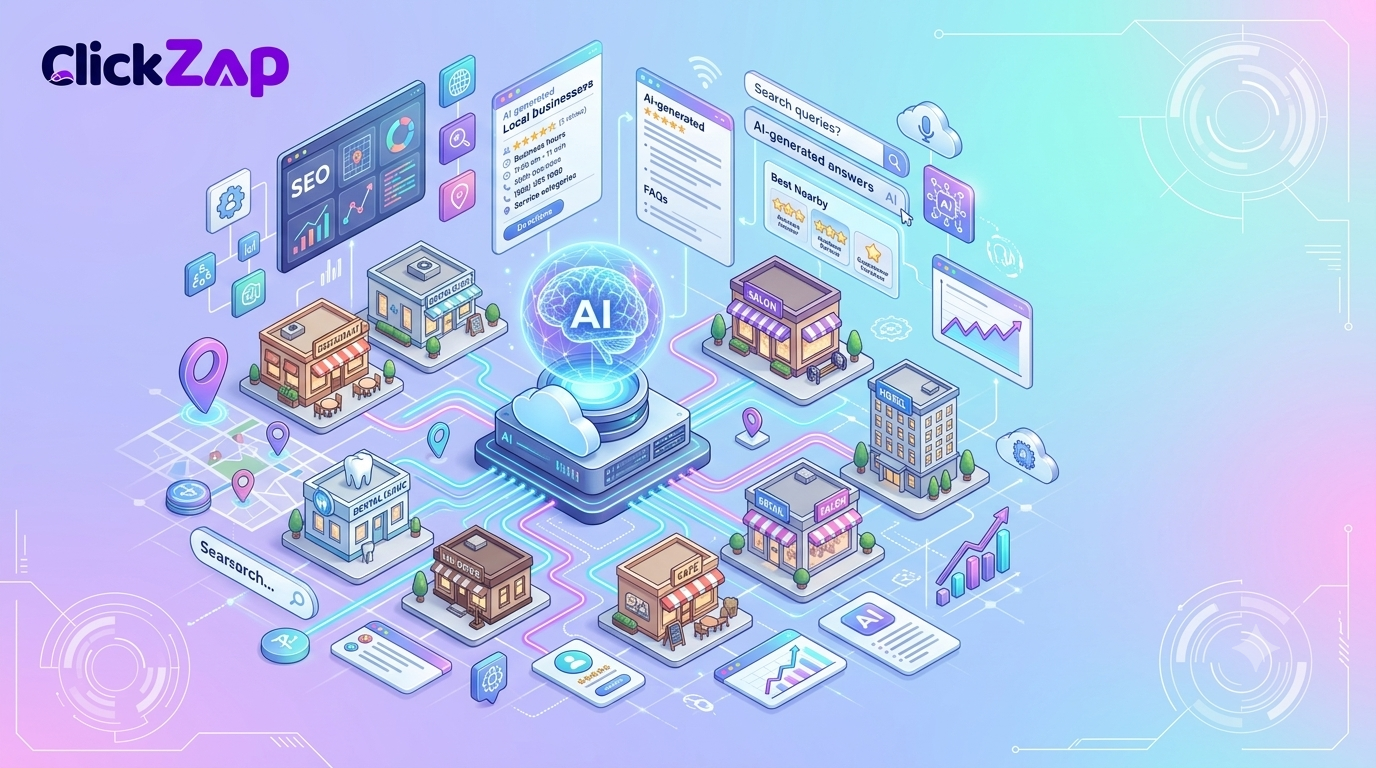
Local businesses can’t afford to treat AI search visibility as optional anymore. Customers researching services increasingly rely on conversational search queries like “which is the best digital marketing agency in Hyderabad” rather than typing short keyword phrases and AI engines answer these directly, often without sending traffic to your site at all.
This shift means your share of voice in AI answers directly impacts leads and revenue. If a competitor is cited by ChatGPT and you’re not, they win the customer even if your website technically ranks higher on traditional Google. Think of it like a shopkeeper losing customers to a rival across the street simply because that rival’s shop sign is more visible; the fundamentals of your business might be identical, but visibility determines who gets walked into.
There’s also a trust dimension here. When ChatGPT or Google AI Overviews cite a business by name, users tend to perceive that business as more credible, almost like an implicit endorsement. This makes AI search visibility not just a traffic lever, but a brand-trust lever too.
AEO/GEO vs Traditional SEO: What’s the Difference?
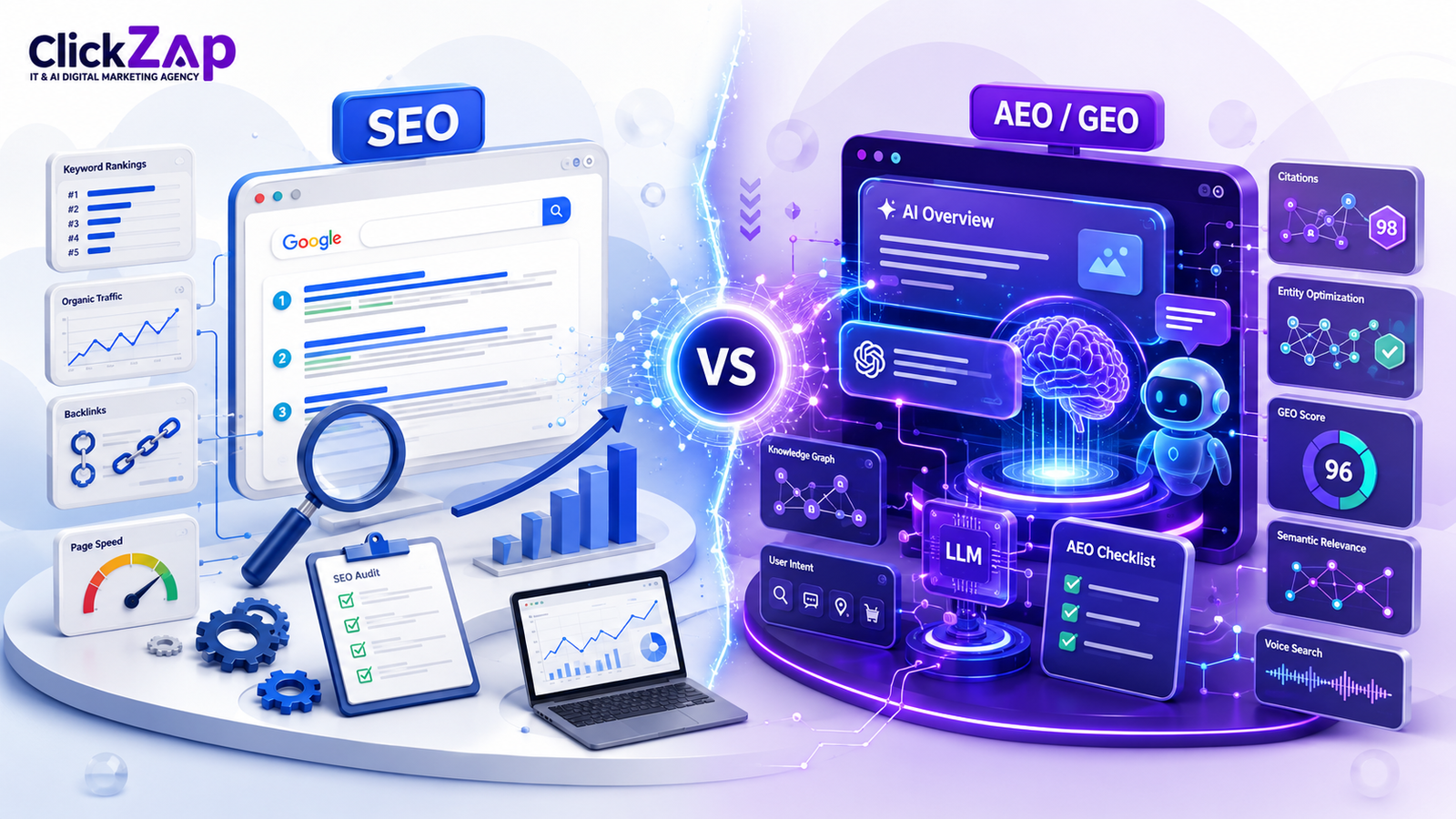
Answer Engine Optimization (AEO) and Generative Engine Optimization (GEO) focus on getting your content selected as source material for AI-generated answers, while traditional SEO focuses on ranking a webpage in a list of links. AEO/GEO prioritizes clarity, structure, and citability over keyword density and backlink volume alone.
Traditional SEO Focus
- Keyword placement and density
- Backlink quantity and domain authority
- Page-by-page ranking position
- Click through rate optimization
- Meta tags and title tag optimization
AEO/GEO Focus (Answer Engine Optimization for Local Business)
- Answer-first content format
- Structured data / schema markup
- Entity-based SEO (are you a recognized “entity” across the web?)
- Content that’s easy for AI to extract and cite
- Topical authority across a subject, not just one page
- Consistency of facts across multiple independent sources
The two approaches overlap significantly; traditional SEO still matters, since AI engines still crawl and index the web using similar signals. But AEO strategy for local business in 2026 requires an added layer: making your content machine-readable and citation worthy, not just human readable and persuasive. It’s the difference between writing to convince a person to click, and writing to be quoted accurately by a machine.
How to Get Cited by ChatGPT and AI Overviews: Practical Steps
Getting cited by AI search engines requires a combination of structured data, authoritative content, and consistent business information across the web. Below are the core levers every local business owner should pull to improve AI search optimization for small businesses.
1. Implement Structured Data and Schema Markup
Schema markup tells search engines and AI crawlers exactly what your content means, not just what it says. For local businesses, prioritize:
- Local business schema (name, category, service area, hours)
- FAQ schema for AI Overviews (structured question-answer pairs)
- Review/rating schema
- Article schema for blog content
- Organization schema with logo, social profiles, and contact details
Structured data significantly increases the odds of how to appear in Google AI Overviews, because it removes ambiguity for AI crawlers trying to extract facts. Without schema, an AI model has to infer your business hours or service area from unstructured text, a process that’s error-prone and easy to skip. With schema, you’re handing the answer directly to the machine.
2. Optimize Your Google Business Profile for AI Search
Your Google Business Profile is one of the most heavily weighted sources for ChatGPT local business visibility and Google AI Mode. Make sure you have:
- Accurate categories and service descriptions
- Regularly updated posts and photos
- Complete Q&A sections answered proactively
- NAP consistency (Name, Address, Phone) matching your website exactly
- Service area boundaries clearly defined
Inconsistent NAP data across directories is one of the fastest ways to get excluded from AI-generated local answers. AI models cross-check facts across multiple sources, and conflicting information, even something as small as a phone number typo on one directory can cause your business to be dropped from consideration entirely in favor of a competitor with cleaner data.
3. Build E-E-A-T Signals Into Every Page
E-E-A-T signals Experience, Expertise, Authoritativeness, Trustworthiness are core to whether AI engines trust your content enough to cite it. Practical ways to build this include:
- Author bios with real credentials and photos
- Case studies and client results (like the example below)
- Verified reviews and testimonials embedded with schema
- Clear “About Us” pages with founding story and team details
- Transparent contact information and business registration details
The stronger your E-E-A-T footprint, the more likely AI models are to treat your business as a trustworthy “entity” worth referencing by name, rather than an anonymous website.
4. Write Answer-First, Conversational Content
AI engines pull content that directly answers a question in the first few sentences of a section. Structure your content so that every H2 or H3 is followed immediately by a tight, standalone answer the way this article is formatted. This directly supports content structure for AI extraction and improves your odds in conversational search queries.
A good rule of thumb: if someone copy pasted just the first 40-60 words after your heading into a search engine, would it stand alone as a complete, useful answer? If not, restructure it. This is exactly how AI models decide what to extract and cite.
5. Strengthen Local Citations and Directory Listings
Consistent listings across Justdial, Sulekha, IndiaMART, and Google Business Profile reinforce your entity-based SEO footprint. AI models cross-reference multiple sources before citing a business inconsistent or missing listings weaken your credibility signal and make it harder for AI engines to confirm you’re a real, active, trustworthy business.
6. Actively Manage Reviews
Reviews aren’t just for human trust anymore; they’re a data source that AI engines mine when generating AI-generated answers about “best” or “top-rated” businesses in a category. Respond to every review, thank customers publicly, and actively request reviews from satisfied clients. A steady stream of recent, detailed reviews signals ongoing legitimacy in a way a handful of old reviews from years ago simply can’t.
7. Don’t Ignore Voice and Perplexity Style Search
Voice search optimization and Perplexity AI citations both favor the same fundamentals: concise, factual, well structured answers. Optimizing for AI Overviews naturally improves your voice search performance too, since both rely on extractable, direct answer content that can be read aloud or quoted verbatim without additional editing.
Common Mistakes Local Businesses Make in AI Search Optimization
Many local businesses treat AI search optimization for small businesses as a checkbox exercise rather than a structural change to their content strategy. Here are the most common mistakes we see:
- Ignoring schema markup entirely leaving AI crawlers to guess at your business details
- Inconsistent NAP data across directories, which erodes trust signals
- Keyword-stuffed content with no clear, direct answers
- No FAQ sections, missing an easy opportunity for AI citation
- Treating AI search as a one time fix instead of an ongoing content and authority-building process
- Neglecting Google Business Profile updates, assuming it’s “set and forget”
- Writing overly promotional content that AI models are less likely to trust or cite as a neutral, factual source
- Failing to update outdated content, which erodes topical authority over time
Avoiding these mistakes is often more valuable than chasing every new tactic. Clean fundamentals consistently outperform scattered, inconsistent effort.
Case Study: A Hyderabad Local Business Scenario
Consider a mid-sized furniture showroom in Kondapur. Before optimizing, their Google Business Profile had inconsistent hours listed across directories, no FAQ schema, and blog content written in a generic, non-structured format with no clear answers to common customer questions.
After implementing local business schema, cleaning up NAP consistency across five directories, and restructuring their blog into answer first sections with FAQ schema, the business began appearing in Google AI Overviews for queries like “best furniture stores in Kondapur” within a few months. This visibility translated into a noticeable increase in direct inquiries via WhatsApp and phone calls without any additional ad spend.
This is the practical value of local SEO for AI search: it’s not about chasing rankings for their own sake, it’s about becoming the trusted source AI engines choose to cite when a real customer is making a real buying decision.
The Future of AI Search for Local Businesses: 2026 and Beyond
Looking ahead, AI search visibility will likely become as foundational as having a Google Business Profile is today. Expect deeper integration between Google AI Mode, ChatGPT, and local business data, with topical authority and structured data playing an even bigger role in which businesses get cited.
We’re also likely to see AI engines placing greater weight on fresh businesses that regularly update their content, respond to reviews, and post updates to their Google Business Profile will likely be favored over static, outdated listings. Businesses that invest early in AEO/GEO fundamentals now will have a significant advantage as AI-driven search adoption continues to grow through 2026 and beyond, while late adopters will find it increasingly difficult to catch up once competitors have established themselves as the “default” cited sources in their category.
Frequently Asked Questions
1.What is the difference between SEO and AEO (Answer Engine Optimization)?
SEO focuses on ranking web pages in traditional search results, while AEO focuses on getting your content selected and cited as the source for AI-generated answers on platforms like ChatGPT and Google AI Overviews.
2.How can a local business get cited by ChatGPT?
Local businesses can get cited by ChatGPT by maintaining consistent, structured, and authoritative information across their website, Google Business Profile, and local directories, along with implementing schema markup and answer-first content.
3.Does Google Business Profile affect AI Overviews ranking?
Yes, Google Business Profile is a major data source for AI Overviews and Google AI Mode, especially for local queries. Accuracy, completeness, and NAP consistency directly impact whether a business appears in AI-generated local answers.
4.Is schema markup necessary for AI search optimization?
Schema markup isn’t strictly mandatory, but it significantly improves an AI engine’s ability to correctly interpret and extract your business information, making it a near essential part of any serious SEO strategy for local business.
5.How long does it take to rank in Google AI Overviews?
There’s no fixed timeline, but businesses that consistently update structured data, content, and directory listings often begin seeing visibility improvements within a few months, similar to traditional SEO timelines.
6.Can small businesses in India compete for AI search visibility against bigger brands?
Yes. AI engines prioritize relevance, structure, and trust signals over sheer domain authority alone, giving well optimized local businesses a genuine opportunity to be cited even against larger, better known competitors.
Conclusion:
Start Building Your AI Search Visibility Today
AI search isn’t a future trend to prepare for, it’s already reshaping how customers in Hyderabad and across India discover local businesses. The shift from ten blue links to a single AI-generated answer means your business either shows up in that answer or loses the customer before they ever see a traditional search result. The good news is that ranking on ChatGPT and Google AI Overviews doesn’t require reinventing your entire marketing strategy; it requires layering structured data, consistent business information, and answer-first content on top of the SEO fundamentals you’re likely already investing in.
The businesses that act now, cleaning up their NAP consistency, implementing schema markup, and restructuring content to be genuinely citable, will be the ones AI engines default to recommending in their category for years to come. The furniture showroom case study above isn’t an outlier; it’s a preview of what’s possible when AEO/GEO fundamentals are applied correctly. Waiting until 2027 to start means competing against businesses that have already established themselves as the trusted, cited source in their space.
If you’re a local business owner in Hyderabad wondering where to even begin, the process doesn’t have to be overwhelming. It starts with an audit of your current schema, Google Business Profile, and content structure, followed by a focused plan to fix the gaps that are actively keeping you out of AI-generated answers.
Get in touch with our team today:
0 Comments