
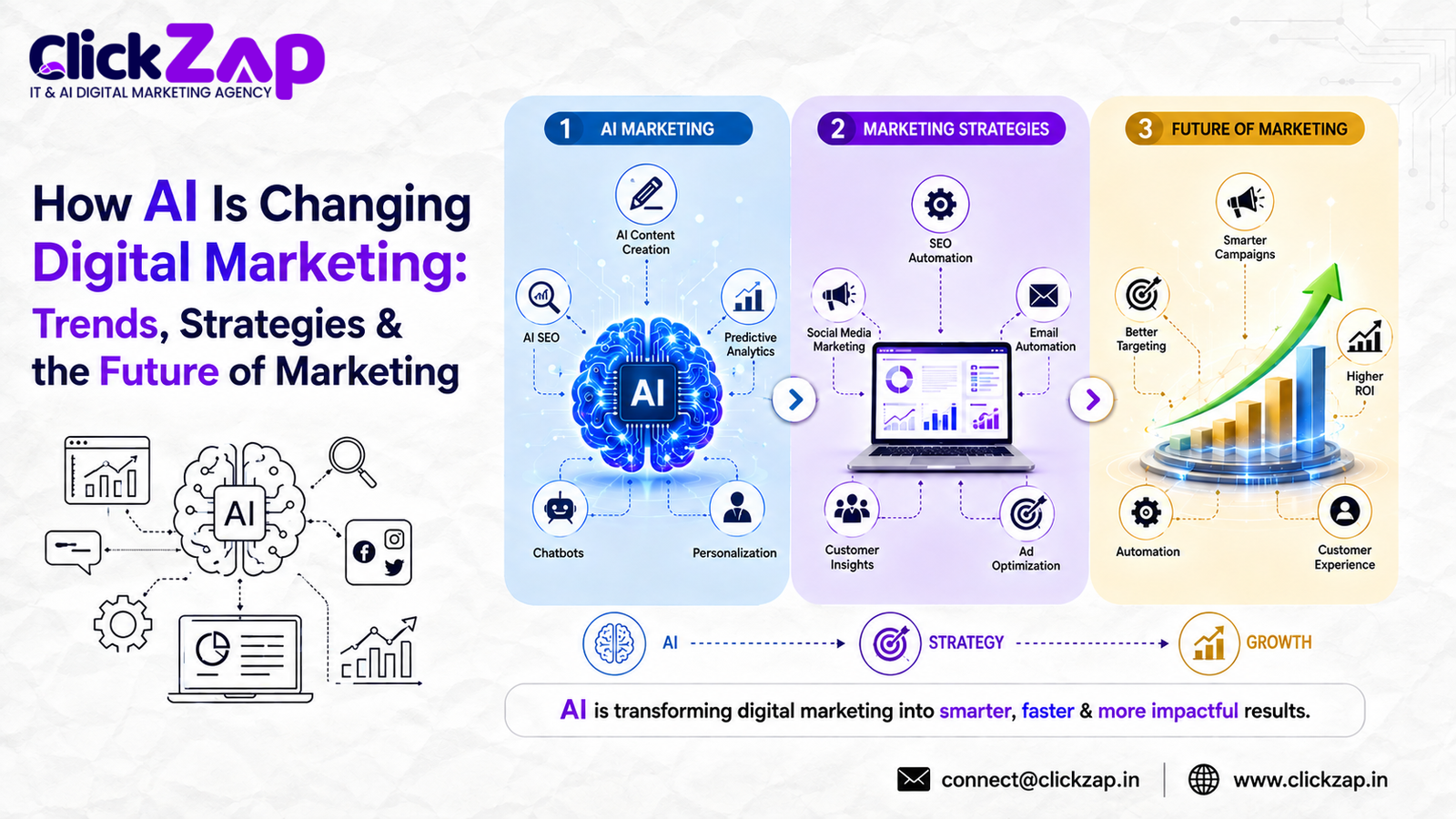
How AI Is Changing Digital Marketing
Five years ago, “AI in marketing” meant a chatbot that could barely answer a customer’s question. Today, it means tools that write ad copy, predict which customers are about to churn, optimize bidding in real time, and draft an entire content calendar before your morning coffee gets cold. That’s how AI is changing digital marketing, quietly, quickly, and across nearly every function at once.
That shift hasn’t happened quietly. Business owners, marketing managers, and startup founders across India including right here in Hyderabad are asking the same question: how is AI changing digital marketing, and what does it actually mean for my business?
The honest answer is: a lot, and not always in the ways people expect. AI isn’t replacing marketing strategy, it’s changing how that strategy gets executed. It’s reshaping SEO, content creation, advertising, personalization, analytics, automation, and lead generation, often all at once, inside the same campaign.
This guide breaks down how AI is changing digital marketing in practical terms, what’s actually happening, which strategies are worth adopting, what risks to watch for, and how businesses can prepare for what comes next.
What Is AI in Digital Marketing?
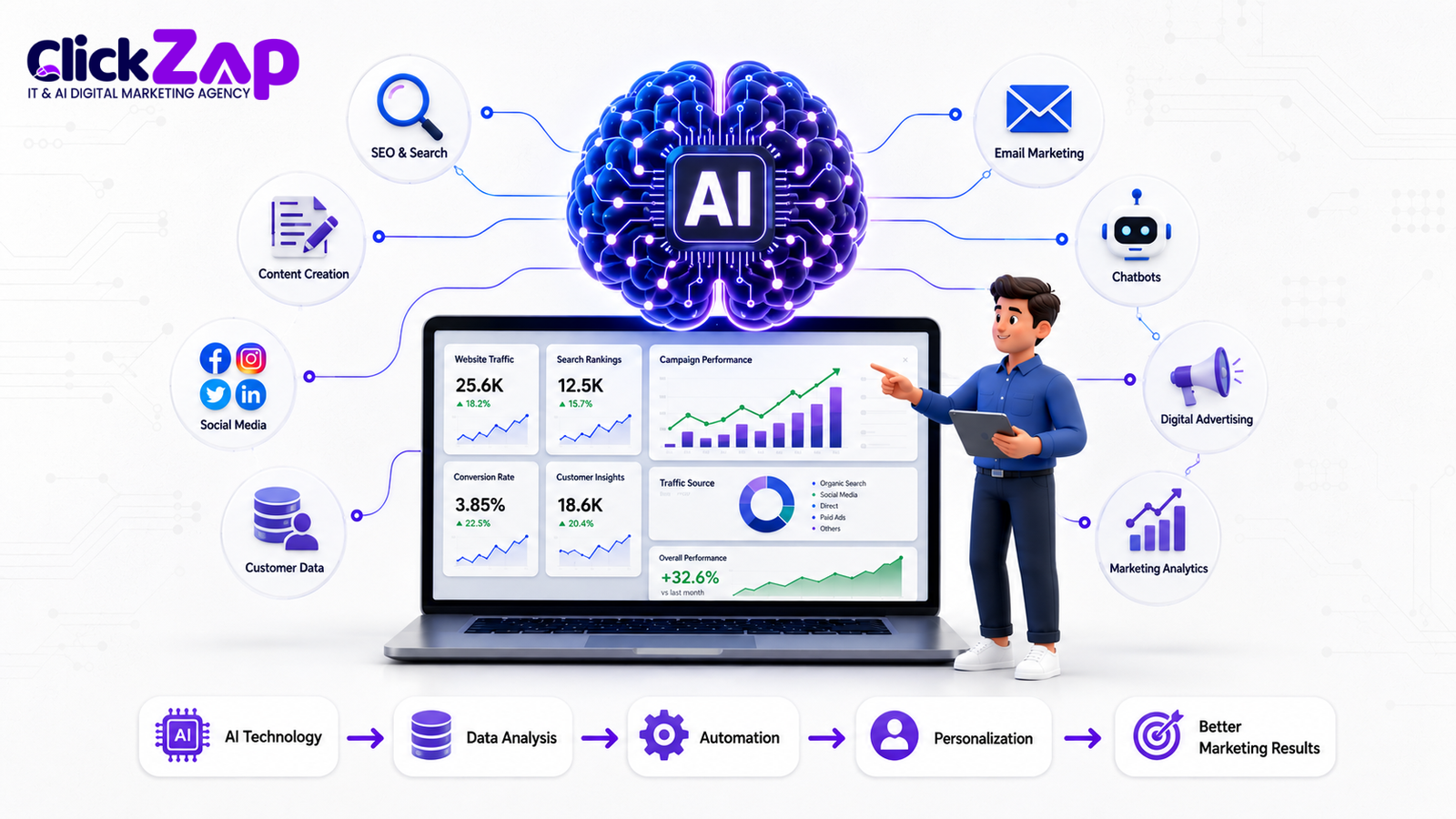
At its core, artificial intelligence in marketing means using software that can learn from data and make decisions or predictions without being explicitly programmed for every scenario. That’s a mouthful, so here’s the plain language version: instead of a marketer manually sorting through spreadsheets to spot patterns, AI tools do it in seconds and often catch patterns a human would miss.
A few technologies sit underneath most AI marketing tools:
- Machine learning — systems that improve at a task the more data they process.
- Natural language processing (NLP) — the technology that lets software understand and generate human language, used in chatbots, content tools, and sentiment analysis.
- Generative AI — tools like ChatGPT that can produce text, images, or ideas based on a prompt.
- Predictive analytics — using historical data to forecast future outcomes, such as which customers are likely to buy again.
In practice, this looks like: a machine learning model deciding which ad to show which user, an NLP powered chatbot answering a website visitor’s question at 11 PM, or a predictive analytics tool flagging that a customer is likely to churn before they actually do.
How AI Is Changing Digital Marketing
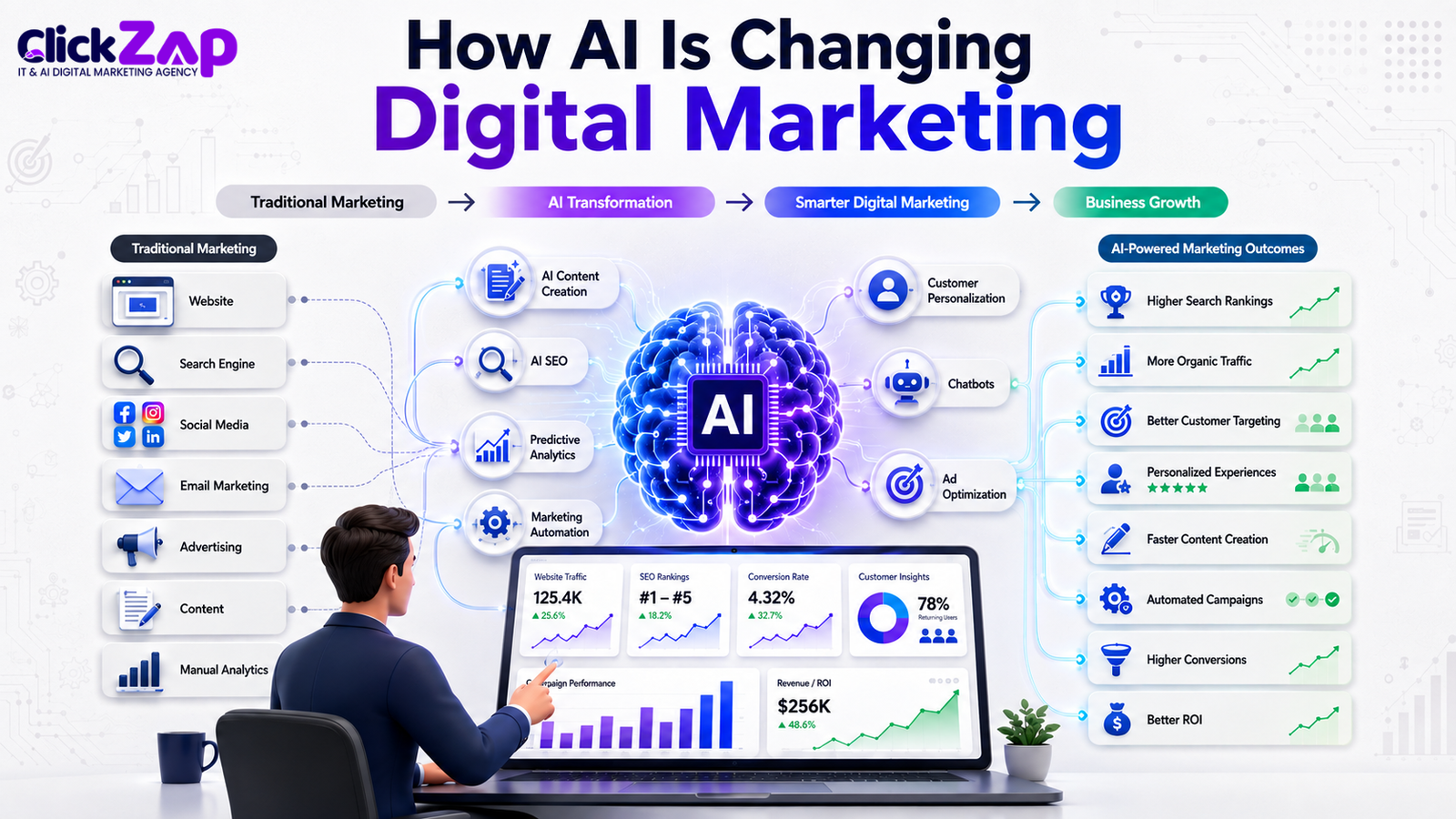
The clearest way to understand how AI is changing digital marketing is to look at where it’s showing up inside real campaigns.
AI-Powered Customer Personalization
AI can analyze browsing behavior, purchase history, and engagement patterns to tailor what each customer sees, product recommendations, email content, or on site messaging without a marketer manually segmenting every audience by hand.
AI Content Creation
Generative AI tools help marketers draft blog outlines, ad copy variations, and social captions faster. The best teams use AI for the first draft and heavy lifting, then rely on human editors for accuracy, brand voice, and originality.
AI SEO
AI tools now assist with keyword research, content gap analysis, and technical SEO audits, helping marketers understand search intent and competitive gaps faster than manual research alone.
AI-Powered Advertising
Platforms like Google Ads and Meta Ads use machine learning to optimize bidding, targeting, and creative testing in real time, adjusting campaigns based on performance signals as they come in.
AI Marketing Automation
Automation platforms use AI to trigger the right message at the right time: a welcome email, a cart abandonment reminder, a re-engagement campaign based on user behavior rather than a fixed schedule.
AI Lead Generation
AI can score leads based on how likely they are to convert, helping sales teams prioritize outreach instead of treating every lead the same way.
Conversational AI and Intelligent Chatbots
Chatbots powered by NLP handle common customer questions instantly, freeing up support and sales teams for more complex conversations.
Customer Behavior Analysis
AI tools process large volumes of website and app data to identify patterns where users drop off, what content keeps them engaged, and what typically precedes a purchase.
Predictive Analytics
Rather than just reporting what happened, predictive analytics tools forecast what’s likely to happen next, such as seasonal demand shifts or which products are trending toward a sales spike.
AI-Powered Marketing Analytics
Tools connected to platforms like Google Analytics can now surface insights automatically, flagging anomalies or opportunities marketers might otherwise take days to notice.
AI Marketing Trends in 2026
Several trends are shaping how marketing teams are using AI this year:
- Generative AI adoption is maturing; teams are moving from experimentation to structured workflows for content and creative production.
- AI powered search is changing how content gets discovered, with Google AI Overviews summarizing answers directly in search results.
- AI assisted SEO is becoming standard, with marketers using AI to speed up research while still relying on human judgment for strategy.
- Answer focused content is gaining importance, since AI driven search tools favor clear, direct answers over vague or overly promotional copy.
- Hyper personalization is extending beyond email into ads, website experiences, and product recommendations.
- Predictive customer insights are being used earlier in the funnel, not just for retention but for identifying high intent prospects.
- Marketing automation is becoming more behavior triggered rather than calendar triggered.
- Conversational AI is expanding beyond basic FAQ bots into more capable sales and support assistants.
- AI powered advertising continues to shift more optimization decisions to the platforms themselves, with marketers focusing more on strategy and creative input.
- AI driven analytics and automated content workflows are helping smaller teams do more without proportionally larger headcount.
AI Digital Marketing Strategies Businesses Should Use
Knowing the trends is one thing, implementing them is another. Here are practical AI digital marketing strategies worth adopting.
AI Powered SEO Strategy
What it is: Using AI tools to speed up keyword research, content gap analysis, and on page optimization.
How AI helps: It processes large datasets, search volumes, competitor rankings, related queries far faster than manual research.
Business benefit: Faster content planning and a clearer view of what’s actually worth targeting.
Example: A Hyderabad based IT services firm could use AI assisted keyword research to find long tail queries like “cloud migration consultants for SMEs” that a manual search might overlook.
AI Content Marketing Strategy
What it is: Using AI to support ideation, drafting, and repurposing content across formats.
How AI helps: Speeds up first drafts and helps identify content gaps based on what’s ranking.
Business benefit: More consistent publishing without sacrificing quality, as long as human editing stays in the loop.
Example: A single long form blog post can be repurposed into LinkedIn posts, an email newsletter, and short social captions with AI assistance, then refined by a human editor.
AI Customer Segmentation
What it is: Grouping customers based on behavior, not just demographics.
How AI helps: Identifies patterns across purchase history, engagement, and browsing behavior that manual segmentation would miss.
Business benefit: More relevant messaging for each segment, which typically improves engagement.
Example: A manufacturing B2B company could segment leads by engagement level and industry vertical to tailor follow up content.
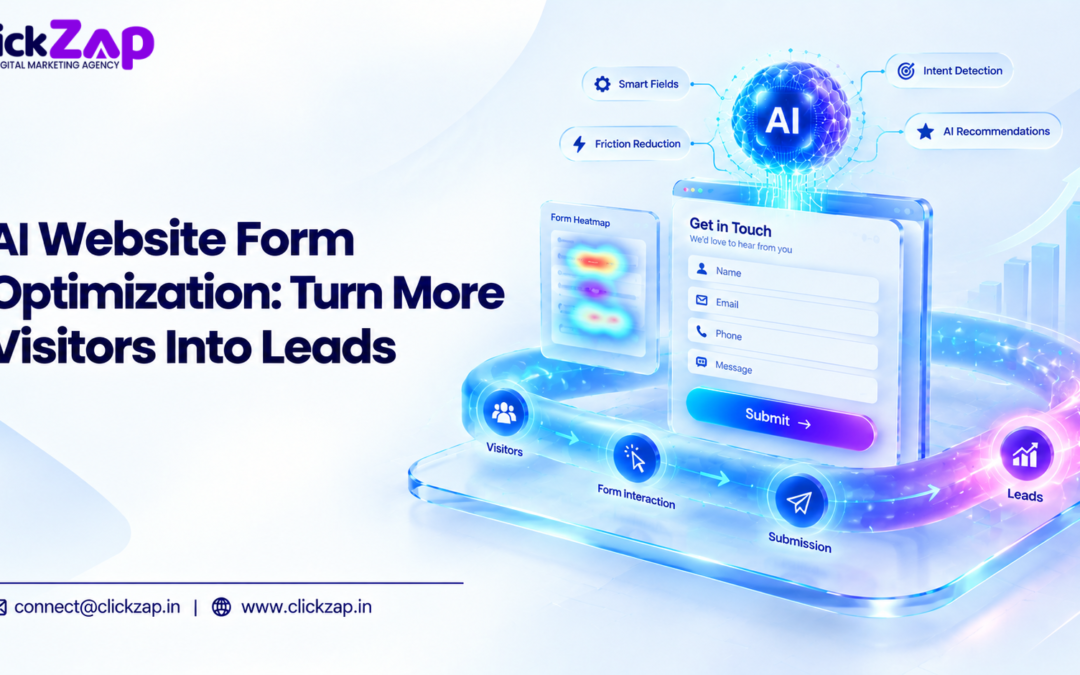
AI Lead Generation
What it is: Using predictive scoring to prioritize which leads are worth pursuing first.
How AI helps: Analyzes behavioral signals page visits, email opens, form fills to rank leads by likelihood to convert.
Business benefit: Sales teams spend time where it counts instead of working every lead equally.
Personalized Email Marketing
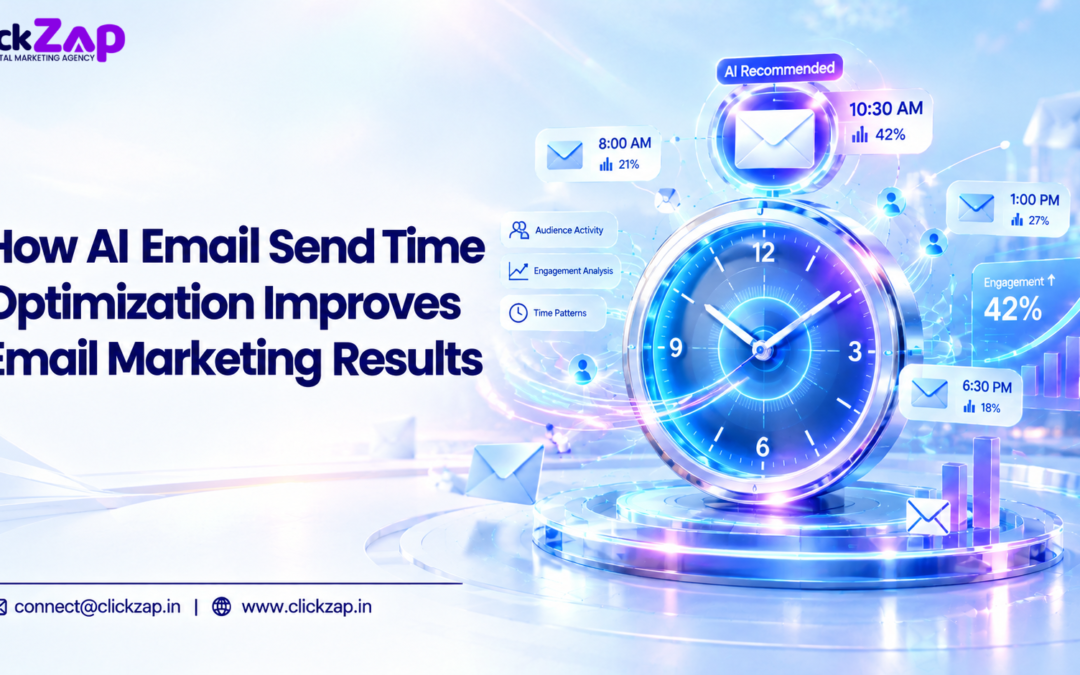
What it is: Tailoring email content and sending times based on individual behavior.
How AI helps: Automates dynamic content blocks and optimal send time predictions.
Business benefit: Higher engagement compared to generic, one size fits all email blasts.
AI-Assisted Paid Advertising
What it is: Letting machine learning optimize targeting, bidding, and creative rotation within Google Ads and Meta Ads.
How AI helps: Continuously tests and adjusts based on real time performance data.
Business benefit: Better use of ad budget, particularly for businesses without a large in house media team.
Predictive Analytics
What it is: Using historical data to forecast future customer behavior or demand.
How AI helps: Surfaces patterns across large datasets that would take a human analyst far longer to find.
Business benefit: More proactive planning for inventory, campaigns, or staffing instead of reactive decision making.
Chatbots and Conversational Marketing
What it is: Using AI driven chat tools to engage website visitors in real time.
How AI helps: Answers common questions instantly and routes complex queries to a human.
Business benefit: Faster response times, which often directly affects conversion rates.
Marketing Automation
What it is: Automating repetitive marketing tasks, email sequences, lead nurturing, retargeting based on triggers.
How AI helps: Adds intelligence to automation, so triggers are based on behavior rather than fixed timelines.
Business benefit: Consistent follow up without manual effort for every single lead.
Benefits of AI in Digital Marketing
When implemented thoughtfully, AI offers real, measurable advantages:
- Saves time on repetitive research and reporting tasks.
- Reduces repetitive work, freeing marketers for strategic thinking.
- Improves personalization at a scale manual segmentation can’t match.
- Supports faster decision making with real time data processing.
- Improves marketing efficiency across content, ads, and analytics.
- Helps identify customer behavior patterns that might otherwise go unnoticed.
- Supports lead generation through smarter scoring and prioritization.
- Improves campaign optimization with continuous, real time adjustments.
- Enables data driven marketing decisions instead of guesswork.
- Can improve ROI but only when paired with clear strategy and human oversight, not used as a shortcut around planning.
AI in SEO: How Search Optimization Is Evolving
SEO has always evolved alongside search engine algorithms, and AI is accelerating that evolution.
AI-Assisted Keyword Research
Tools like Semrush and Ahrefs already use AI driven features to surface keyword opportunities, search volume trends, and competitive gaps faster than manual research.
Search Intent Analysis
AI helps marketers understand not just what people search for, but why a query is informational, navigational, or transactional which shapes what kind of content should be created.
Content Optimization
AI tools can flag missing topics, suggest structural improvements, and highlight readability issues, though final editorial judgment should stay with a human writer.
Competitor Analysis
AI speeds up the process of identifying what’s working for competitors, which pages rank, what content gaps exist, and where opportunities lie.
Technical SEO Analysis
AI-assisted audits can flag site speed issues, crawlability problems, and broken links faster than manual site crawls.
AI Overviews and AI-Powered Search Experiences
Google AI Overviews now summarize answers directly within search results for many queries. This means content increasingly needs to answer questions clearly and directly, not just rank for a keyword.
Why Original, Trustworthy Content Still Matters
AI can speed up research and drafting, but search engines and readers still reward original insight, accurate information, and genuine expertise. Human review, fact checking, and a real point of view remain essential, especially as more AI generated content floods the web.
AI in Content Marketing
AI is changing how content gets planned and produced, though the core principles of good content haven’t changed.
Automated Content Ideation
AI tools can generate topic ideas based on search trends, competitor content, and audience questions, giving content teams a faster starting point.
Content Briefs
AI can help assemble structured briefs, target keywords, related questions, suggested headings that speed up the planning phase.
Draft Creation
Generative AI tools can produce first drafts quickly, which human writers then refine for accuracy, voice, and depth.
Content Personalization
AI can help tailor content recommendations on a website based on a visitor’s past behavior or interests.
Content Optimization
AI tools can suggest readability improvements, keyword placement, and structural changes to align content with search intent.
Content Repurposing
A single article can be quickly reshaped into social posts, email content, or video scripts with AI assistance.
Human Editing and Fact Checking
None of the above replaces the need for human review. AI generated drafts can contain factual errors or generic phrasing, so editorial oversight is essential to protect both accuracy and brand voice.
AI in Digital Advertising
Digital advertising has become one of the most AI driven corners of marketing.
Within Google Ads and Meta Ads, machine learning now plays a role in nearly every stage of a campaign:
- Audience targeting — algorithms identify likely converters based on behavioral signals, often beyond what manual targeting could achieve.
- Campaign optimization — bids and budgets adjust automatically based on real-time performance.
- Ad creative testing — platforms test multiple creative variations to identify what resonates with different audience segments.
- Bid optimization — AI adjusts bids in real time based on the likelihood of conversion.
- Conversion prediction — models estimate which users are most likely to complete a desired action.
- Budget allocation — spend shifts automatically toward better performing campaigns or ad sets.
- Performance analysis — automated reporting surfaces trends and anomalies faster than manual review.
For businesses, this means advertising strategy is shifting: less time spent on manual bid adjustments, more time spent on creative quality, audience strategy, and interpreting what the AI-driven results are actually telling you.
AI Marketing Tools Businesses Can Use
| Tool | Main Use | How Marketers Can Use It |
| ChatGPT | Generative AI for text and ideas | Drafting content, brainstorming campaign angles, summarizing research |
| Google Gemini | Generative AI integrated with Google’s ecosystem | Content ideation and research assistance |
| Microsoft Copilot | AI assistant integrated into Microsoft tools | Drafting reports, summarizing data, assisting with presentations |
| Google Ads | Paid advertising platform with AI-driven optimization | Running and optimizing search and display ad campaigns |
| Meta Ads | Paid advertising platform for Facebook and Instagram | Audience targeting and creative testing for social ads |
| Google Analytics | Web analytics platform | Tracking traffic, behavior, and conversion data |
| HubSpot | CRM and marketing automation platform | Managing leads, automating email sequences, tracking the customer journey |
| Salesforce | CRM platform | Managing customer relationships and sales pipelines with AI-assisted insights |
| Semrush | SEO and competitive research platform | Keyword research, site audits, competitor analysis |
| Ahrefs | SEO and backlink analysis platform | Keyword research, backlink audits, content gap analysis |
AI vs Traditional Digital Marketing
| Area | Traditional Approach | AI-Enhanced Approach |
| Data analysis | Manual review of reports and spreadsheets | Automated pattern detection across large datasets |
| Content creation | Fully manual writing and editing | AI assisted drafting with human refinement |
| Personalization | Broad audience segments | Behavior based, individualized targeting |
| Advertising | Manual bid and budget adjustments | Real time, algorithm driven optimization |
| SEO | Manual keyword research and audits | AI assisted research with human strategic input |
| Customer support | Human only response handling | Chatbots handling routine queries, humans handling complex ones |
| Lead generation | Equal effort across all leads | Predictive scoring to prioritize high intent leads |
| Campaign optimization | Periodic manual review | Continuous, real time adjustment |
| Reporting | Manually compiled reports | Automated dashboards with flagged insights |
It’s worth being clear: AI does not replace traditional marketing, it enhances human led processes. Strategy, brand judgment, creativity, and relationship building are still fundamentally human skills. AI simply removes friction from the repetitive parts of the work.
Challenges and Risks of Using AI in Digital Marketing
AI adoption isn’t without trade offs, and businesses should go in with realistic expectations.
- Data privacy — AI tools often rely on customer data, so businesses need clear policies on what’s collected and how it’s used.
- Accuracy and hallucinations — generative AI tools can produce confident sounding but incorrect information, which makes fact checking essential.
- Over-automation — automating too much, too fast, can make marketing feel impersonal or robotic.
- Lack of originality — AI generated content that isn’t edited carefully can sound generic or repetitive.
- Brand voice issues — AI tools don’t inherently understand a brand’s tone without clear guidance and review.
- Bias — AI models can reflect biases present in their training data, which can affect targeting or messaging.
- Dependence on AI tools — over reliance can weaken a team’s own strategic and creative skills over time.
- Human oversight — every AI output, from ad copy to analytics insights, needs a human check before it goes live.
- Ethical marketing — transparency with customers about AI use, especially chatbots and automated communications, builds trust rather than eroding it.
Practical recommendations: set clear data privacy policies, always fact check AI generated content, keep a human editor in every content workflow, monitor AI driven campaigns regularly rather than setting and forgetting them, and be transparent with customers when they’re interacting with AI.
The Future of AI in Digital Marketing
Rather than making bold predictions, it’s more useful to look at realistic directions AI is likely to push marketing over the coming years:
- Search will likely continue shifting toward AI summarized answers, making clear, well structured content more important than ever.
- SEO will probably keep blending traditional ranking factors with optimization for AI driven search experiences.
- Advertising will likely see even more automated optimization, with marketers focusing more on strategy and creative direction.
- Content will probably rely more on AI for speed, with human expertise remaining the differentiator for quality and trust.
- Customer experience may become more personalized by default, as AI driven personalization becomes standard rather than exceptional.
- Marketing automation will likely become more sophisticated in recognizing behavioral triggers.
- Analytics will probably continue moving toward automated insight generation rather than manual reporting.
- Personalization will likely extend further across channels, websites, email, ads, and support in a more connected way.
- Lead generation will probably rely more heavily on predictive scoring as the technology matures.
How Businesses Can Prepare for the Future of AI Marketing
- Audit existing marketing processes to identify where AI could genuinely add value.
- Identify repetitive tasks reporting, basic content drafts, lead sorting that are good candidates for automation.
- Select suitable AI tools based on actual business needs, not hype.
- Build AI assisted workflows that combine automation with human review at key checkpoints.
- Train marketing teams on how to use AI tools effectively and responsibly.
- Protect customer data with clear policies and secure systems.
- Measure performance consistently to know what’s actually working.
- Maintain human oversight across every AI assisted process.
- Continuously test and optimize, since AI tools and best practices are still evolving quickly.
Why Choose ClickZap IT for AI Powered Digital Marketing?
Understanding how AI is changing digital marketing is one thing. Implementing it well without losing strategy, brand voice, or customer trust in the process is another.
ClickZap IT is a digital marketing agency in Hyderabad that works with businesses looking to combine AI powered tools with sound marketing strategy. As an AI digital marketing agency in Hyderabad, ClickZap IT helps businesses apply AI thoughtfully across SEO, content marketing, Google Ads, social media marketing, lead generation, marketing automation, and analytics, always with human strategy driving the decisions.
Whether you’re a startup exploring AI marketing services for Indian businesses for the first time, or an established company looking to refine your digital marketing services in Hyderabad with AI assisted workflows, the goal is the same: using AI to remove friction and inefficiency, not to replace the judgment and creativity that actually build a brand.
If you’re ready to explore how AI powered digital marketing strategies could work for your business, get in touch with ClickZap IT to talk through what makes sense for your goals and budget.
Frequently Asked Questions
How is AI changing digital marketing?
AI is changing digital marketing by automating repetitive tasks, improving personalization, speeding up content and SEO research, optimizing advertising in real time, and enabling faster, data driven decisions across nearly every marketing function.
What are the benefits of AI in digital marketing?
Key benefits include time savings, improved personalization, faster decision making, better campaign optimization, and stronger lead prioritization though results depend on how thoughtfully AI is implemented.
How is AI used in SEO?
AI supports SEO through faster keyword research, search intent analysis, content optimization suggestions, competitor analysis, and technical audits, while human strategy and content quality remain essential.
How can AI improve digital advertising?
AI improves digital advertising by optimizing targeting, bidding, and creative testing in real time on platforms like Google Ads and Meta Ads, helping businesses get more value from their ad spend.
Will AI replace digital marketers?
Unlikely in the near term. AI handles repetitive and data heavy tasks well, but strategy, creativity, brand judgment, and relationship building still require human expertise.
What are the best AI marketing tools?
Commonly used tools include ChatGPT, Google Gemini, Microsoft Copilot, Google Ads, Meta Ads, Google Analytics, HubSpot, Salesforce, Semrush, and Ahrefs. The right choice depends on a business’s specific needs.
How can small businesses use AI marketing?
Small businesses can start with accessible tools for content drafting, basic automation, and AI assisted advertising, focusing first on the repetitive tasks that consume the most time.
What is the future of AI in digital marketing?
The future likely involves deeper integration of AI across search, advertising, content, and personalization with human oversight remaining essential for strategy, accuracy, and brand trust.
Conclusion
AI is changing digital marketing in ways that touch nearly every function of SEO, content, advertising, personalization, automation, and lead generation. But the businesses seeing real results aren’t the ones handing everything over to AI. They’re the ones using it to remove friction from repetitive work while keeping strategy, creativity, and human judgment firmly in the driver’s seat.
That balanced AI powered efficiency paired with human expertise is what will define effective marketing going forward. Businesses that get this combination right will be better positioned to build marketing systems that are both efficient and genuinely customer focused.
Also Read: SEO Audit: A Complete Guide to Improve Search Engine Rankings
0 Comments