
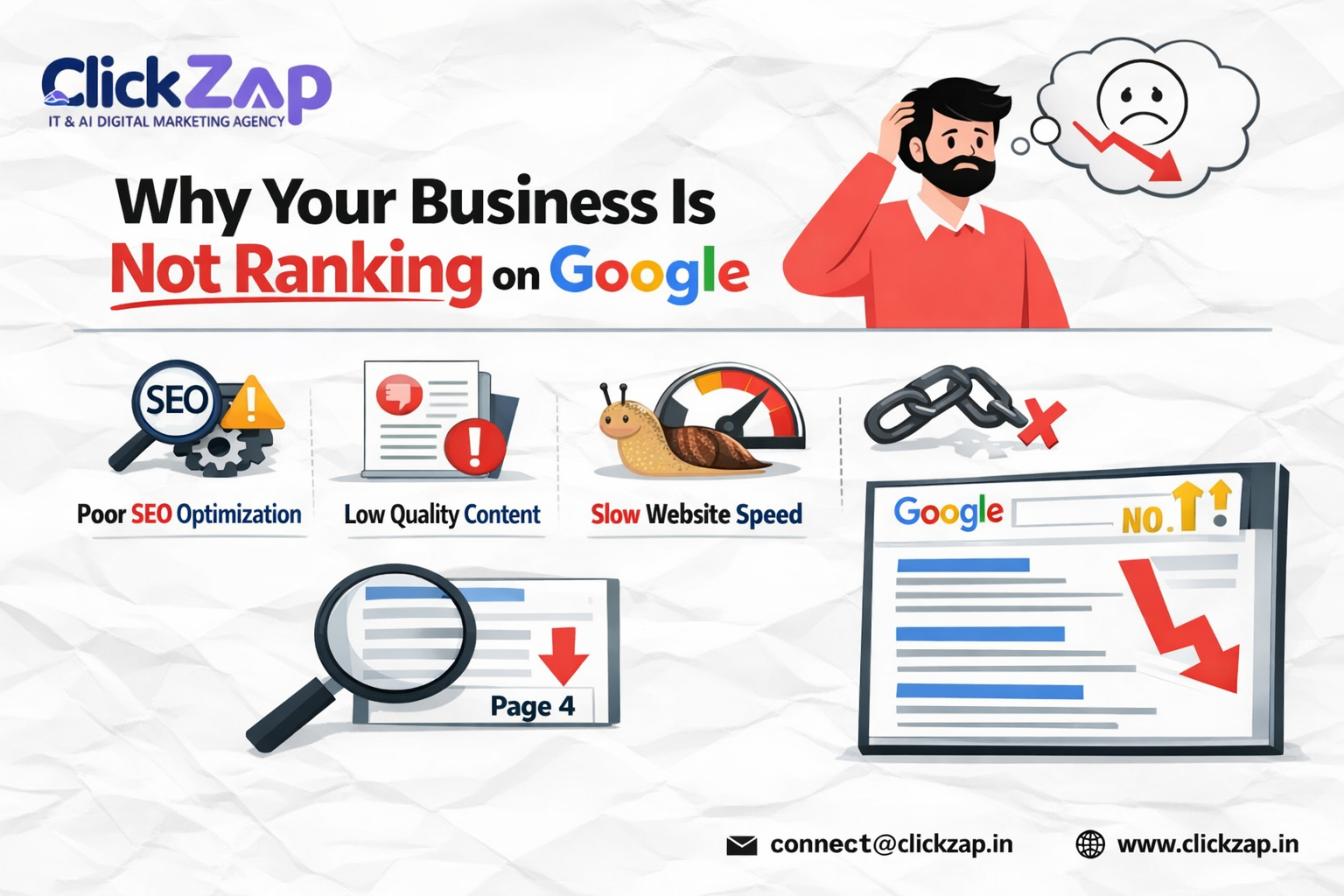
If you’re wondering why your business is not ranking on Google, the issue is more common than you think. Many businesses launch a website expecting immediate visibility, but without a proper SEO strategy, strong content, and technical optimisation, rankings remain low. Simply having a website is not enough. Google evaluates relevance, authority, user experience, and performance before deciding where your site appears.
Businesses often struggle with visibility due to poor keyword targeting, weak on-page SEO, slow website speed, a lack of backlinks, or a lack of local optimisation. Even small technical errors can prevent search engines from properly crawling and indexing your pages.
In this guide, you’ll understand the key reasons behind low rankings and learn practical steps to improve your search visibility, drive organic traffic, and build long-term growth for your business.
Why Business Is Not Ranking on Google
If your business is not ranking on Google, it’s usually due to poor keyword targeting, weak on-page SEO, or technical issues like slow speed and indexing errors. Low-quality content and a lack of backlinks can also reduce your visibility in search results. Strong competition may further push your website down the rankings. To improve, focus on proper SEO strategy, quality content, and consistent optimisation.
How Google Decides Rankings
To understand why your website is not performing well in search results, it’s important first to understand how Google ranking actually works. Google follows a structured process to discover, store, and position web pages in search results. This process happens in three main stages: crawling, indexing, and ranking. If any of these stages are disrupted or poorly optimised, your website’s visibility can suffer.
Crawling
Crawling is the first step in the process. Google uses automated bots, often called “spiders” or “Googlebot,” to scan the internet and discover new or updated web pages. These bots move from one page to another using links.
If your website has:
- Broken links
- Poor internal linking
- Blocked pages in robots.txt
- No sitemap
Google may struggle to crawl your content properly. When pages are not crawled effectively, they cannot move to the next stage, indexing.
Indexing
After crawling, Google analyses the content of your page and stores it in its database. This is called indexing. During this stage, Google tries to understand what your page is about by analysing keywords, headings, content quality, images, and structure.
If your website has:
- Thin or duplicate content
- No clear keyword focus
- “Noindex” tags
- Poor content structure
Your pages may not get indexed properly. If a page is not indexed, it will not appear in search results at all.
Ranking Factors That Matter Most
Once a page is indexed, Google decides where it should appear in search results. This is the ranking stage. Google evaluates hundreds of factors, but some of the most important include:
- Content relevance to the search query
- Keyword optimisation
- Website authority and backlinks
- Page speed and mobile-friendliness
- User experience and engagement signals
- Internal linking structure
Websites that provide high-quality, helpful content and strong technical performance are more likely to rank higher. Understanding these core ranking factors helps you identify what needs improvement and where your SEO strategy should focus.
Common Reasons Why Your Business Is Not Ranking on Google
If you’re trying to understand why your website is not appearing on the first page of search results, the answer usually lies in multiple SEO gaps rather than a single issue. Below are the most common reasons businesses struggle with rankings.
Poor Keyword Targeting
One major reason why your business is not ranking on Google is poor keyword targeting. Keyword strategy is the foundation of SEO. If you target the wrong keywords, your website may never reach the right audience.
Targeting high competition keywords
Many businesses try to rank for broad terms like “digital marketing” or “SEO services.” These keywords are highly competitive and dominated by established brands. Without strong authority, it becomes extremely difficult to compete.
Ignoring search intent
Search intent refers to what users actually want when they type a query. If your content does not match their intent informational, transactional, or navigational, Google will prioritise other pages that better satisfy the query.
Not using long-tail keywords.
Long-tail keywords are more specific phrases with lower competition. They often bring highly targeted traffic and better conversion rates. Ignoring them limits your ranking opportunities.
Weak On-Page SEO
Even strong content can underperform if it isn’t properly optimised.
Missing title tags & meta descriptions
Title tags help search engines understand your page topic, while meta descriptions improve click-through rates. Missing or poorly written metadata weakens visibility.
Improper heading structure
Using multiple H1S or unorganised headings confuses search engines and reduces content clarity.
No internal linking
Internal links help distribute authority across your website and guide users to related content. Without them, pages remain isolated.
Thin or Low-Quality Content
Content quality plays a major role in rankings.
Short content
Very brief pages often lack depth and fail to answer user queries fully.
Duplicate content
Copied or repeated content reduces credibility and can harm rankings.
No value-driven information
Content should solve problems, provide insights, and offer actionable solutions. Generic information rarely ranks well.
Technical SEO Issues
Technical problems can also explain why your business is not ranking on Google. Issues such as:
Slow website speed
Slow-loading pages increase bounce rates and negatively affect rankings.
Broken links
Broken internal or external links create a poor user experience and crawl issues.
Crawl errors
If search engines cannot properly access your pages, they may not index them correctly.
Mobile optimization issues
Since Google uses mobile-first indexing, a poorly optimised mobile website will struggle to rank.
Lack of Quality Backlinks
Backlinks act as trust signals.
Low domain authority
Websites with few authoritative backlinks often struggle to compete.
No link-building strategy
Without outreach, guest posting, or digital PR efforts, authority growth remains slow.
Competitor comparison
If competitors have stronger backlink profiles, Google sees them as more credible sources.
Poor User Experience (UX)
User behaviour influences rankings.
High bounce rate
If visitors leave quickly, Google may interpret your page as irrelevant.
Slow loading pages
Speed impacts both user satisfaction and search performance.
Poor navigation
Confusing menus and unclear structure reduce engagement and conversions.
Ignoring Local SEO
Local businesses must optimise for location-based searches.
Unoptimized Google Business Profile
An incomplete profile reduces local visibility.
Inconsistent NAP details
Your Name, Address, and Phone number must be consistent across all platforms.
No local keywords
Without location-based terms in your content, ranking for local searches becomes difficult.
Addressing these issues systematically can significantly improve your website’s search performance and overall online visibility.
Steps to Fix Your Business Ranking on Google
Once you understand what’s holding your website back, the next step is taking structured action. Improving search visibility is not about quick tricks; it requires a systematic approach that combines technical optimisation, content strategy, and authority building. Below are the key steps to fix ranking issues effectively.
Conduct a Complete SEO Audit
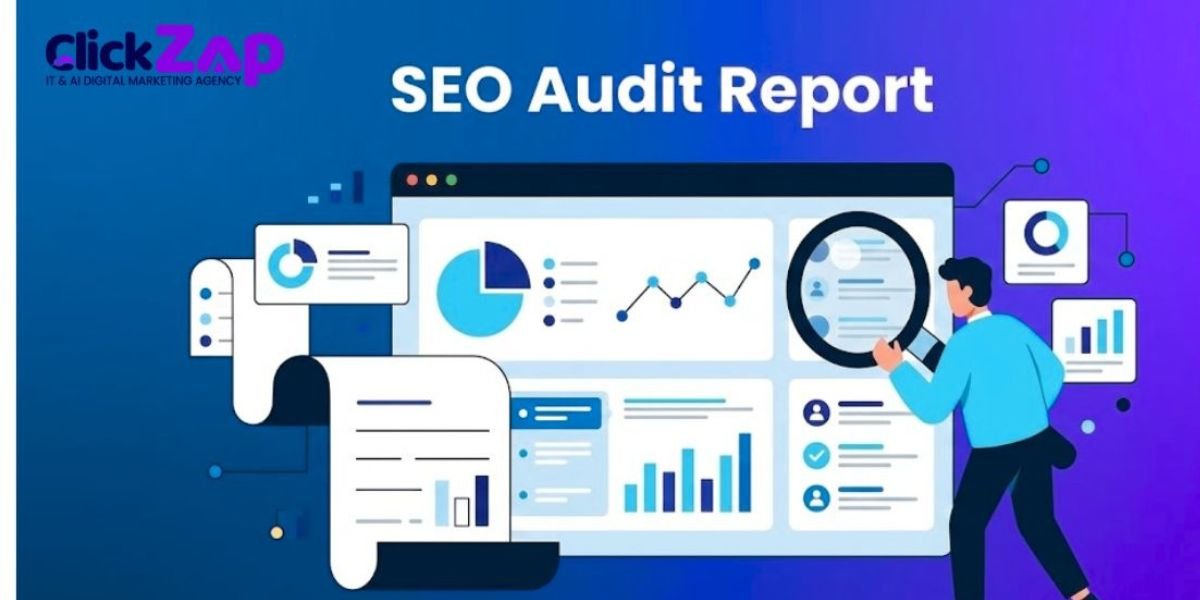
An SEO audit is the foundation of improvement. Before making changes, you need to identify what’s actually wrong.
A complete audit should analyse:
- Technical errors (crawl issues, indexing problems)
- Website speed and mobile responsiveness
- On-page SEO elements
- Content gaps
- Backlink profile
- Competitor performance
An audit helps you prioritise actions rather than guess. Fixing technical and structural issues first ensures that future optimisation efforts deliver better results.
Improve Keyword Strategy
If your keyword targeting is weak, rankings will remain stagnant. A strong keyword strategy focuses on relevance, competition level, and user intent.
To improve your strategy:
- Target long-tail, specific phrases
- Focus on keywords aligned with buyer intent
- Analyse competitor keywords
- Build topic clusters instead of isolated pages
Avoid targeting only broad, high-competition keywords. Instead, choose terms that your website realistically has the authority to rank for.
Optimise On-Page SEO Properly
On-page optimisation tells search engines exactly what your content is about. Even high-quality content can underperform without proper optimisation.
Key elements to improve:
- Use one clear H1 per page
- Optimise title tags and meta descriptions
- Include keywords naturally in headings and content
- Add internal links to related pages
- Optimise images with descriptive alt text
Proper on-page SEO improves both visibility and user experience.
Create High-Quality, Consistent Content
Content drives organic growth. Publishing valuable, structured, and informative content helps build authority over time.
Focus on:
- In-depth blog posts
- Optimised service pages
- FAQs and guides
- Case studies
- Regular updates to old content
Consistency is critical. Instead of posting randomly, follow a structured content calendar aligned with your keyword strategy.
Build Authority with Backlinks
Backlinks remain one of the strongest ranking signals. When reputable websites link to your content, it increases your credibility in Google’s eyes.
Effective strategies include:
- Guest blogging
- Industry collaborations
- Digital PR outreach
- Directory submissions
- Creating link-worthy content assets
Quality matters more than quantity. A few authoritative backlinks are more powerful than many low-quality ones.
Track and Measure Performance
SEO is not a one-time effort. Continuous monitoring ensures long-term success.
Track:
- Organic traffic growth
- Keyword rankings
- Click-through rates
- Bounce rate and engagement
- Conversion metrics
How Long Does It Take to Fix Rankings?
One of the most common questions businesses ask is how long it takes to see SEO results. The honest answer is: it depends. SEO is not an instant marketing strategy; it’s a long-term investment that builds momentum over time. Factors like industry competition, website age, technical health, content quality, and backlink strength all influence how quickly improvements appear.
Realistic SEO Timelines

In most cases, noticeable improvements begin within 3 to 6 months of consistent optimisation. However, the timeline can vary:
- Month 1–2: Technical fixes, on-page improvements, and keyword restructuring. You may not see major ranking changes yet, but the foundation is being built.
- Months 3–4: Some keywords may start moving upward. Organic traffic may gradually increase.
- Months 5–6: Stronger ranking improvements become visible, especially for medium and low-competition keywords.
- 6–12 Months: Sustainable traffic growth and improved domain authority, particularly in competitive industries.
New websites may take longer to build authority, while established websites with strong foundations may see faster gains.
Short-Term vs Long-Term Expectations
Short-term SEO efforts focus on fixing technical errors, improving existing pages, and targeting low-competition keywords. These actions can bring gradual traffic increases.
Long-term SEO focuses on building authority, creating consistent content, earning quality backlinks, and strengthening brand credibility. This is where real growth happens, generating steady organic leads without relying heavily on paid ads.
The key is consistency. Businesses that treat SEO as an ongoing strategy rather than a one-time task are the ones that achieve lasting search visibility and measurable growth.
Why Professional SEO Strategy Matters
SEO has become more complex than ever. With frequent algorithm updates, increasing competition, and evolving user behaviour, managing search optimisation without expertise can slow down your growth. While basic improvements can be handled internally, achieving consistent and competitive rankings often requires professional strategy and execution.
Benefits of Hiring an Agency
Hiring an SEO agency provides structured planning, advanced tools, and industry expertise that are difficult to replicate in-house.
Key benefits include:
- Strategic Keyword Research: Agencies identify high-impact keywords based on search intent, competition, and conversion potential.
- Technical Expertise: From crawl errors to site speed optimisation, technical issues are identified and resolved efficiently.
- Content Strategy Development: Instead of random blog posting, agencies build topic clusters and structured content calendars.
- Backlink Building: Professional outreach helps earn high-quality backlinks that improve domain authority.
- Performance Tracking: Agencies continuously monitor analytics, rankings, and engagement metrics to refine strategies.
- Time and Resource Efficiency: Your internal team can focus on core business operations while experts handle optimisation.
How ClickZap IT Approaches SEO Strategy
At ClickZap IT, SEO is not treated as a one-time service but as a long-term growth strategy. Our approach focuses on building a strong digital foundation before scaling traffic.
Our process includes:
- Comprehensive SEO Audit: Identifying technical gaps, content weaknesses, and competitor opportunities.
- Customised Keyword Strategy: Targeting relevant, achievable keywords aligned with business goals.
- On-Page and Technical Optimisation: Ensuring proper site structure, metadata, internal linking, and performance improvements.
- Content-Driven Growth: Creating high-quality, value-focused content designed to attract and convert users.
- Authority Building: Implementing ethical backlink strategies to strengthen domain credibility.
- Continuous Monitoring & Optimisation: Tracking progress and adapting strategies based on real-time data.
ClickZap IT’s goal is not just to increase rankings, but to drive qualified traffic that converts into leads and measurable business growth.
Frequently Asked Questions
1. Why is my website not ranking on Google?
Your site may have weak keyword targeting, technical issues, or low authority.
Google prioritises relevant, optimised, and trustworthy websites.
2. How long does it take to improve rankings?
SEO usually shows results within 3–6 months.
Competitive industries may require longer, consistent efforts.
3. Does website speed affect SEO?
Yes, page speed is a ranking factor.
Slow websites increase bounce rates and reduce user engagement.
4. Are backlinks still important in 2026?
Yes, high-quality backlinks remain a major ranking factor.
They signal trust and authority to search engines.
5. Can I rank without technical SEO?
It’s very difficult in competitive markets.
Technical optimisation ensures search engines can crawl and index your site properly.
6. Should I hire an SEO agency?
If growth is slow or competition is high, expert help can accelerate results.
Agencies provide strategy, execution, and ongoing performance tracking.
Final Thoughts
If you’re consistently asking yourself why your business is not ranking on Google, the issue is rarely accidental. It usually involves keyword strategy gaps, weak content, technical errors, or a lack of authority.
With a structured SEO plan, consistent effort, and expert execution, rankings can improve significantly.
At ClickZap IT, we specialise in identifying exactly why your business is not ranking on Google and implementing strategies that drive measurable growth.


0 Comments