
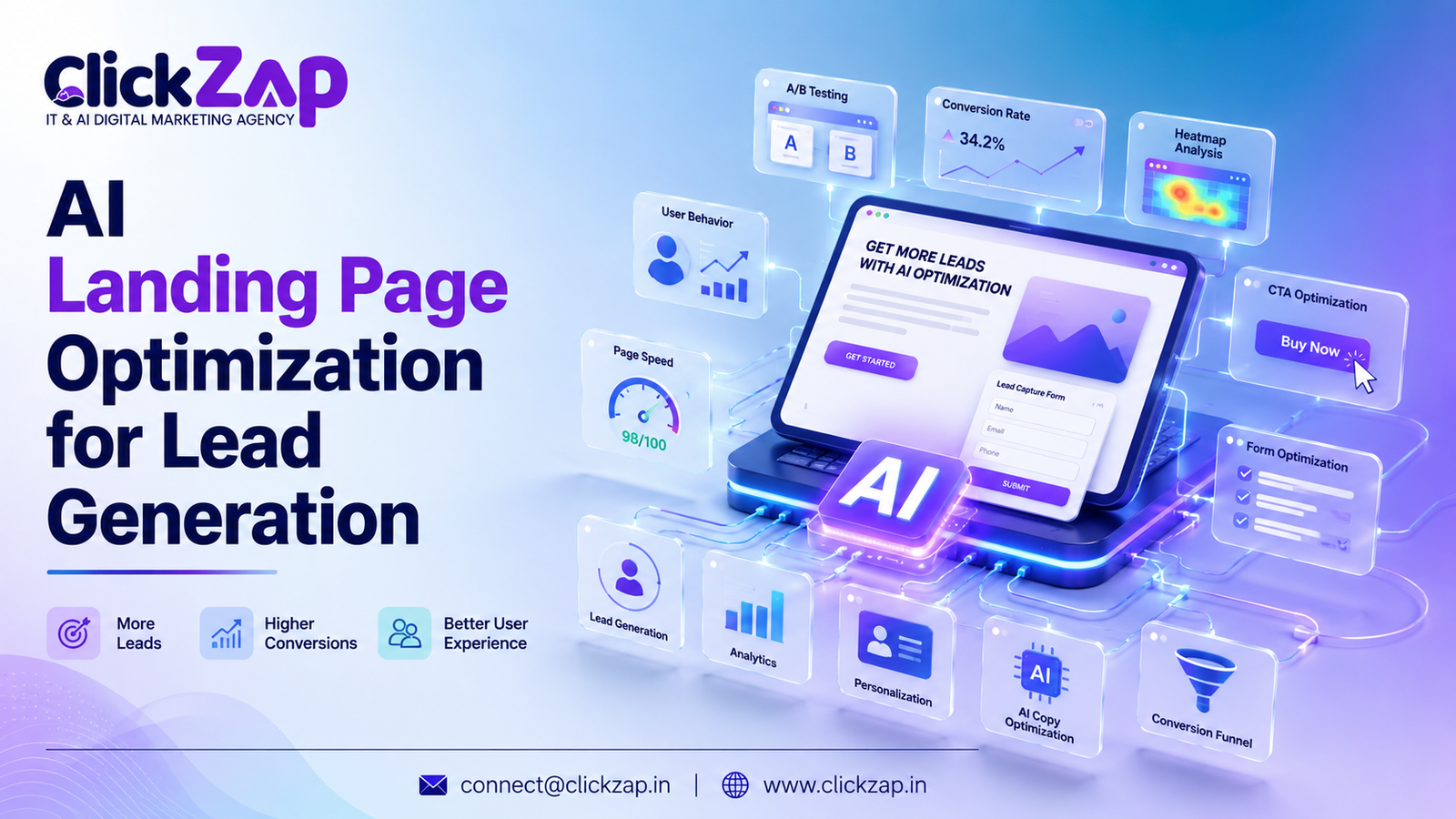
AI Landing Page Optimization for Lead Generation
Most businesses have a landing page that gets traffic but doesn’t convert. Visitors arrive, scroll for a few seconds, and leave without filling out a form or booking a call. Traditional optimization methods manual A/B tests, guesswork-driven copy edits, and slow reporting cycles can take weeks to show meaningful results. This is where AI Landing Page Optimization for Lead Generation changes the game, replacing sluggish, manual guesswork with faster, data-backed decisions that turn more visitors into leads.
This is where AI landing page optimization for lead generation changes the equation. By analyzing visitor behavior, personalizing content, and automating experimentation, artificial intelligence helps marketers find conversion opportunities faster and with more precision. In this guide, you’ll learn what AI landing page optimization actually means, how it works, which tools support it, and how to apply it step by step to generate more qualified leads.
What Is AI Landing Page Optimization?
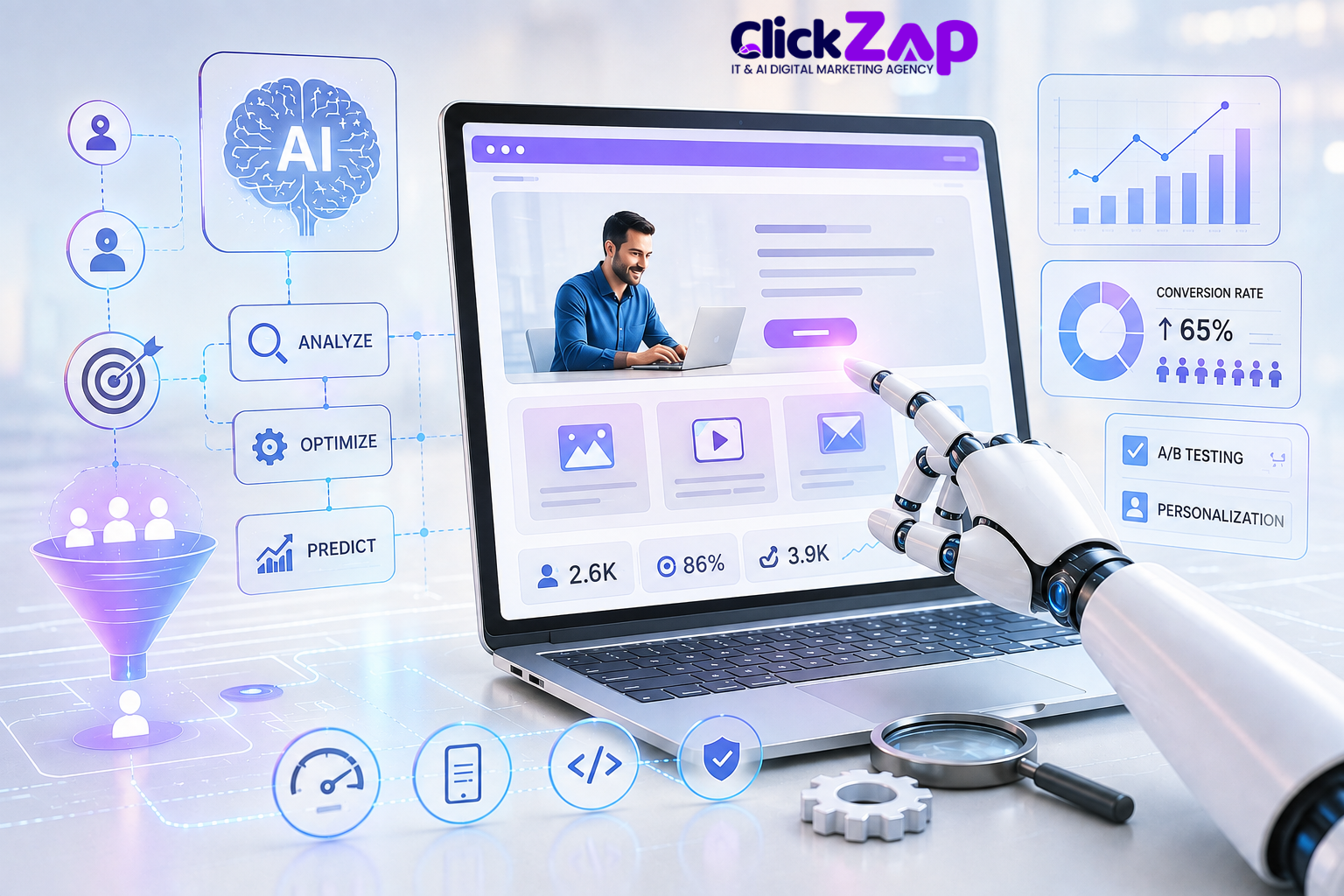
AI landing page optimization uses machine learning and behavioral data to identify conversion opportunities and personalize experiences for different visitors. Instead of relying purely on intuition, marketers use AI powered personalization, predictive analytics, and automated testing to improve landing page performance systematically.
At its core, AI landing page optimization works by collecting data on how real visitors interact with a page where they click, how far they scroll, and where they drop off. Machine learning models process this data to detect patterns that would be difficult for a human analyst to spot manually, especially across large volumes of traffic.
Once patterns are identified, AI can suggest or automatically apply changes: adjusting a headline, reordering page sections, or serving a different call to action to a specific audience segment. This creates a feedback loop where the page continuously learns from visitor behavior and adapts.
The result is a more data driven approach to conversion rate optimization (CRO) , one where decisions about landing page user experience are grounded in actual behavior rather than assumptions.
Why Is AI Landing Page Optimization Important for Lead Generation?
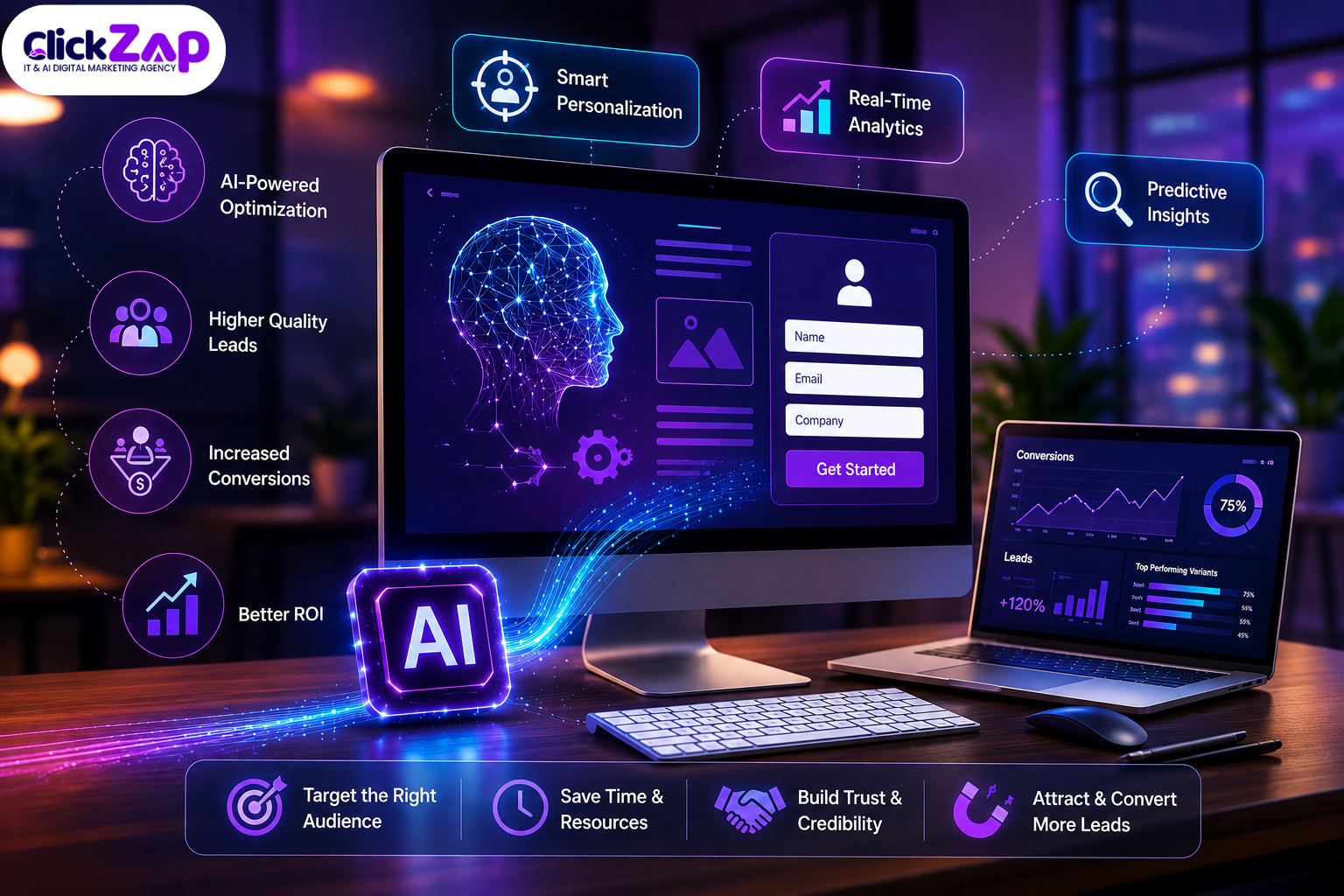
Lead generation depends on getting the right message in front of the right visitor at the right moment. AI landing page optimization for lead generation supports this by making landing pages more responsive to real audience behavior, rather than treating every visitor the same way.
This matters because a landing page built for a broad audience often underperforms for specific segments. AI tools for lead generation help close that gap by identifying what different visitor groups respond to and adjusting the experience accordingly.
Key benefits include:
- Improved lead quality : better targeting and messaging attract visitors more likely to convert into genuine prospects
- Higher conversion rates :data backed changes to headlines, CTAs, and layout can reduce friction
- Smarter personalization : content adapts based on visitor source, behavior, or intent signals
- Better user experience : pages become easier to navigate based on how people actually use them
- Faster testing cycles : AI assisted A/B testing automation shortens the time needed to find winning variations
- Greater marketing efficiency : teams spend less time manually analyzing data and more time acting on insights
How Does AI Improve Landing Page Conversion Rates?
AI contributes to conversion rate optimization in several interconnected ways from analyzing visitor behavior to predicting outcomes and automating tests. Below are the primary mechanisms.
AI Powered Visitor Behavior Analysis
Understanding what visitors actually do on a landing page is the foundation of any optimization effort. AI assisted analytics tools track scroll depth, click patterns, session activity, and full user journeys to reveal where visitors engage and where they lose interest.
This kind of website visitor tracking often uses heatmaps and session recordings alongside standard analytics. Tools like Hotjar and Microsoft Clarity capture how users move through a page, while Google Analytics provides broader data on traffic sources, bounce rate, and on-page behavior at scale.
By combining these data sources, marketers can pinpoint drop off points for example, a form that causes abandonment or a CTA that visitors consistently ignore. These insights form the basis for targeted, evidence based improvements rather than broad guesses.
AI Powered Personalization
Personalized landing page content adjusts what a visitor sees based on signals such as location, referral source, device type, or past behavior. AI powered personalization can dynamically change headlines, offers, images, product recommendations, and calls to action to better match visitor intent.
For example, a SaaS company might show a “Start Your Free Trial” CTA to visitors arriving from a product comparison search, while showing “Book a Demo” to visitors coming from an enterprise focused LinkedIn ad. The underlying page structure stays the same, but the messaging adapts to context.
This kind of dynamic personalization can improve relevance without requiring marketers to manually build dozens of separate landing pages.
AI and Predictive Analytics
Predictive analytics for marketing uses historical and real time data to estimate the likelihood of future outcomes, such as whether a visitor is likely to convert. In the context of landing pages, this means AI models can help estimate visitor intent, conversion probability, and lead quality before a form is even submitted.
Marketers can use these predictive insights to prioritize follow up on higher probability leads, adjust bidding strategies in ad platforms, or trigger different on-page experiences for visitors who show stronger buying signals. This doesn’t guarantee outcomes, but it can help teams focus effort where it’s most likely to pay off.
AI Powered A/B Testing Automation
Traditional A/B testing requires marketers to manually create variations, split traffic, and wait for statistically significant results, a process that can take weeks per test. AI assisted testing changes this by automating variant creation, analyzing results faster, and running multiple experiments simultaneously through multivariate testing.
Platforms like Optimizely and VWO offer AI assisted experimentation features that help identify winning variations more efficiently and support more dynamic audience segmentation during testing.
|
Traditional A/B Testing |
AI Assisted Testing |
|
Manual setup |
Automated insights |
|
Limited variations |
Multiple variations |
|
Slower analysis |
Faster pattern detection |
|
Static segmentation |
Dynamic audience analysis |
Key Elements AI Can Optimize on a Landing Page
Headlines and Value Propositions
AI-assisted messaging analysis can compare how different headline variations perform across audience segments, helping marketers identify which value propositions resonate most clearly with specific visitor types.
Calls to Action
Call to action optimization involves testing CTA wording, placement, and design to reduce friction and encourage action. AI tools can help identify which combinations perform best, and can support contextual CTAs that change based on where a visitor is in the funnel.
Landing Page Copy
AI can assist with generating copy variations for testing, though human review remains essential for accuracy and brand voice. This includes personalization by audience segment and benefit focused messaging that speaks directly to a visitor’s likely pain points. Generative AI tools, including those built on models from companies like OpenAI, are increasingly used to draft initial copy variations that marketers then refine and test.
Images and Visual Elements
Visitor behavior data such as which images visitors linger on or scroll past can inform which visuals are more likely to support conversion, rather than simply looking appealing.
Forms
Form optimization is one of the highest impact areas for lead generation. AI-informed analysis can guide decisions on the number of fields, form placement, and progressive profiling, based on where drop off actually occurs.
Page Layout
Behavioral data on scroll depth and click patterns can reveal whether key content is positioned too far down the page or whether important sections are being missed entirely, informing layout adjustments.
Step by Step Process to Optimize Landing Pages with AI
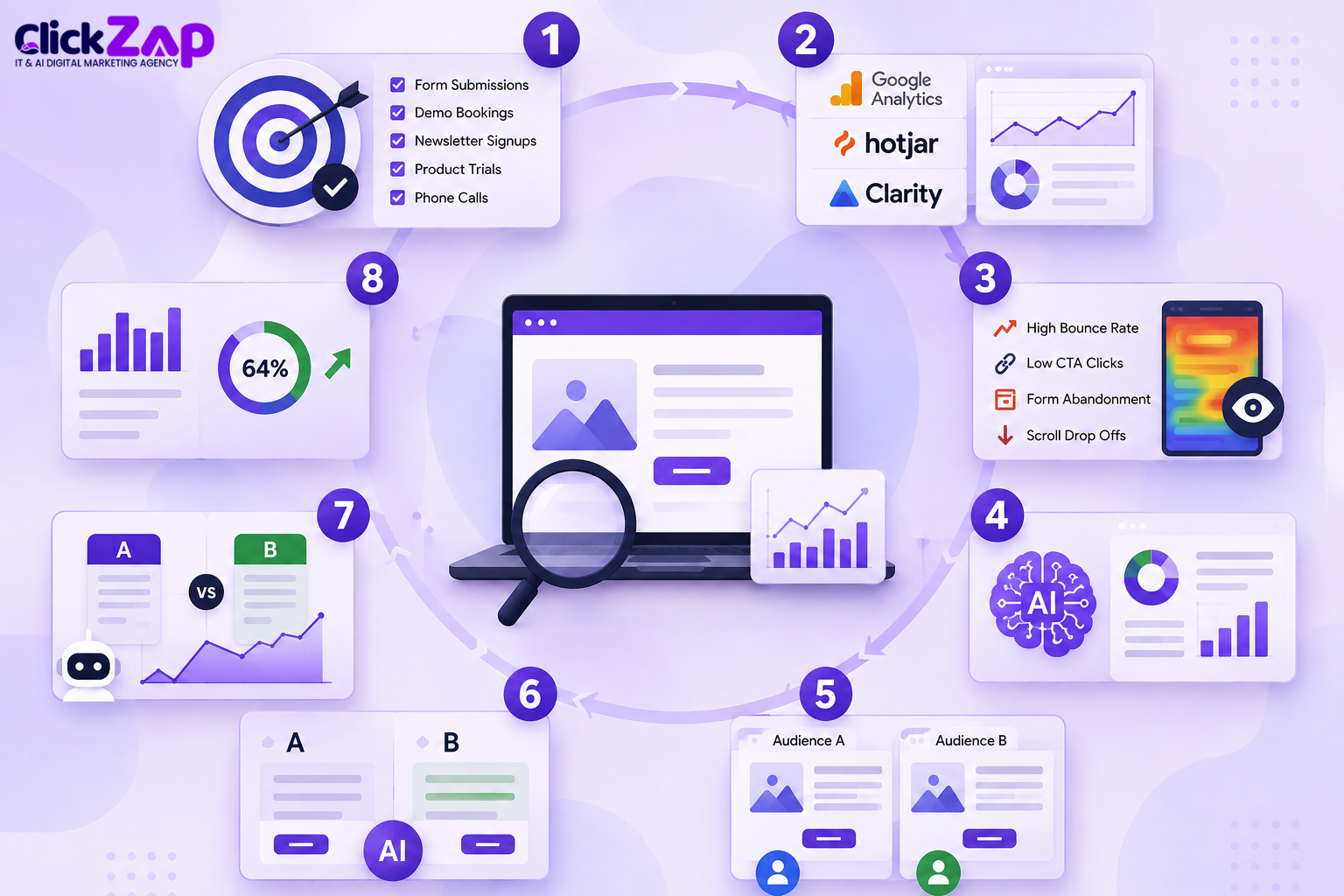
Step 1: Define Your Conversion Goal
Decide what “success” looks like form submissions, demo bookings, newsletter signups, product trials, or phone calls. Every optimization decision should tie back to this goal.
Step 2: Collect Landing Page Data
Set up website visitor tracking through tools such as Google Analytics, Hotjar, and Microsoft Clarity to gather behavioral and quantitative data before making changes.
Step 3: Identify Conversion Bottlenecks
Look for signals like high bounce rate, low CTA clicks, form abandonment, and scroll drop offs that indicate where visitors disengage.
Step 4: Use AI to Analyze Visitor Behavior
Apply AI powered analysis to surface patterns across large data sets patterns that would take much longer to identify manually.
Step 5: Create Personalized Content Variations
Build content variations for key audience segments, such as different traffic sources or buyer personas, to test more relevant messaging.
Step 6: Optimize CTAs and Landing Page Copy
Use AI assisted content testing to refine wording, placement, and structure based on early performance signals.
Step 7: Run AI Assisted Experiments
Launch A/B testing automation to evaluate variations faster and with more statistical rigor than manual testing typically allows.
Step 8: Monitor Results and Continuously Improve
Treat optimization as an ongoing process. Landing page performance analysis should continue even after a “winning” variation is found, since audience behavior evolves over time.
Best AI Tools for Landing Page Optimization
The right landing page AI optimization tools depend on your goals, budget, and existing marketing stack. The table below summarizes commonly used platforms. Features, pricing, and AI capabilities change frequently, so verify current details directly with each provider before choosing a platform.
|
Tool |
Primary Use |
Best For |
Key AI/Optimization Capability |
|
Unbounce |
AI landing page builder |
Small to mid size marketing teams |
AI assisted copy and page suggestions |
|
HubSpot |
Marketing and CRM platform |
Businesses wanting integrated CRM and landing pages |
Behavioral tracking tied to CRM data |
|
Optimizely |
Experimentation platform |
Larger teams running complex tests |
AI assisted experimentation and analysis |
|
VWO |
Conversion optimization suite |
Mid size to enterprise CRO teams |
Testing automation and behavior insights |
|
Instapage |
Landing page builder |
Marketers needing fast page creation |
Page personalization and A/B testing |
|
Hotjar |
Behavior analytics |
Understanding user experience issues |
Heatmaps and session recordings |
|
Microsoft Clarity |
Behavior analytics |
Free, detailed session insights |
Heatmaps, scroll tracking, rage click detection |
|
Google Analytics |
Web analytics |
Nearly all businesses |
Traffic, conversion, and audience reporting |
Best Strategies for AI Landing Page Optimization for Lead Generation
- Segment visitors based on behavior
Group visitors by source, device, or intent signals. This works because a single generic page rarely serves every audience equally well for instance, showing different messaging to organic search visitors versus paid ad traffic. - Personalize landing page experiences
Use AI powered personalization to adjust headlines or offers by segment. A B2B SaaS company might personalize its hero section based on industry, referencing the visitor’s sector directly. - Optimize CTAs using performance data
Test CTA wording and placement based on actual click data rather than assumptions, since even small wording changes can affect click through rates. - Use AI assisted copy variations
Generate multiple copy options for testing, then have a human reviewer refine tone and accuracy before publishing. - Reduce form friction
Shorten forms or use progressive profiling to lower abandonment, particularly for early funnel offers where visitors are less willing to share detailed information upfront. - Identify bounce rate problems
Use session recordings and analytics to understand why visitors leave quickly, which often points to slow load times or mismatched messaging. - Automate experimentation
Run multiple tests concurrently using AI assisted platforms to accelerate learning cycles. - Improve page speed and user experience
Faster loading pages typically retain more visitors, and AI performance tools can help flag technical issues affecting speed. - Connect landing page data with CRM data
Linking conversion data to CRM systems like HubSpot helps marketers understand which leads actually became customers, not just which ones filled out a form. - Continuously monitor conversion performance
Treat landing page optimization as ongoing rather than a one time project, since traffic sources and audience behavior shift over time.
Best AI Digital Marketing Agency in Hyderabad
AI Landing Page Optimization Best Practices
- Start with reliable data decisions are only as good as the data behind them
- Define one primary conversion goal per page to avoid diluted messaging
- Avoid over personalization that feels intrusive or relies on excessive tracking
- Test changes instead of assuming they will improve performance
- Protect user privacy and follow applicable data regulations when tracking behavior
- Keep pages fast, since load time directly affects bounce rate
- Focus on user intent, not just keyword matching
- Combine AI insights with human judgment AI identifies patterns, but strategy still requires marketing expertise
- Monitor conversion metrics regularly, not just at the end of a campaign
- Continuously optimize rather than treating a single successful test as a finish line
Common Mistakes to Avoid
Relying completely on AI: AI can identify patterns, but human oversight is needed to validate recommendations against brand goals and context.
Optimizing without enough data: small sample sizes can produce misleading results; wait for sufficient traffic before drawing conclusions.
Making too many changes at once: this makes it difficult to know which change actually influenced performance.
Ignoring mobile users : a large share of landing page traffic is mobile, so testing must account for that experience separately.
Overcomplicating landing pages : too many elements can distract from the primary conversion goal.
Using generic personalization : personalization that feels irrelevant or robotic can hurt trust rather than build it.
Focusing only on traffic instead of conversions : more visitors don’t help if the page still fails to convert them.
Ignoring user experience : a technically “optimized” page that frustrates visitors will underperform regardless of AI involvement.
Not validating AI generated recommendations : always test suggested changes before assuming they will work for your specific audience.
Stopping optimization after one successful test : conversion rate optimization is an ongoing discipline, not a single project.
How to Measure the Success of AI Landing Page Optimization
Measuring success requires looking beyond surface level traffic numbers and focusing on outcomes tied to actual business goals.
|
Metric |
What It Measures |
Why It Matters |
|
Landing page conversion rate |
Percentage of visitors who complete the goal action |
Core indicator of page effectiveness |
|
Cost per lead |
Marketing spend divided by leads generated |
Reflects efficiency of the campaign and page |
|
Lead quality |
How well leads match ideal customer criteria |
High volume means little without quality |
|
Bounce rate |
Percentage of visitors who leave without interacting |
Signals relevance and first impression issues |
|
CTA click through rate |
How often visitors click the primary CTA |
Shows whether messaging drives action |
|
Form completion rate |
Percentage of started forms that are submitted |
Highlights friction in the conversion process |
|
Average engagement time |
How long visitors spend on the page |
Indicates content relevance and interest |
|
Revenue or pipeline generated |
Business value tied to converted leads |
Connects marketing activity to real outcomes |
|
Conversion funnel performance |
How visitors move through each funnel stage |
Reveals where prospects drop out of the journey |
Businesses should prioritize metrics tied to meaningful outcomes like lead quality and pipeline generated over vanity metrics like raw traffic or page views alone.
The Future of AI Powered Landing Pages
AI powered landing pages are likely to keep evolving, though it’s worth approaching predictions with realistic expectations rather than overpromising specific outcomes. Some emerging areas worth watching include:
- Real time personalization that adapts content as a visitor interacts with the page, not just on page load
- AI agents for conversion optimization that can suggest or test changes with less manual setup
- Predictive lead scoring that estimates lead quality earlier in the funnel
- Automated experimentation that runs continuously in the background rather than in discrete test cycles
- Conversational landing pages that incorporate chat based interactions alongside traditional forms
- Dynamic content generation tailored to individual visitor context
- Better audience segmentation powered by richer behavioral and intent data
These trends point toward landing pages that are more adaptive, but they still depend on solid data foundations and human strategic direction to be effective.
FAQ Section
What is AI landing page optimization?
AI landing page optimization uses machine learning and behavioral data to analyze how visitors interact with a page and identify opportunities to improve conversions. It combines visitor behavior analysis, personalization, and automated testing to make data driven improvements. Rather than relying solely on manual guesswork, marketers use AI insights to prioritize changes most likely to affect performance, while still validating results through testing.
How can AI improve landing page conversion rates?
AI improves conversion rates by analyzing visitor behavior patterns, personalizing content for different audience segments, and automating A/B testing to find effective variations faster. It can also support predictive analytics to estimate conversion likelihood. These capabilities help marketers make more informed decisions about headlines, CTAs, forms, and layout, though results should always be validated through real testing rather than assumed.
Can AI help generate more leads?
AI can help generate more qualified leads by improving personalization, identifying conversion bottlenecks, and enabling faster experimentation. It can also support predictive lead scoring to help teams focus on higher probability prospects. However, AI works best alongside a clear lead generation strategy and quality traffic. It can optimize an existing funnel, but it does not replace foundational marketing strategy.
Which AI tools are best for landing page optimization?
Commonly used tools include Unbounce and Instapage for AI assisted page building, Optimizely and VWO for AI supported testing, HubSpot for integrated CRM and landing pages, and Hotjar, Microsoft Clarity, and Google Analytics for behavioral insights. The best choice depends on your budget, team size, and existing marketing stack, so compare current features directly with each provider.
Can AI automate A/B testing?
Yes, AI assisted A/B testing automation can help create variations, analyze results faster, and support multivariate testing across multiple audience segments simultaneously. This can significantly shorten testing cycles compared to fully manual approaches. That said, marketers should still review test design and results carefully to ensure statistically meaningful conclusions before rolling out changes broadly.
Conclusion
AI landing page optimization for lead generation isn’t about replacing marketing judgment, it’s about giving marketers better data, faster testing cycles, and more relevant personalization to work with. The technology can identify patterns in visitor behavior far faster than manual analysis, but the strategy behind what to test and why still requires human expertise.
Businesses that combine AI powered tools with continuous testing, careful measurement, and a genuine understanding of customer behavior tend to see steadier, more sustainable improvements in conversion performance. Treat AI as a tool that supports smarter decisions, not a shortcut that eliminates the need for strategy.
AI landing page optimization for lead generation gives businesses a faster, more precise way to understand visitor behavior and improve conversion performance but it works best when paired with clear goals, ongoing testing, and human strategic oversight. If you’re ready to turn your landing pages into a stronger lead generation asset, ClickZap IT can help you build a data driven optimization strategy tailored to your audience. Contact ClickZap IT to discuss how AI powered CRO can support your growth goals.
Also Read: How to Improve Technical SEO Using AI: A Complete Guide
0 Comments