
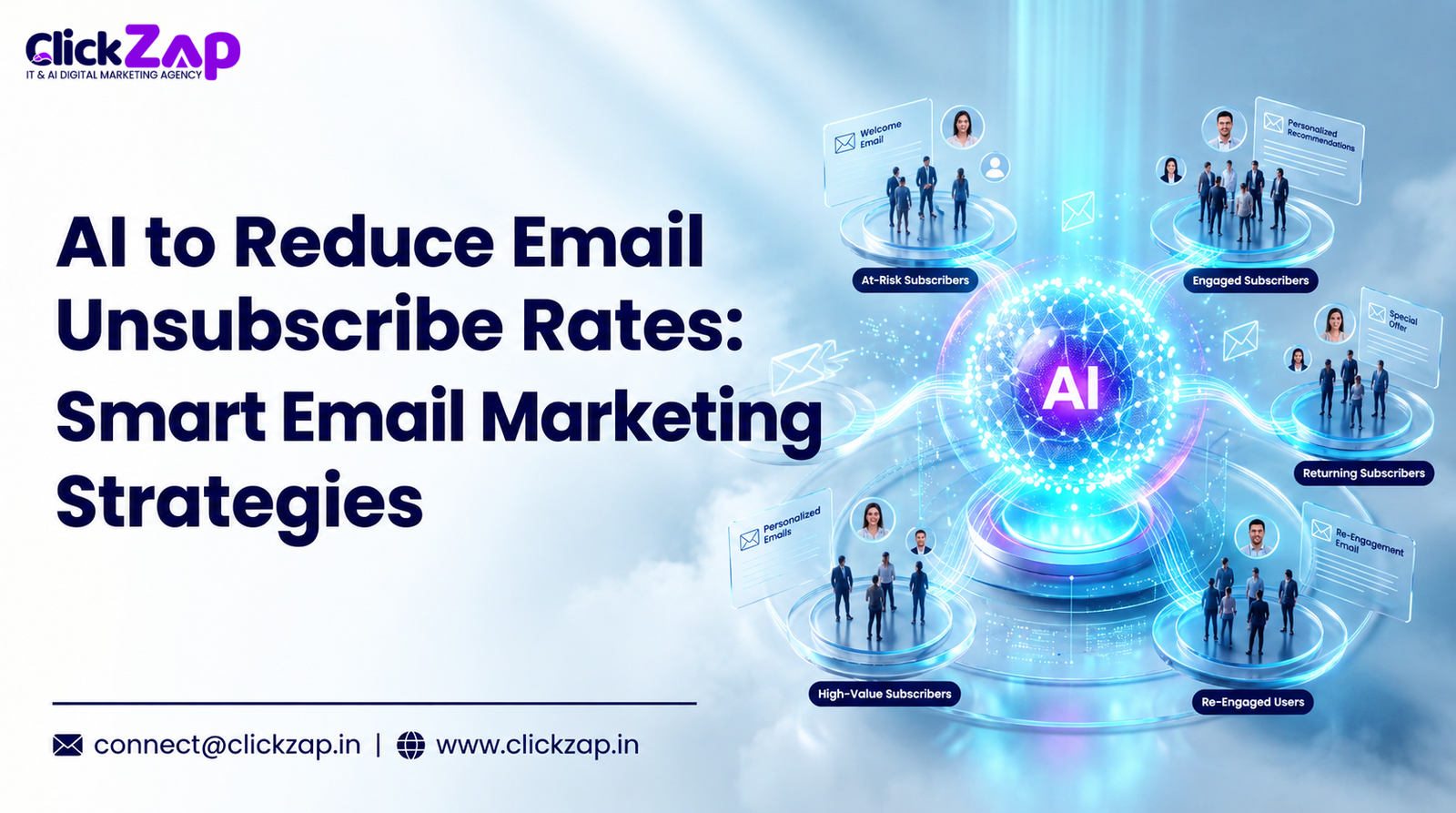
You send a big campaign. Opens look fine at first. Then the unsubscribe count jumps. This happens to almost every email marketer, and it rarely comes down to one bad email. A rising unsubscribe rate usually points to a deeper problem: irrelevant content, too many emails, weak personalization, poor audience segmentation, or a subscriber experience that feels generic. That’s why using AI to reduce email unsubscribe rates starts with fixing the cause, not just sending less.
The answer is not to send fewer emails to everyone. It is to send smarter ones. Using AI to reduce email unsubscribe rates helps you see what each subscriber wants and act on it, instead of guessing. This guide explains how, in plain language.
AI can reduce email unsubscribe rates by studying how each subscriber behaves, then adjusting what they receive. It groups people by behavior, personalizes content, picks better send times, limits email frequency, and flags subscribers who are losing interest, so marketers can step in with relevant retention campaigns before people leave.
What Is an Email Unsubscribe Rate?
The email unsubscribe rate is the percentage of recipients who opt out of your list after receiving a campaign. It tells you how many people decided your emails were no longer worth their inbox space.
Here is the formula:
Unsubscribe Rate = Number of Unsubscribes ÷ Number of Delivered Emails × 100
For example, if you deliver 10,000 emails and 50 people unsubscribe, your unsubscribe rate is 0.5%.
Marketers track this number because it works as an early warning. Opens and clicks tell you what people like. Unsubscribes tell you what pushed them away.
This metric is closely linked to three others:
- Engagement: how often subscribers open, click, reply, or buy.
- Subscriber retention: how many people stay on your list and keep engaging.
- Subscriber churn: how many people leave or go quiet over time.
When engagement drops, churn usually follows. Unsubscribes are often the last step of a decline that started weeks earlier.
One caution: not every unsubscribe is bad. If someone who never wanted your product leaves, your list gets healthier. The real problem is losing people who were interested and engaged.
Why Do People Unsubscribe From Emails?
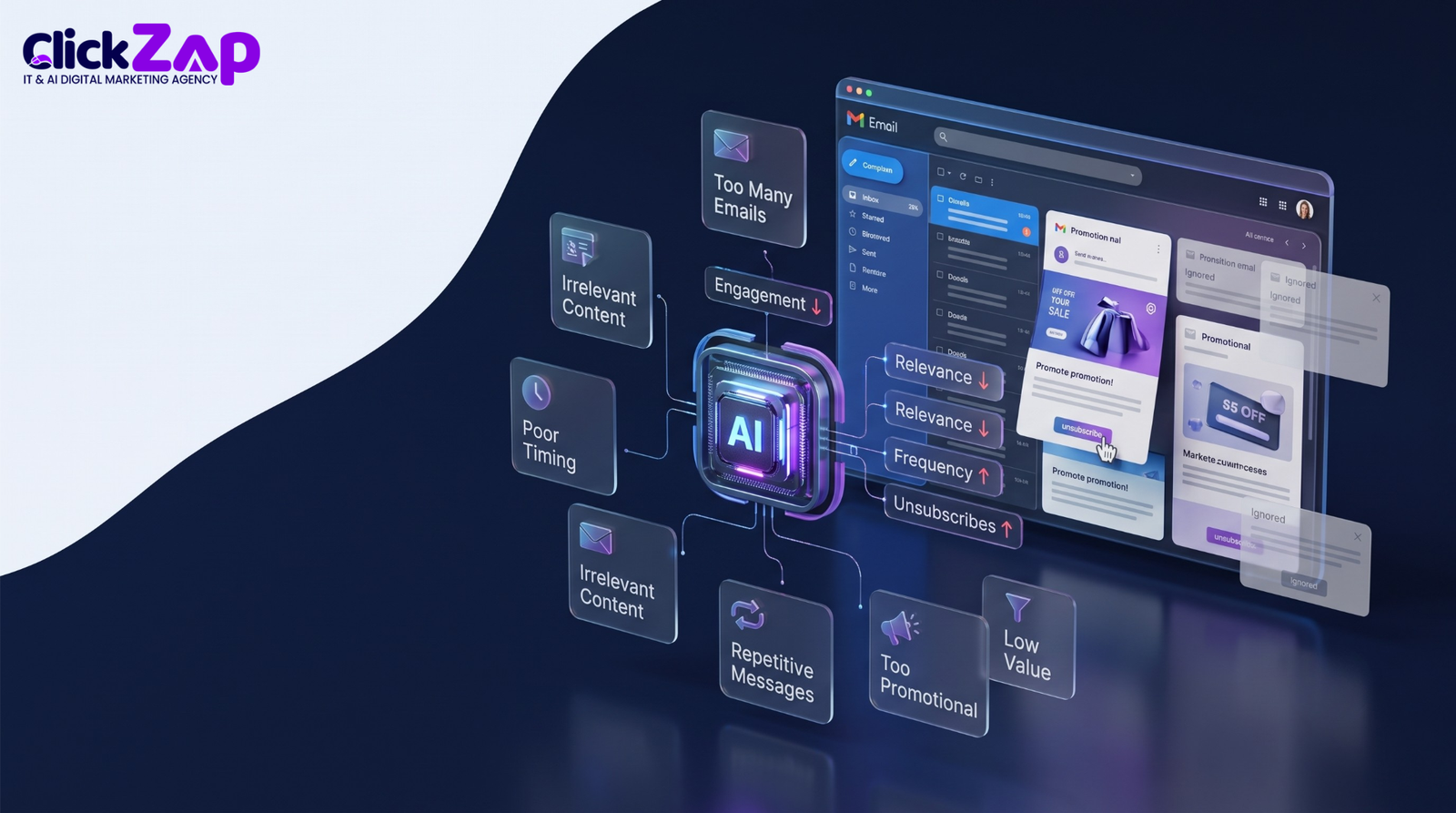
People leave when your emails stop feeling worth their time. These are the most common reasons:
- Too many emails. A subscriber who joined for a monthly newsletter and now gets daily promotions will leave quickly.
- Irrelevant content. A customer who bought running shoes keeps getting emails about office furniture.
- Poor personalization. Emails that open with a first name but offer nothing specific to the reader still feel like mass mail.
- Repetitive promotions. If every email is a discount or a “last chance” message, subscribers tune out.
- Wrong timing. A B2B email that arrives at 11 PM on Saturday gets ignored, then deleted, then resented.
- Lack of value. If your emails don’t teach, help, or save money, there is no reason to keep reading.
- Mismatch with preferences. A subscriber who wants tips gets only sales pitches.
- Poor mobile experience. Tiny text, broken layouts, and slow loading images push people away fast.
- Changed needs. Some subscribers simply no longer need what you sell. You can’t fix that, and you shouldn’t try to.
Notice that most of these are about relevance and respect, not about the email itself being badly written. That is exactly where AI helps.
How to Use AI to Reduce Email Unsubscribe Rates
What it is: AI in email marketing means software that finds patterns in subscriber data and uses them to decide who gets which message, when, and how often.
How it works: The system looks at signals from many sources and learns what each subscriber responds to. It can analyze:
- Subscriber behavior and past email interactions
- Website activity and product views
- Purchase history
- Email opens and clicks
- Content preferences
- Email frequency and how people respond to it
- Customer lifecycle stage (new lead, active customer, lapsed customer)
A human marketer can’t read all these signals for thousands of people. AI can do it continuously. This kind of subscriber behavior analysis is the foundation of everything else in this guide.
Why it matters: In practice, AI to reduce email unsubscribe rates is about reading signals you already have. Most businesses collect plenty of data but treat their whole list as one audience. AI turns that data into decisions: send this person fewer emails, show that person different products, pause emails to someone who is fading.
Example: A fashion store notices that a group of subscribers opens only emails about new arrivals and ignores discount emails. AI spots the pattern and moves them into a “new arrivals only” path. They keep getting emails they want, so they stay.
This is the core of AI email unsubscribe reduction: fewer irrelevant emails and more relevant ones.
10 Smart AI Strategies to Reduce Email Unsubscribes
1. Use AI to Reduce Email Unsubscribe Rates With Personalization
What it is: AI email marketing personalization means tailoring each email to the person receiving it, not just inserting their name.
How it works: AI looks at a subscriber’s interests, purchase behavior, and previous interactions. It then picks the products, topics, and messages that fit that person best.
Why it matters: Email personalization works because people stay with emails that feel useful. A relevant recommendation feels like a service. A random offer feels like spam.
Example: A customer who bought a coffee grinder gets an email about fresh beans and brewing tips. Another customer who bought a gift set gets ideas for the next occasion. Same brand, different emails, both relevant.
Personalization covers more than product picks. It includes the tone, the offer, the content format, and the timing.
2. Use AI Email Segmentation
What it is: AI email segmentation automatically groups subscribers based on behavior and data patterns, instead of rules you set by hand.
How it works: AI can build groups from:
- Behavioral segmentation (clicks, visits, product views)
- Purchase history
- Engagement levels
- Interests
- Customer lifecycle stage
- Location
- Stated preferences
Why it matters: Better email list segmentation means better email content relevance. When the message fits the group, fewer people feel the need to leave.
Example: A SaaS company separates trial users who completed setup from those who didn’t. The first group gets feature tips. The second gets simple onboarding help. Neither group gets the wrong email.
3. Optimize Email Frequency With AI
What it is: AI email frequency optimization decides how often each subscriber should hear from you.
How it works: AI can identify:
- Highly engaged subscribers who welcome frequent emails
- Less active subscribers who need a lighter touch
- Subscribers who prefer fewer emails
- Subscribers who respond better to frequent communication
Why it matters: Email frequency is one of the biggest causes of unsubscribes, and the right number differs from person to person. A fixed schedule for everyone is a blunt tool.
Example: Your most engaged customers get three emails a week. Subscribers who haven’t clicked in two months get one email every two weeks, with your best content only.
4. Use Behavioral Email Targeting
What it is: AI behavioral email targeting sends emails based on what subscribers actually do, not just who they are.
How it works: Actions trigger different messages. Common examples:
- Website visits: someone reads three blog posts on one topic and gets a related guide.
- Product views: someone views a product twice and gets a helpful comparison.
- Purchases: a buyer gets usage tips instead of another sales pitch.
- Email clicks: someone clicks a pricing link and gets a case study.
- Abandoned carts: a reminder goes out, ideally without an aggressive discount.
- Content engagement: readers of beginner content get beginner friendly follow ups.
Why it matters: Behavior shows real intent. Emails tied to that intent feel timely, not intrusive.
5. Predict Subscriber Churn With AI
What it is: Churn prediction means identifying subscribers who are likely to leave before they do.
How it works: AI watches for warning signals such as:
- Declining open rates
- Fewer clicks
- Reduced website activity
- Long periods of inactivity
- Repeatedly ignoring emails
The system scores each subscriber by risk. You can then build retention campaigns for the high-risk group.
Why it matters: Reducing email churn is easier before the unsubscribe click. Once someone leaves, you can’t email them again.
Example: A subscriber who used to open every email hasn’t opened the last six. AI flags them, and they receive a short “what would you like to hear about?” message with simple preference options.
6. Improve Email Content Relevance
What it is: Content relevance means your email matches what the reader cares about right now.
How it works: AI analyzes which topics, formats, products, and messages earn clicks and replies. It can show that one audience loves how-to guides while another prefers short product updates.
Why it matters: This kind of AI email engagement optimization takes the guesswork out of content planning. You stop writing what you think people want and start writing what the data shows they read.
Example: A B2B agency finds that subscribers click case studies far more than industry news. The next campaigns lead with results and examples.
7. Optimize Email Send Times
What it is: Send time optimization delivers each email when that individual subscriber is most likely to engage.
How it works: AI studies when each person has opened or clicked in the past and schedules emails accordingly. Many email platforms offer some form of this, depending on the plan.
Why it matters: Good timing can improve:
- Opens
- Clicks
- Engagement
- Customer experience
An email that arrives when someone is ready to read it feels helpful. The same email at the wrong moment feels like noise.
8. Use AI to Optimize Email Subject Lines
What it is: AI can help you write and test subject lines that are clear, relevant, and honest.
How it works: Tools from OpenAI, including ChatGPT, can generate multiple subject line options quickly. You then review them, pick the best, and test them with real audiences. A good subject line balances:
- Relevance: it matches what the reader cares about.
- Clarity: the reader knows what’s inside.
- Personalization: it fits the segment, not just the name.
- Curiosity: it gives a reason to open without tricking anyone.
- Intent: it fits where the subscriber is in their journey.
Why it matters: Misleading subject lines may win an open but lose a subscriber. Clear ones set the right expectation.
A note of caution: no tool can guarantee higher open rates. Treat AI as a drafting partner, then test and edit.
9. Automate Subscriber Retention Campaigns
What it is: AI email marketing automation triggers the right campaign automatically, based on subscriber behavior.
How it works: You set up journeys that respond to signals. Useful examples include:
- Re-engagement campaigns for subscribers who have gone quiet.
- Product recommendations based on past views and purchases.
- Educational emails for new subscribers or new customers.
- Win back campaigns for lapsed buyers.
- Preference based campaigns that let subscribers choose topics and frequency.
Why it matters: Automation makes sure no at risk subscriber slips through. It also frees your team to focus on strategy and creative work.
10. Continuously Optimize Email Campaigns
What it is: AI email campaign optimization is the ongoing cycle of measuring, testing, and improving.
How it works: Use your email platform and analytics to track:
- Unsubscribe rate
- Open rate
- Click through rate
- Conversion rate
- Engagement
- Revenue
- Subscriber retention
Google Analytics 4 (GA4) adds another layer. It shows what subscribers do on your website after they click, such as which pages they read and whether they convert.
Why it matters: Subscriber needs change. A strategy that works today may not work next quarter. Regular review keeps your emails relevant.
Digital Marketing Services For Your’s Business
How AI Email Segmentation Helps Reduce Unsubscribes
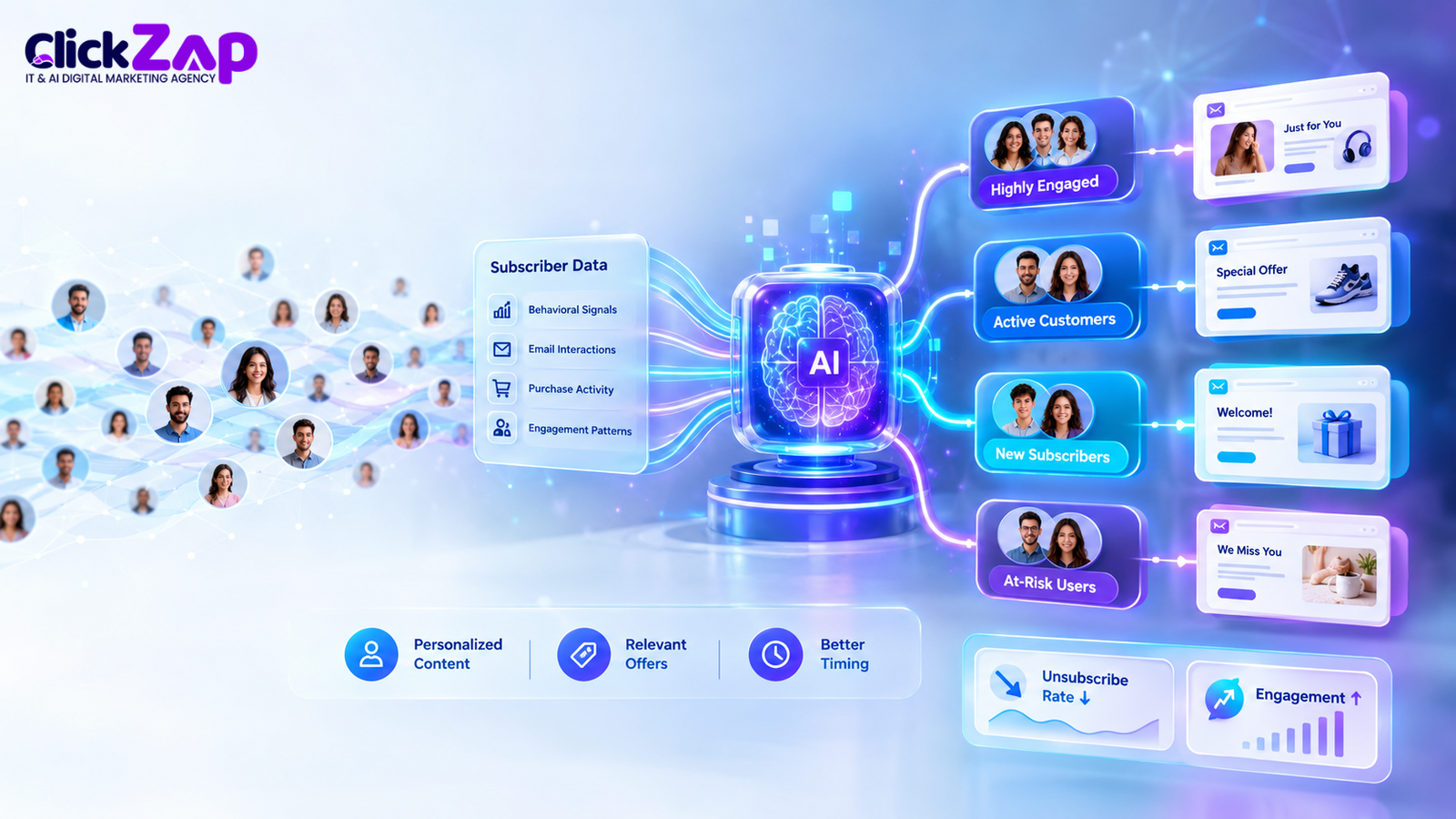
Basic segmentation uses simple rules, like “customers in Hyderabad” or “people who bought in the last 30 days.” It’s useful, but limited. AI powered segmentation looks at many signals at once and updates groups as behavior changes.
|
Traditional Segmentation |
AI Powered Segmentation |
|
Manual rules |
Automated analysis |
|
Broad audience groups |
Detailed behavioral groups |
|
Limited data |
Multiple data signals |
|
Static segments |
Dynamic segments |
|
Manual updates |
Continuous optimization |
The key difference is movement. A traditional segment stays the same until someone edits it. An AI powered segment changes when a subscriber changes. If a customer goes from browsing to buying to going quiet, they move between groups automatically and receive the right email at each stage.
That matters for unsubscribes because most people leave when emails don’t match their current situation. Dynamic segments keep your messages in step with what subscribers actually need.
How AI Personalization Improves Subscriber Retention
People stay on lists that give them something useful. That is the simple truth behind AI subscriber retention.
AI email content personalization supports retention in several ways:
- Relevant recommendations: suggestions based on what the subscriber has viewed or bought.
- Personalized content: articles, offers, and tips that match their interests.
- Individual preferences: respecting the topics and frequency they chose.
- Customer lifecycle: different messages for new subscribers, loyal customers, and lapsed ones.
- Behavioral signals: adjusting emails when a subscriber’s activity changes.
Personalized email campaigns also build trust. When a brand consistently sends emails that fit, subscribers start to expect value from the inbox. That expectation is what keeps customer engagement high over months and years.
The goal isn’t to look clever. It’s to make each email feel like it was sent for a reason.
Best AI Digital Marketing Agency in Hyderabad
AI Tools That Can Help Reduce Email Unsubscribe Rates
No single platform is “the best.” Each one has different strengths, and AI features often depend on the platform and plan. Choosing a tool matters less than how you use AI to reduce email unsubscribe rates in your own process.
Here is a general view of where each tool can help:
- HubSpot: Combines email with a CRM, so you can segment by contact activity and lifecycle stage. AI assisted features for content and personalization are available depending on the plan.
- Mailchimp: Popular with small businesses. It offers audience segmentation, automation, and some predictive and send time features, depending on the plan.
- Klaviyo: Widely used by e-commerce brands. It works well with purchase and browsing data for behavioral targeting and flows, with predictive features depending on the plan.
- ActiveCampaign: Known for automation and behavior based triggers. Some predictive and personalization features vary by plan.
- Brevo: A practical option for small and medium businesses, with email automation, segmentation, and send time options depending on the plan.
- Omnisend: Built for online stores, with automation workflows and segmentation based on shopping behavior.
- Salesforce Marketing Cloud: Suited to larger organizations that need complex customer journeys and deeper analytics. Available AI capabilities depend on the edition.
- Adobe Marketo Engage: Often used for B2B lead nurturing and engagement programs, helping teams respond to how leads interact with content.
- Google Analytics 4 (GA4): Not an email platform, but it shows what subscribers do after they click. That helps you judge whether your emails lead to real engagement.
- OpenAI and ChatGPT: Useful for brainstorming subject lines, drafting email variations, and summarizing exported campaign data. They don’t send emails, and every output needs human review.
Before choosing, check what your plan actually includes. Ask which features cover segmentation, personalization, automation, analytics, and campaign optimization, and which ones cost extra.
Step by Step Process to Use AI for Reducing Email Unsubscribes
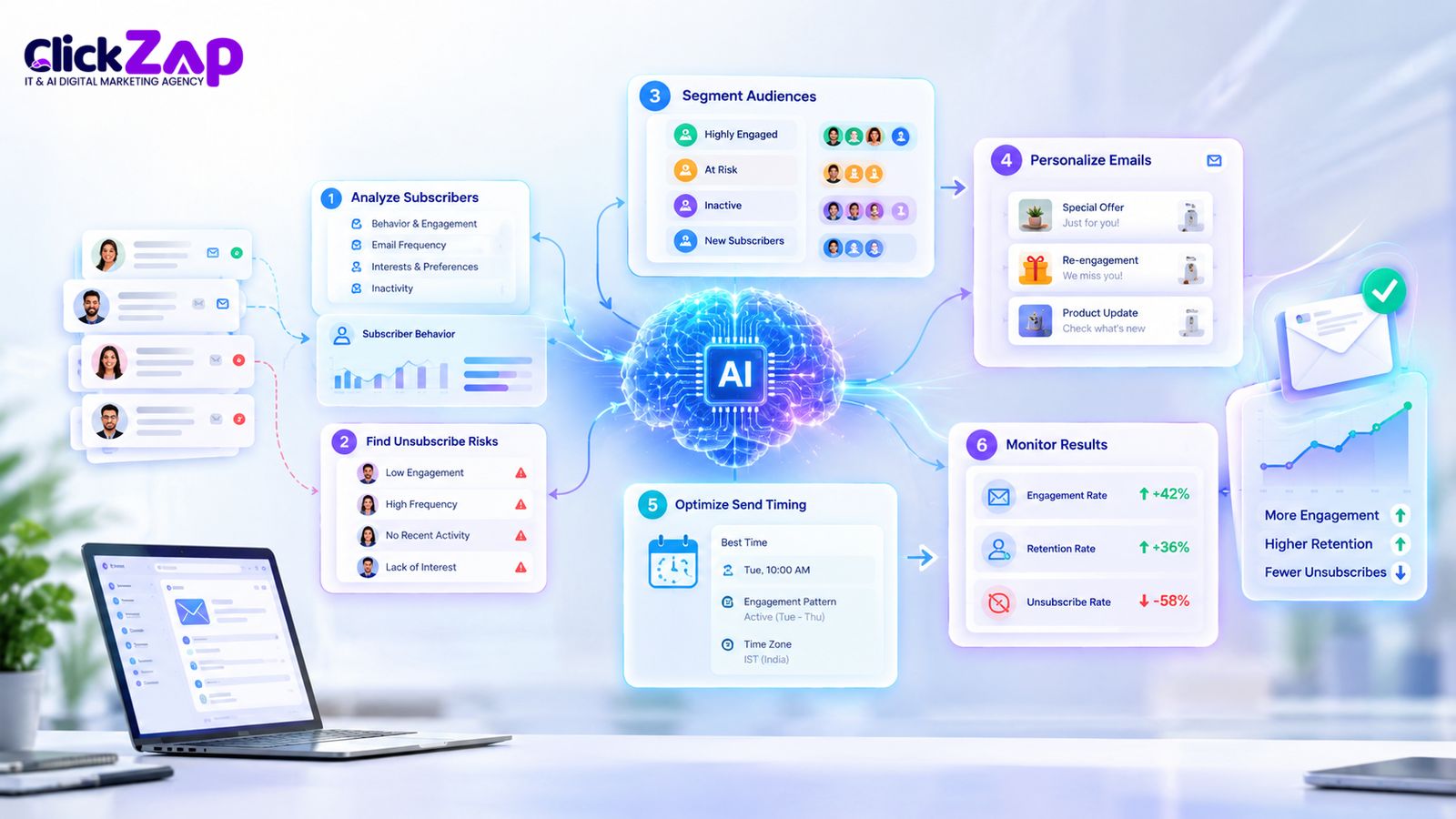
Here is a practical seven step process you can follow.
- Measure the current unsubscribe rate.
Calculate your rate for the last several campaigns. Note which emails caused spikes. This is your baseline. - Analyze subscriber behavior.
Look at opens, clicks, website activity, and purchases. Find out who is engaged, who is fading, and which topics perform best. - Identify high risk subscribers.
Use your platform’s predictive tools, or build simple rules, to flag people with declining engagement. These are the subscribers to save. - Segment the email list.
Group subscribers by behavior, interests, and lifecycle stage. Let AI keep these segments updated. - Personalize email content.
Match content to each segment. Start with one or two changes, such as product recommendations or topic based newsletters. - Optimize frequency and timing.
Reduce emails to low engagement groups. Use send-time optimization where it’s available. - Monitor and continuously improve performance.
Review your metrics every month. Keep what works, fix what doesn’t, and test one change at a time.
Example of AI Based Email Unsubscribe Reduction
Here is a simple, hypothetical example.
An online skincare store sends four promotional emails a week to its whole list. Over a few months, the team notices that many subscribers have stopped opening emails, and unsubscribes are creeping up.
Here is how AI could help:
- Identify the behavior. AI finds that subscribers who receive more than two promotions a week are the ones becoming inactive.
- Segment those subscribers. The system creates a group of “high frequency, low engagement” contacts.
- Reduce their email frequency. This group moves to one email a week.
- Recommend more relevant content. AI notices that many of them click on ingredient guides, not discounts. Their emails shift toward skincare tips and product education.
- Trigger a re-engagement campaign. Subscribers who still don’t open get a short message asking what they’d like to receive.
- Monitor the response. The team tracks unsubscribes, clicks, and purchases for this group and adjusts again.
The store doesn’t send fewer emails to everyone. It sends the right amount to each person. That is the difference between cutting volume and using AI well.
Best Practices for AI Powered Email Marketing
Good AI powered email marketing strategies share a few habits:
- Respect subscriber preferences. If someone asks for monthly emails, send monthly emails.
- Avoid excessive email frequency. More emails rarely fix a weak message.
- Keep content relevant. Every email should have a reason to exist for its audience.
- Use behavioral data responsibly. Collect only what you need, and be clear about how you use it.
- Regularly clean inactive subscribers. Dead addresses hurt your reputation and your numbers.
- Test personalization. Try one change at a time and compare the results.
- Monitor unsubscribe trends. Look at which campaigns, segments, and send times cause spikes.
- Give subscribers frequency options. A simple preference center can prevent many unsubscribes.
- Keep emails valuable. Teach, help, or save time before you sell.
- Combine AI insights with human judgment. AI shows patterns. People decide what makes sense for the brand.
Common Mistakes to Avoid When Using AI for Email Marketing
AI helps, but it can also make bad habits faster. Watch out for these mistakes:
- Over personalization. Referencing too much of someone’s browsing history can feel invasive.
- Sending too many automated emails. Automation makes it easy to stack campaigns on the same person.
- Relying entirely on AI. Models don’t know your brand voice, your legal limits, or your customers the way your team does.
- Ignoring subscriber preferences. If a person tells you what they want, that outranks any prediction.
- Using poor quality data. Duplicate, outdated, or incomplete data leads to poor decisions.
- Creating generic AI written content. Emails that sound like everyone else’s get ignored.
- Ignoring privacy and consent. Follow the data protection and email rules that apply to your audience and region.
- Failing to monitor unsubscribe trends. Automation without review lets small problems grow.
How to Measure the Success of AI Email Unsubscribe Reduction
Success with AI to reduce email unsubscribe rates should never be judged by one number. A lower unsubscribe rate means little if it opens and sales also fall. Look at the full picture.
|
Metric |
What It Tells You |
|
Unsubscribe Rate |
How many recipients leave the list |
|
Open Rate |
How many recipients open emails |
|
Click Through Rate |
How many recipients click |
|
Conversion Rate |
How many recipients take the desired action |
|
Engagement |
How actively subscribers interact |
|
Subscriber Retention |
How well the email list is retained |
Compare results before and after each change, and compare segments against each other. Keep in mind that email doesn’t work alone. Subscribers often join through search and paid campaigns, so list quality is shaped by your wider marketing.
Give each test enough time. One campaign is rarely enough to draw a conclusion.
The Future of AI in Email Marketing
Email marketing is moving away from “one message to everyone.” AI is pushing it toward:
- More personalized emails built around individual interests.
- More predictive systems that spot problems before subscribers leave.
- More automated journeys that react to behavior in real time.
- More behavioral targeting based on what people do, not only what they say.
- More customer focused programs that treat each subscriber as an individual.
Instead of sending the same newsletter to the full list, marketers will build individual customer journeys, where each subscriber gets a different path based on their needs. The brands that win will be the ones that use AI to be more useful, not just more frequent.
Frequently Asked Questions
Can AI reduce email unsubscribe rates?
Yes, AI can reduce email unsubscribe rates when it is used to improve relevance. It analyzes subscriber behavior, personalizes content, adjusts frequency, and flags at risk subscribers early. It works best alongside clear subscriber preferences, quality data, and human review of campaigns. AI alone won’t fix weak content or a poor offer.
How does AI help reduce email unsubscribes?
AI helps by matching each email to the subscriber’s behavior and interests. It segments audiences, picks better send times, limits email frequency for less active contacts, and predicts who may leave soon. Marketers can then send retention campaigns instead of waiting for people to unsubscribe.
Why do subscribers unsubscribe from emails?
Subscribers usually unsubscribe because emails are too frequent, irrelevant, or repetitive. Other common reasons include poor personalization, bad timing, lack of value, and a weak mobile experience. Sometimes people simply no longer need the product or service. Most of these causes can be improved with better segmentation and content.
How can AI personalize email marketing?
AI personalizes email marketing by using subscriber data like past purchases, clicks, website visits, and interests. It can recommend products, adjust content topics, choose the right offer, and time the send. The result is an email that feels relevant to one person instead of a mass message sent to the whole list.
Can AI optimize email frequency?
Yes, AI can optimize email frequency by learning how each subscriber responds to different volumes of email. It can identify people who engage with frequent messages and those who prefer fewer. Marketers can then reduce frequency for low engagement groups, which helps prevent unsubscribes caused by inbox fatigue.
Conclusion
AI to reduce email unsubscribe rates is not simply about sending fewer emails. It’s about sending emails that fit the person reading them.
The strongest results come from combining several things: better segmentation, personalization, behavioral targeting, frequency optimization, content relevance, automation, continuous testing, and respect for subscriber preferences. AI makes each of these faster and more precise, but your team still sets the strategy and the standards.
Start small. Measure your current unsubscribe rate, find your at risk subscribers, and fix one problem at a time.
If you’d like help building an email program that keeps subscribers engaged, ClickZap IT, a digital marketing agency in Hyderabad, helps businesses with AI powered digital marketing and email marketing strategies. You can reach our team.
Also Read: AI Segmentation for Email Marketing: Strategies to Increase Engagement
0 Comments