
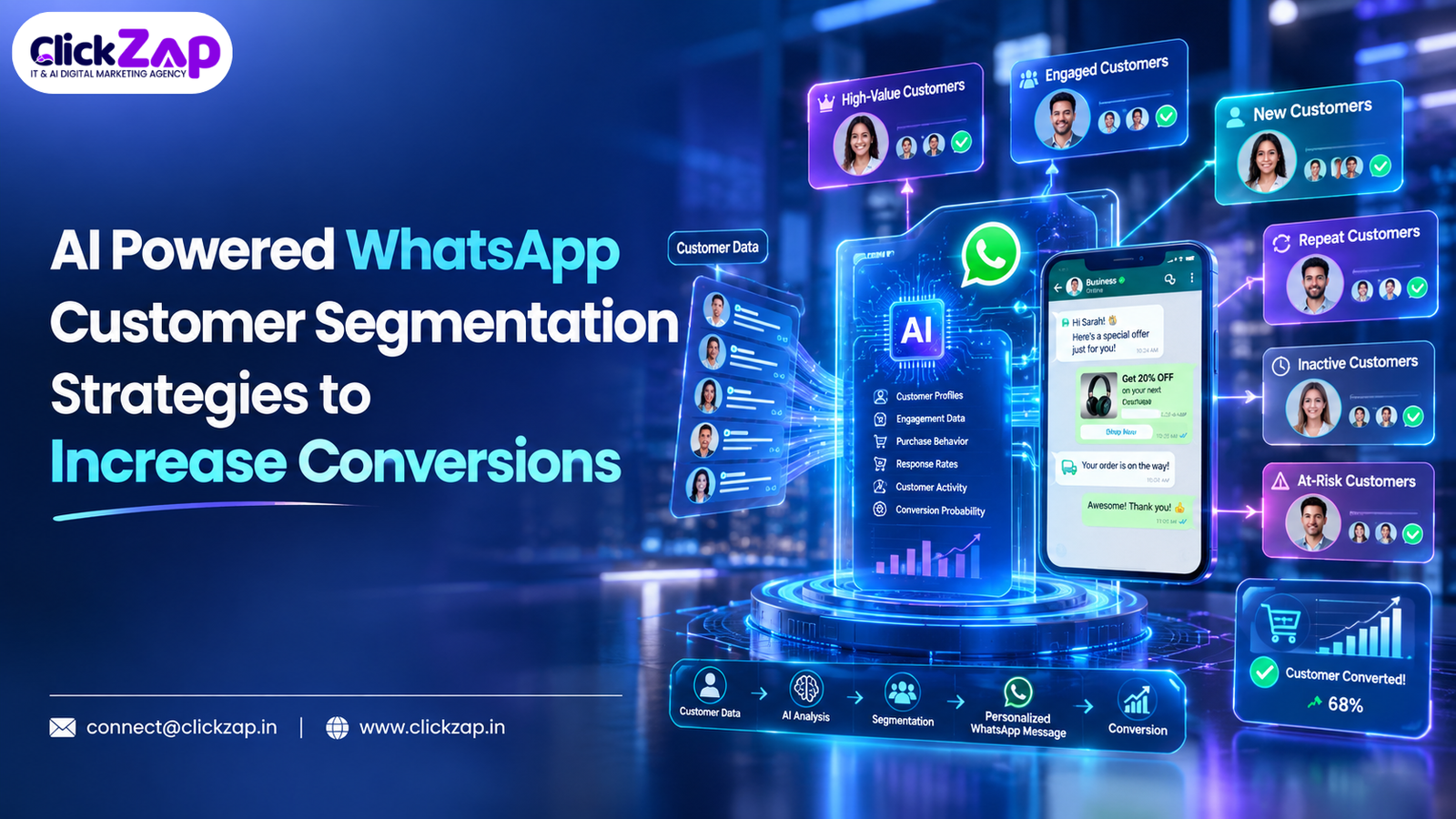
Picture this. You have 8,000 contacts on WhatsApp, and you send every one of them the same festive discount. A first time buyer, a loyal repeat customer and someone who last ordered two years ago all get an identical message. A few reply, many ignore it, and some block you. That is the problem AI powered WhatsApp customer segmentation is built to solve.
Generic broadcasts get weaker engagement because they are relevant to almost nobody. WhatsApp is a personal inbox, and people judge a message in seconds.
With AI, you can analyze customer behavior, find patterns in how people buy and respond, and build audience groups that actually mean something. Each group then gets a message that fits its situation. Relevant messages tend to earn more replies, more clicks and fewer opt-outs, which gives you a stronger shot at conversions.
This guide covers how segmentation works, the strategies worth using, how to implement them and how to measure results. It is written for business owners, marketers and sales teams, with examples from Indian businesses.
What Is AI Powered WhatsApp Customer Segmentation?
AI powered WhatsApp customer segmentation is the use of AI to group your WhatsApp contacts by behavior, purchase history, engagement and interests, so each group receives more relevant messages.
Three related terms are worth separating:
- WhatsApp customer segmentation means dividing contacts into groups that share traits.
- WhatsApp audience segmentation is the campaign side view: deciding which audience gets which message.
- AI customer segmentation for WhatsApp adds software that finds patterns in data, so you are not sorting contacts into folders by hand.
The point most people miss: this is not splitting a contact list into “Group A” and “Group B.” It is understanding customer behavior, building meaningful groups and adjusting them as customers change.
Traditional vs AI Powered Segmentation
|
Factor |
Traditional Segmentation |
AI Powered Segmentation |
|
How groups are built |
Manual rules (city, last purchase date) |
Many data points analyzed together |
|
Update speed |
Occasional and manual |
Can refresh as new data arrives |
|
Basis |
Assumptions about customers |
Observed customer behavior |
|
Scale |
Hard to manage beyond a few groups |
Handles large contact lists more easily |
|
Example group |
“Customers in Hyderabad” |
“Repeat buyers who respond in the evening and click on ethnic wear” |
People cannot manually spot patterns across thousands of customers. A Hyderabad D2C jeweler brand may know that earring buyers are one group. AI could also reveal that a subset of them reorders every few weeks and mostly clicks on festive collections. That second insight changes what you send and when.
Why Customer Segmentation Matters for WhatsApp Marketing
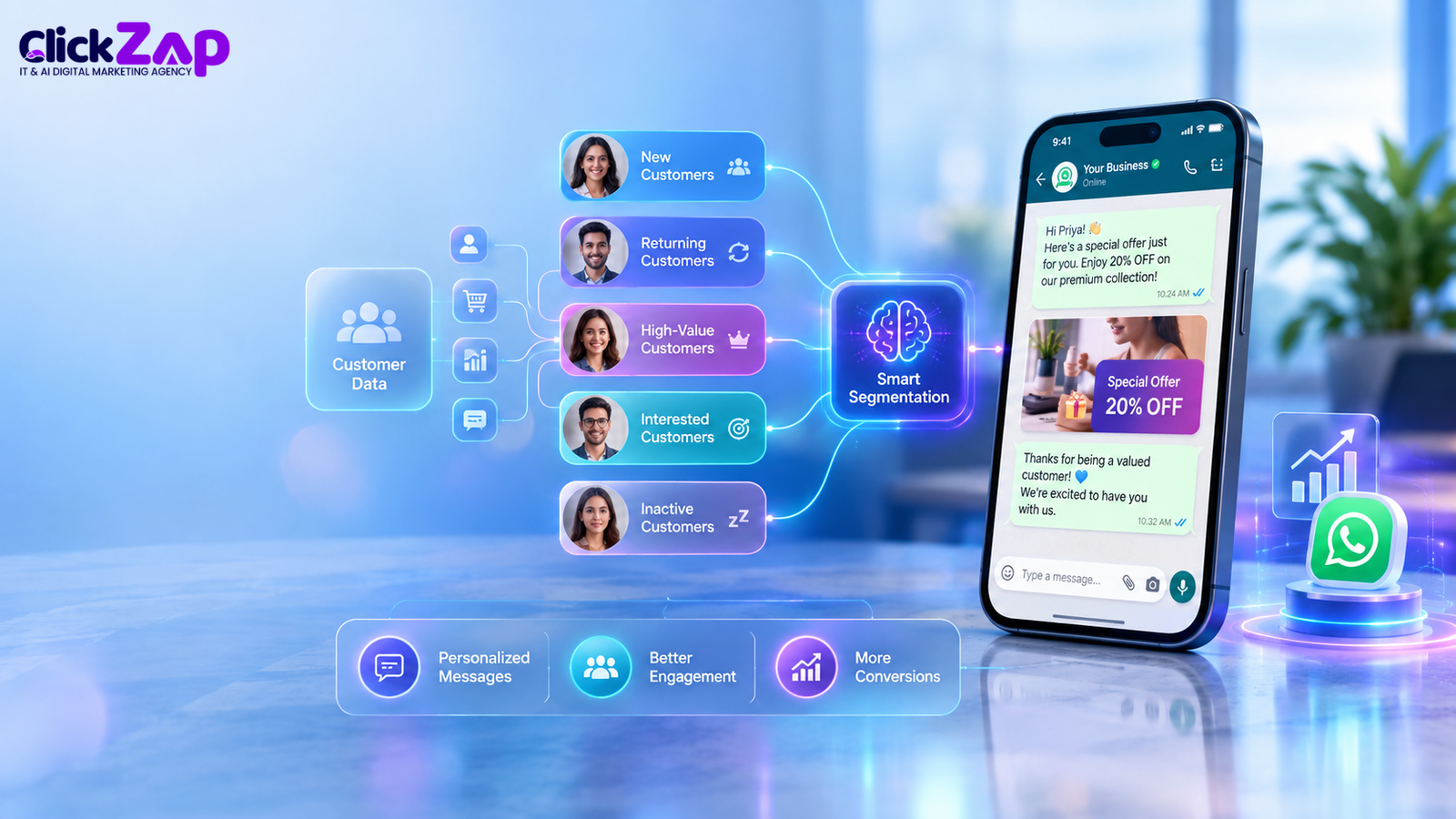
Sending identical messages to everyone wastes your most direct channel. Good WhatsApp marketing segmentation gives you:
- Better relevance. People see offers that match what they care about.
- Higher engagement. Relevant messages earn more reads, replies and clicks, which lifts WhatsApp customer engagement.
- Better customer experience. A new buyer needs help. A loyal buyer wants early access.
- Sharper WhatsApp customer targeting. You focus effort on audiences most likely to act.
- Real WhatsApp marketing personalization. Content, offer and timing fit the person.
- Less message fatigue. Fewer irrelevant messages means fewer opt-outs.
- Better retention. Useful messages keep customers connected between purchases.
There is a platform angle too. On the WhatsApp Business Platform, how recipients react to your messages can affect your quality rating and sending limits. Check Meta’s current documentation for the rules that apply to you. Irrelevant blasts put that at risk.
How AI Segments WhatsApp Customers
Think of it as an eight step loop:
Collect Data → Analyze Behavior → Identify Patterns → Create Segments → Personalize Messages → Launch Campaigns → Measure Results → Optimize
- Collect data. Gather first party data you have permission to use.
- Analyze behavior. AI reviews how customers buy, browse and respond.
- Identify patterns. It finds clusters, such as people who only buy during sales.
- Create segments. Patterns become named audiences.
- Personalize messages. Offer, tone and product match each audience.
- Launch campaigns. Send through approved WhatsApp channels.
- Measure results. Track replies, clicks, sales and opt-outs.
- Optimize. Feed results back in and refine.
AI can analyze:
- Customer purchase history and purchase frequency
- Customer engagement data and response behavior
- Website activity and product interests
- Previous WhatsApp interactions
- Customer value and lifecycle stage
One warning. WhatsApp does not hand you all of this data automatically. Chat interactions come from WhatsApp. The rest usually comes from your CRM, website, eCommerce platform, advertising tools and other first party sources. Combine them only where it is compliant and your customers have given consent.
Digital Marketing Services for Business
Types of AI Powered WhatsApp Customer Segmentation
1. Behavioral Customer Segmentation
Groups customers by what they do. Typical groups: frequently engaged customers, customers who rarely respond, customers who clicked previous offers, and customers who interacted with specific products. Behavior shows intent better than demographics.
2. Purchase Based Segmentation
Groups customers by purchase history, purchase frequency, average order value, product categories and recent purchases. A buyer who spends heavily in one category needs a different message than an occasional discount shopper.
3. RFM Customer Segmentation
RFM Analysis scores each customer on three things:
- Recency: how recently they bought
- Frequency: how often they buy
- Monetary value: how much they spend
Combined scores reveal high value customers (recent, frequent, high spend), loyal customers (frequent buyers), new customers (recent, low frequency), at risk customers (once frequent, now quiet) and inactive customers (long gone). AI scores everyone automatically and refreshes the scores as new orders arrive.
4. Customer Lifecycle Segmentation
Groups people by relationship stage: new prospects, new customers, repeat customers, loyal customers, at risk customers and inactive customers. Prospects need information. New customers need onboarding. Loyal customers want recognition. At risk customers need a reason to return.
5. Engagement Based Segmentation
Groups people by message engagement, click behavior, response behavior and campaign interaction. Someone who replies within minutes needs a different approach than someone who reads and never clicks.
6. Interest Based Segmentation
Uses product preferences and browsing signals to personalize campaigns. A Hyderabad home décor brand can send sofa cover offers to customers who asked about living room makeovers, and skip everyone else.
Best AI Digital Marketing Agency in Hyderabad
WhatsApp Segmentation Strategies You Can Use
- Segment customers based on purchase history
- How it works: Group customers by what and how often they bought.
- Example: A skincare brand separates face care buyers from hair care buyers.
- Why it helps: Offers match proven interest.
- Use RFM Analysis
- How it works: Score recency, frequency and monetary value, then group by score.
- Example: A snack brand sends top scorers a new bundle and lapses customers a comeback offer.
- Why it helps: Each RFM group has a different motivation.
- Segment by engagement level
- How it works: Group contacts by reads, replies and clicks.
- Example: Active repliers get a full catalogue. Passive readers get one short offer.
- Why it helps: Message weight matches attention.
- Create customer lifecycle segments
- How it works: Place each contact in a stage, from prospect to loyal customer.
- Example: A coaching institute sends course details to enquiries and exam reminders to enrolled students.
- Why it helps: The message fits the relationship stage.
- Identify high value customers
- How it works: Flag top spenders or most frequent buyers.
- Example: A jeweler store invites top spenders to a private preview before a festive season.
- Why it helps: It protects your most valuable relationships.
- Target inactive customers with re-engagement campaigns
- How it works: Identify contacts with no purchase or response for a defined period.
- Example: A fashion brand shares new arrivals since their last order and asks if they want to keep getting updates.
- Why it helps: It revives demand you already paid to create.
- Segment customers by product interest
- How it works: Use browsing, chat questions and past orders to tag interests.
- Example: A furniture retailer messages dining table browsers about dining table offers only.
- Why it helps: Relevant products reduce the effort to buy.
- Combine CRM data with WhatsApp engagement data
- How it works: Merge deal stage and customer profiles with chat behavior.
- Example: A Hyderabad IT services firm sends case studies to leads who engaged with earlier messages and a demo reminder to leads at proposal stage.
- Why it helps: Sales and marketing see the same customer.
How AI Personalizes WhatsApp Messages
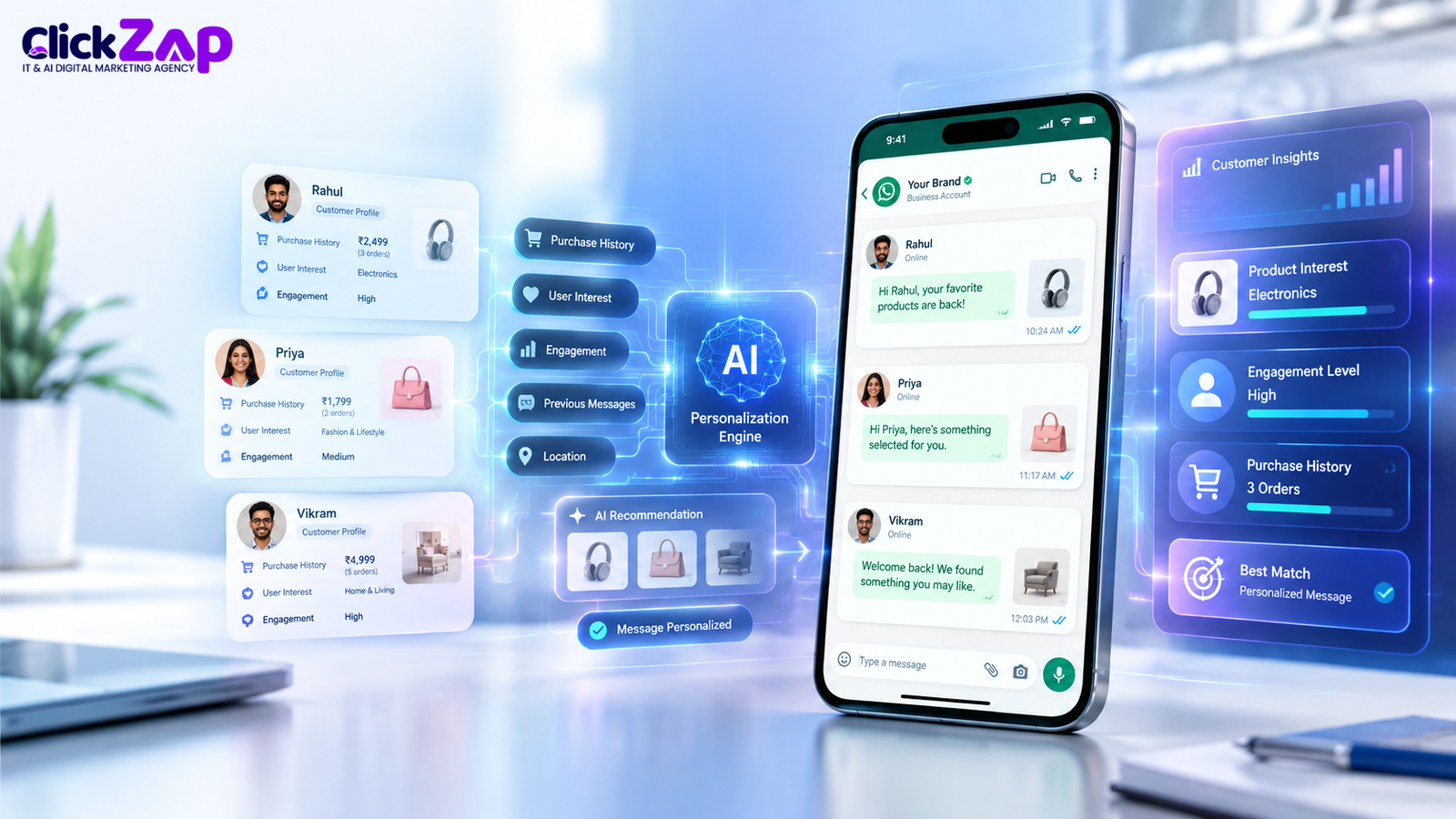
Segmentation decides who gets a message. Personalization decides what it says. Compare:
|
Customer Type |
Generic Message |
Segmented Personalized Message |
|
New customer |
“Big sale now! Shop today.” |
“Hi Priya, thanks for your first order. Need help with sizing? Reply here and we will help.” |
|
Repeat customer |
“Big sale now! Shop today.” |
“Hi Ravi, your favorite kurta style is back in new colors.” |
|
High value customer |
“Big sale now! Shop today.” |
“Priya, you get early access to our new collection before it opens to everyone.” |
|
Inactive customer |
“Big sale now! Shop today.” |
“It has been a while. Here is what is new, plus a small offer on your next order.” |
|
Interested in a specific product |
“Big sale now! Shop today.” |
“The running shoes you asked about are back in size 9.” |
|
Bought a related product |
“Big sale now! Shop today.” |
“Bought a mixer grinder last month? These extra jars fit it.” |
The segmented messages are shorter, specific and useful. That is what audience personalization means: the message answers a question the customer already has.
Keep it sensible. Use a name and a relevant product, not a creepy level of detail.
Role of CRM in WhatsApp Customer Segmentation
A CRM stores the customer data that makes segmentation smarter: customer profiles, purchase history, deal stages and engagement data. Platforms such as HubSpot and Salesforce are widely used for this.
Businesses can connect relevant CRM information with WhatsApp activity to build more targeted campaigns. For example, a lead’s deal stage or past purchases can decide which message they receive.
What is possible depends on your technology setup, plan and available integrations. Confirm specific features in each platform’s official documentation before you plan around them.
WhatsApp Business and the Meta Ecosystem
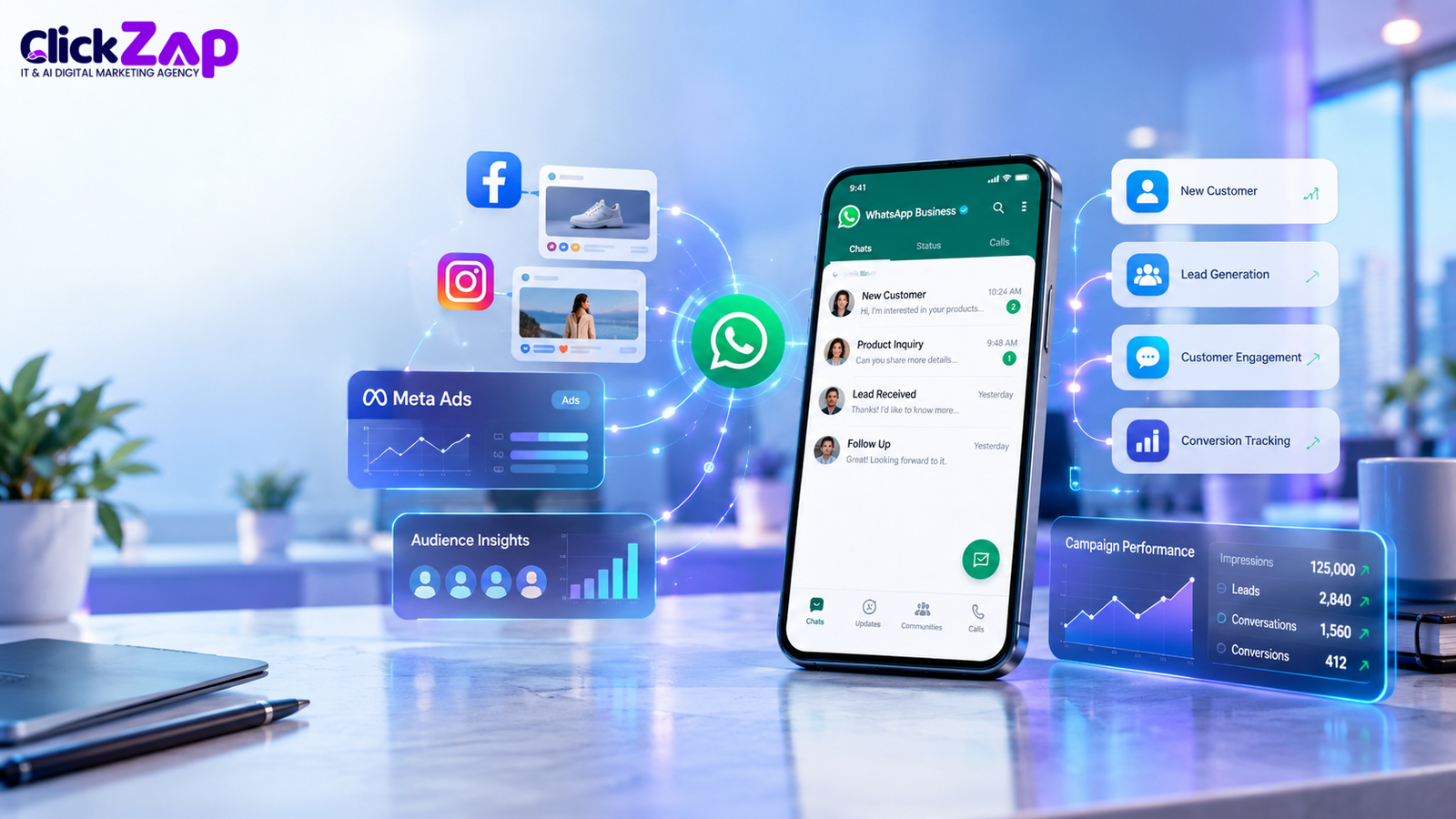
WhatsApp Business (the app) suits small businesses and offers labels for basic manual segmentation. The WhatsApp Business Platform, accessed through the WhatsApp Business API and approved providers, suits larger volumes, integrations and automation.
Meta owns the ecosystem. Meta Business Suite helps manage your Facebook and Instagram business presence. Meta Ads runs your paid campaigns. Click to WhatsApp Ads are ads that open a WhatsApp chat when someone taps them.
Keep two jobs separate:
- Customer acquisition: starting new conversations. Click to WhatsApp Ads do this.
- Segmentation and personalization: organizing those contacts and tailoring follow ups. This relies on your own data and tools. Do not assume Meta performs advanced AI segmentation for you.
Example: a Hyderabad real estate firm runs Click to WhatsApp Ads. Leads asking about 2BHK flats are tagged separately from those asking about plots, and each group gets different follow ups.
How AI Powered WhatsApp Segmentation Increases Conversions
The conversion journey looks like this:
Right Customer → Right Message → Right Offer → Right Timing → Better Engagement → Higher Conversion Potential
AI-powered WhatsApp customer segmentation supports each link in that chain. Segmentation can help improve:
- Message relevance: content matches the customer’s situation
- Engagement: more reads and replies
- Click through behavior: offers fit interests, so more people tap
- Lead quality: conversations reach people with real intent
- Purchase intent: helpful nudges at the right stage
- Repeat purchases: timely reminders and related product suggestions
- Customer retention: ongoing, useful contact
- Conversion rates: the combined effect of the above
No one can guarantee results. Your data quality, offer and product still matter. But sending the right offer to the right group beats a blast to everyone almost every time.
Real World Example: An Online Fashion Business
This is a hypothetical example, not a real case study. An online fashion business has 10,000 WhatsApp contacts. Instead of one message to all, AI divides them into groups:
|
Customer Segment |
Customer Behavior |
WhatsApp Message |
Marketing Goal |
|
New customers |
One recent order |
Care tips and a styling suggestion |
Encourage a second purchase |
|
Repeat buyers |
3+ orders in a year |
New arrivals in categories they buy |
Increase repeat sales |
|
High value customers |
High spend, recent orders |
Early access to a new collection |
Strengthen loyalty |
|
Inactive customers |
No order or reply for months |
“We miss you” note with a small offer |
Re-engage |
|
Category interested customers |
Browsed or asked about one category |
Offers on that category only |
Convert existing interest |
Each group gets a message with a clear job. Nobody gets a discount they did not need.
How to Implement AI Powered WhatsApp Customer Segmentation
Here is how to put AI powered WhatsApp customer segmentation into practice without overcomplicating it.
- Define your marketing goal. Repeat sales, lead quality or win back? Pick one.
- Collect first party customer data. Orders, enquiries, chat history, with consent.
- Connect relevant data sources. Link CRM, website, eCommerce and ad data where compliant.
- Create customer profiles. One clean record per customer.
- Identify segmentation criteria. Choose signals tied to your goal, such as recency or product interest.
- Build customer segments. Let AI propose groups, then sanity check them yourself.
- Create personalized WhatsApp messages. One clear message and call to action per segment.
- Launch targeted campaigns. Start small and send only to opt in contacts.
- Track performance. Compare segments against your goal.
- Continuously optimize segments. Merge weak groups, split strong ones, retest.
Common Mistakes to Avoid
- Sending the same message to everyone. Even two or three segments beat none.
- Creating too many segments. Start with four to six you can actually manage.
- Using poor quality customer data. Clean duplicates and outdated records first.
- Ignoring lifecycle stages. A first time buyer should not get a loyalty tier pitch.
- Over personalizing. If a message feels like surveillance, tone it down.
- Messaging too frequently. Set frequency limits per segment.
- Not measuring performance. Review every campaign against your goal.
- Ignoring privacy and consent. Use opted in contacts only and honor opt-outs. For Indian businesses, review obligations under the Digital Personal Data Protection Act, 2023.
- Creating segments that are too small. Tiny groups give you no useful signal. Merge them.
Metrics to Measure WhatsApp Segmentation Performance
|
Metric |
What It Tells You |
|
Message delivery rate |
How many messages reached the phone |
|
Read rate |
How many people opened the message |
|
Response rate |
How many replied |
|
Click through rate |
How many tapped your link or button |
|
Conversion rate |
How many took the action you wanted |
|
Cost per conversion |
What each sale or lead cost you |
|
Revenue per campaign |
What each campaign earned |
|
Repeat purchase rate |
How many customers bought again |
|
Customer retention |
How many stay active over time |
|
Unsubscribe/opt-out rate |
How many people said stop |
Compare segments against each other and against your own past campaigns. Your own baseline matters more than any generic benchmark.
Best Practices for AI Powered WhatsApp Marketing
- Start with clear customer segments.
- Use accurate first party data.
- Keep personalization useful, not invasive.
- Test different messages on each segment.
- Respect customer preferences and opt-outs.
- Avoid excessive messaging.
- Track campaign results every time.
- Continuously refine segments.
- Use AI as an optimization tool, not a blind autopilot. A human should review segments and messages.
The Future of AI Powered WhatsApp Customer Segmentation
Expect steady progress, not miracles. Realistic directions include:
- Predictive customer segmentation and predictive purchase intent
- AI powered customer profiling
- Real time behavioral segmentation
- Automated personalization
- AI driven customer lifecycle management
- Conversational marketing built on chat
- Smarter WhatsApp campaign optimization
Tools will improve, but the foundation stays the same: clean data, customer consent and relevant messages.
Frequently Asked Questions
How does AI segment WhatsApp customers?
AI analyzes customer data such as purchase history, engagement, website activity and chat responses. It finds patterns, then groups customers with similar behavior into segments. Businesses use those segments to send more relevant messages, then feed campaign results back so the groups improve over time.
What customer data can be used for WhatsApp segmentation?
Businesses can use purchase history, purchase frequency, product interests, engagement data, response behavior, website activity and previous WhatsApp interactions. Much of this comes from your CRM, website or eCommerce platform, not WhatsApp alone. Use only data you have permission to use.
What is RFM customer segmentation for WhatsApp marketing?
RFM scores customers on Recency, Frequency and Monetary value. It separates high value, loyal, new, at risk and inactive customers. Businesses then send each group a different WhatsApp message, such as an early access invite for top customers or a win back offer for lapsed ones.
Can CRM data be used for WhatsApp customer segmentation?
Yes, in many setups. CRM data such as customer profiles, purchase history and deal stage can help build segments for WhatsApp campaigns. Whether you can sync it depends on your CRM, plan and integrations, so check the official documentation of platforms like HubSpot or Salesforce.
How does WhatsApp customer segmentation increase conversions?
Segmentation helps businesses send the right offer to the right customer at the right time. AI powered WhatsApp customer segmentation improves message relevance, which can raise engagement and purchase intent while reducing opt-outs. Results vary by data quality, offer and execution, so test and measure each segment.
Is AI powered WhatsApp marketing suitable for small businesses?
Yes. Small businesses can start with simple segments, such as new customers, repeat buyers and inactive contacts, using the WhatsApp Business app’s labels. As contact lists and data grow, they can move to the WhatsApp Business Platform and AI tools for deeper segmentation.
Conclusion
Sending one message to every WhatsApp contact is the fastest way to waste your best channel. AI powered WhatsApp customer segmentation fixes that by turning raw customer data into audience groups that behave differently, buy differently and need different messages.
The formula is simple. Start with one clear goal. Use clean, consented first party data. Build three or four segments you can manage, such as new customers, repeat buyers and inactive contacts. Write one focused message per group, then track replies, clicks, conversions and opt-outs. Refine every cycle.
Don’t treat AI as an autopilot. It finds the patterns, but you still decide the offer, the tone and how often you message. Businesses that get this right earn more attention and more trust, and that is what turns conversations into sales.
Ready to build a smarter WhatsApp strategy? Talk to the ClickZap IT team and turn your customer data into conversions.
Also Read: AI to Reduce Email Unsubscribe Rates: Smart Email Marketing Strategies
0 Comments