
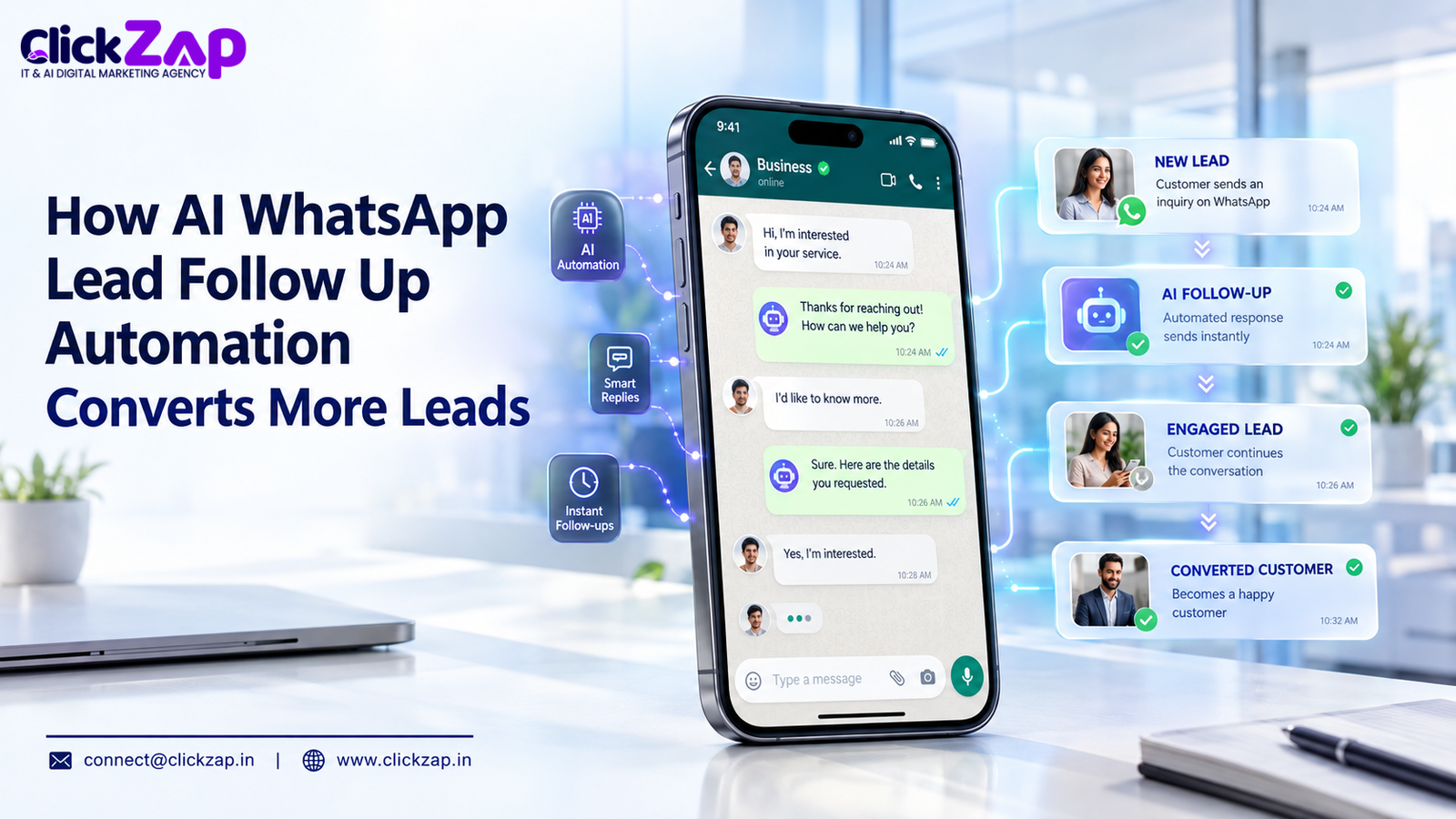
Getting a lead is the easy part. Your Meta Ads, Google Ads, website forms, landing pages, social media and organic search can all send enquiries to your inbox. Most businesses still lose a large share of them within hours, and that is exactly the gap AI WhatsApp lead follow up automation is built to close.
The reasons are boring and familiar. Teams reply too slowly. Someone forgets to follow up. The message is generic. Nobody checks whether the lead is serious or just browsing. High intent prospects wait in the same queue as casual enquiries.
This is where AI WhatsApp lead follow up automation helps. It replies within seconds, personalizes the conversation, asks the right questions, and sends serious prospects to your sales team while the interest is still fresh. It does not replace your salespeople. It stops good leads from slipping through the gaps.
This guide explains how it works, how to build it, and where it goes wrong.
What Is AI WhatsApp Lead Follow Up Automation?
AI WhatsApp lead follow-up automation is the use of AI and automated workflows to respond to, nurture, qualify and prioritize leads on WhatsApp. It sends timely, relevant messages, understands replies, and hands sales ready leads to a human team member.
Here are the key terms in plain language:
- AI: software that can read text, understand intent, classify messages and generate replies.
- WhatsApp automation: rules and workflows that send messages automatically, such as a welcome message after a form fill.
- Lead follow up: contacting a person after they show interest in your business.
- Lead nurturing: staying useful to a prospect over time until they are ready to buy.
- AI powered lead follow up: follow up where AI decides what to say or what to do next based on the lead’s replies.
Automation follows fixed rules. AI adds judgement. Together, the system can both send and think about what to send.
A Simple Example
- A person fills out a website form asking about your service.
- They become a lead in your CRM.
- They receive a WhatsApp message within a minute.
- They reply, “What is the cost for 10 users?”
- The AI understands this as a pricing question and sends a relevant answer.
- It asks about timeline and location to qualify the lead.
- The lead says they want to start this month.
- The system alerts a salesperson with the full conversation.
No one sat waiting at a screen, yet the lead was handled quickly and properly.
Why WhatsApp Follow Up Matters for Lead Conversion
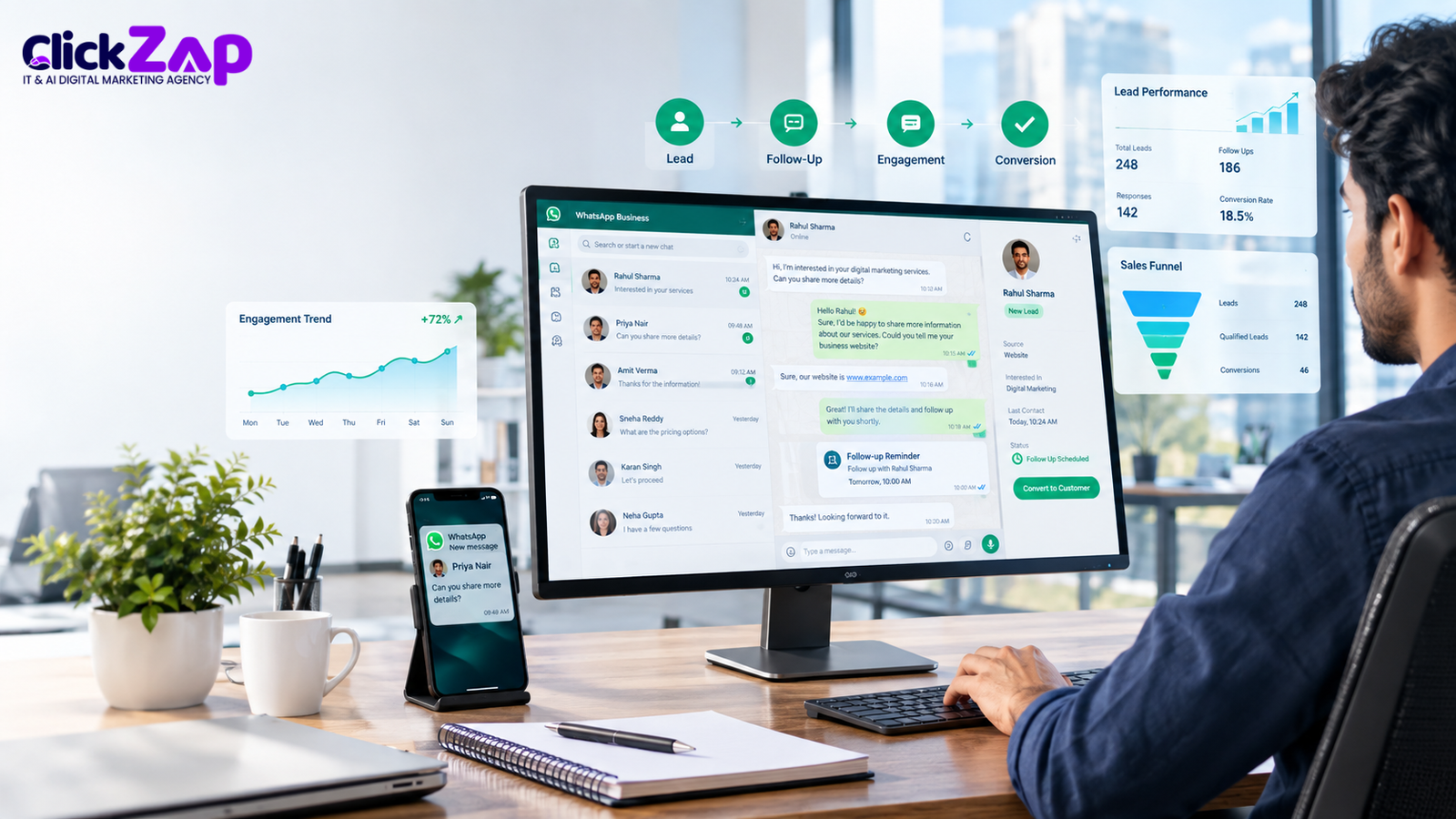
Stopping after lead capture is the most expensive mistake in lead generation. You paid for the click, the form and the ad. Then you let the lead go cold.
Speed to lead. Interest fades quickly. A person who enquires now is comparing options right now. The business that replies first often gets the first real conversation. I won’t quote a made up percentage here, but any sales manager will tell you the pattern holds.
Consistent communication. Humans forget. Systems do not. A lead who goes quiet on day two can still get a useful message on day four.
Customer expectations. People use WhatsApp daily to talk to friends and family. They expect business replies to feel just as quick and simple. A follow up email that arrives a day later feels slow by comparison.
Lead intent. Not every lead is equal. Someone asking for pricing and availability is different from someone downloading a guide. Good automated lead nurturing treats them differently.
Multiple follow ups. Many prospects do not reply to the first message. That does not mean no. A well paced sequence gives them several chances to respond.
Personalization. Messages that reflect what the person actually asked about get more replies than generic broadcasts.
Done well, WhatsApp lead management reduces the chance of losing interested prospects. It cannot create demand that does not exist, and it cannot fix a weak offer.
How AI WhatsApp Lead Follow Up Automation Works
The process has seven steps. Each one can be partly or fully automated.
Step 1: Capture the Lead
Leads can enter your system from:
- Website forms and landing pages
- Meta Ads (including click to WhatsApp ads and lead forms)
- Google Ads
- Social media enquiries
- WhatsApp campaigns where users have opted in
- Organic search traffic
The key is to capture the phone number along with clear consent to contact the person on WhatsApp.
Step 2: Send an Immediate WhatsApp Response
The first message should acknowledge the enquiry within seconds or minutes. It should be short, friendly and ask one simple question. Speed matters more than length here.
Step 3: Understand Lead Intent
AI can read the lead’s replies, questions and preferences. It can tell the difference between “Send me pricing,” “I’m just exploring,” and “Can someone call me today?” It can also use interaction signals, such as which link they clicked or how quickly they replied.
Step 4: Personalize the Follow Up
Based on what the lead said, the system picks or drafts a relevant reply. A lead asking about SEO should not receive a message about social media ads.
SEO services for your’s website
Step 5: Qualify the Lead
Short questions help you sort leads. Typical ones:
- What service are you interested in?
- What is your budget range?
- When do you need the service?
- Which location are you targeting?
- Are you ready to speak with our team?
Ask one question at a time. A five question wall of text gets ignored.
Step 6: Continue the Follow Up Sequence
If the lead goes quiet, the system sends a limited number of spaced out messages. Each message should add something: an answer, a useful example, or a simple prompt. If it only says “any update?” three times, you are being annoying, not persistent.
Step 7: Handoff to a Human
When a lead shows buying signals, a salesperson takes over. This is not optional. AI is good at speed and sorting. Humans are better at trust, negotiation, nuance and closing. The best systems use AI to assist sales teams, not to hide them.
How AI Personalizes WhatsApp Follow Ups
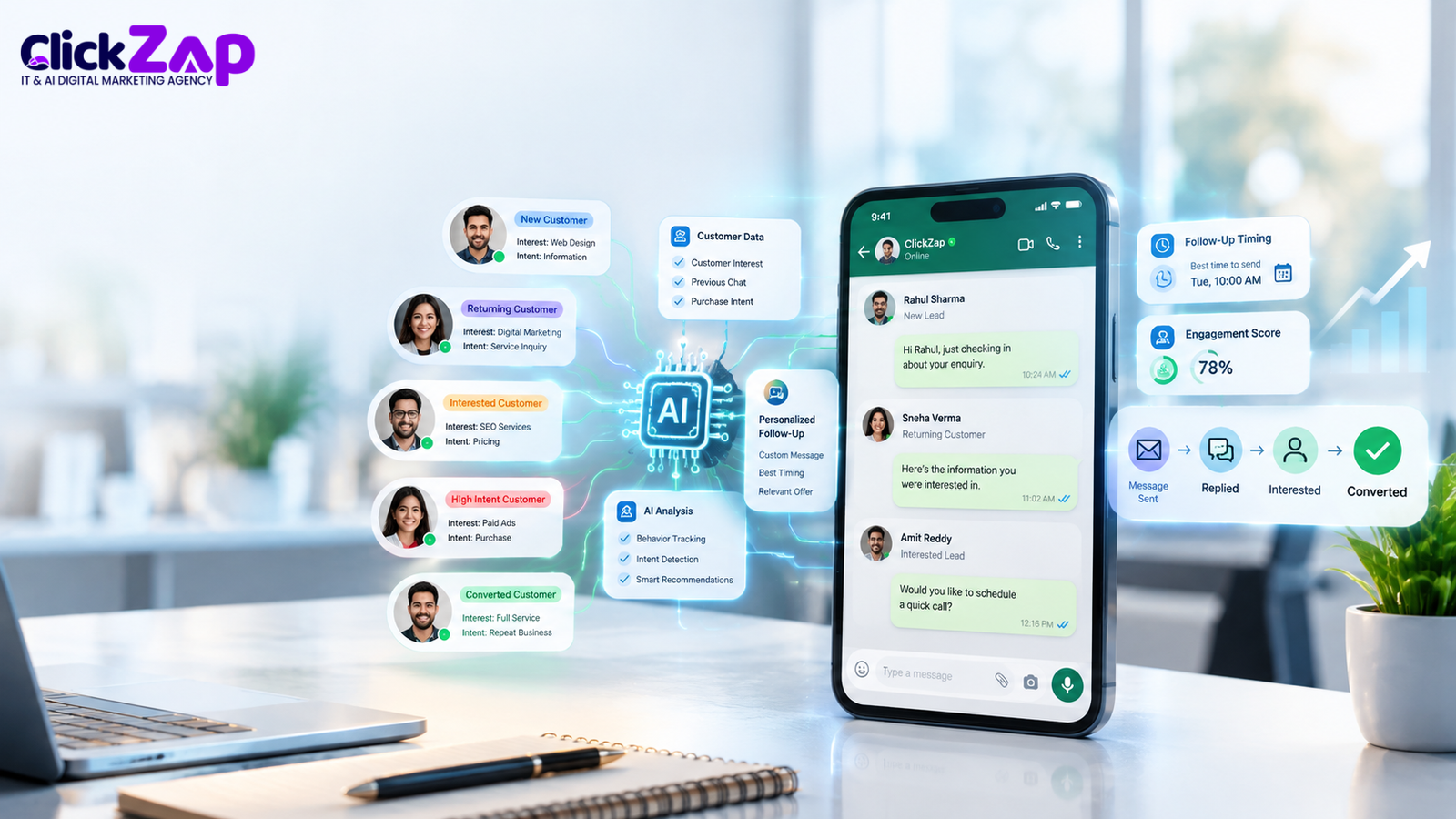
Personalization means the message reflects who the lead is and what they said. AI can use information the customer has provided, such as service interest, location, and past replies, plus your business context, like available offers and services.
Here are three examples:
New lead:
“Thanks for contacting us. Which service are you interested in?”
High intent lead:
“Thanks for sharing your requirements. Would you like to speak with our team today?”
Unresponsive lead:
“Just checking if you still need help with your requirements. We’re happy to assist.”
These messages look simple because they should be. Good personalized WhatsApp messages sound like a helpful person, not a mail merge.
AI driven lead nurturing works best when it uses legitimate data: what the customer told you, what they asked, and how they interacted with your business. Do not scrape personal details from elsewhere or make messages feel invasive. If a lead wonders “how do they know that?”, you have gone too far.
Used properly, AI powered lead follow up improves automated customer communication by making each reply feel relevant instead of canned.
Digital Marketing agency in Hyderabad
AI WhatsApp Lead Follow Up for Lead Nurturing
Not every lead is ready to buy today. Some need information. Some need time. Some need a reminder. Nurturing keeps the relationship warm without pressure.
Here are the common lead stages:
|
Lead Stage |
What It Means |
Nurturing Approach |
|
New lead |
Just enquired |
Quick welcome and one question |
|
Interested lead |
Replied and showed curiosity |
Share relevant service details |
|
Qualified lead |
Fits your service, budget and location |
Offer a call or consultation |
|
High intent lead |
Asking about price, timing or next steps |
Fast human handoff |
|
Sales ready lead |
Ready to decide |
Salesperson closes |
|
Dormant lead |
Stopped responding |
Occasional, useful re-engagement |
WhatsApp lead nurturing automation lets you build a separate sequence for each stage. A new lead gets a welcome and a qualifying question. An interested lead gets a short explanation or a relevant example. A dormant lead gets a gentle check-in after a sensible gap.
AI lead nurturing on WhatsApp adds a layer of judgement. Instead of sending messages purely on a timer, the system can move a lead from one stage to another based on their replies. This is automated lead nurturing on WhatsApp working the way it should: relevant, timely and respectful.
How AI Helps Qualify WhatsApp Leads
Lead qualification means checking whether a lead is a good fit and likely to buy. It saves your sales team from spending time on people who are not ready or not suitable.
AI can look at:
- Customer needs: what problem are they trying to solve?
- Budget: do they have a realistic range?
- Location: can you serve them?
- Product or service interest: which offering do they want?
- Purchase timeline: this week, this quarter, or someday?
- Previous interactions: have they replied before or clicked links?
- Questions asked: pricing questions usually signal stronger intent than general ones.
AI can then sort leads into Hot, Warm and Cold:
|
Category |
Typical Signals |
Suggested Action |
|
Hot |
Clear need, budget fits, wants to start soon, asks for a call |
Alert sales immediately |
|
Warm |
Interested, but timeline or budget unclear |
Continue nurturing sequence |
|
Cold |
Vague interest, no reply, or poor fit |
Low frequency re-engagement or pause |
One honest caveat: AI scoring is only as good as your data and your rules. If your qualification questions are vague, or your CRM is messy, the scores will be unreliable. Review scored leads manually in the first few weeks and adjust.
How AI WhatsApp Automation Improves the Sales Funnel
WhatsApp is not just a closing channel. It can support every stage of the WhatsApp sales funnel.
|
Funnel Stage |
WhatsApp Communication |
|
Awareness |
Click to WhatsApp ads, opt-in updates, simple welcome messages |
|
Interest |
Short service explanations, brochures, FAQs |
|
Consideration |
Answers to questions, comparisons, relevant examples |
|
Qualification |
Budget, timeline and requirement questions |
|
Conversion |
Booking links, call scheduling, proposal follow-ups |
|
Retention |
Order updates, feedback requests, renewal reminders |
The big gain is continuity. The same conversation thread can carry a person from first enquiry to purchase and beyond. Nothing gets lost between channels, and your team sees the full history.
AI WhatsApp Follow Up Strategies That Can Increase Conversions
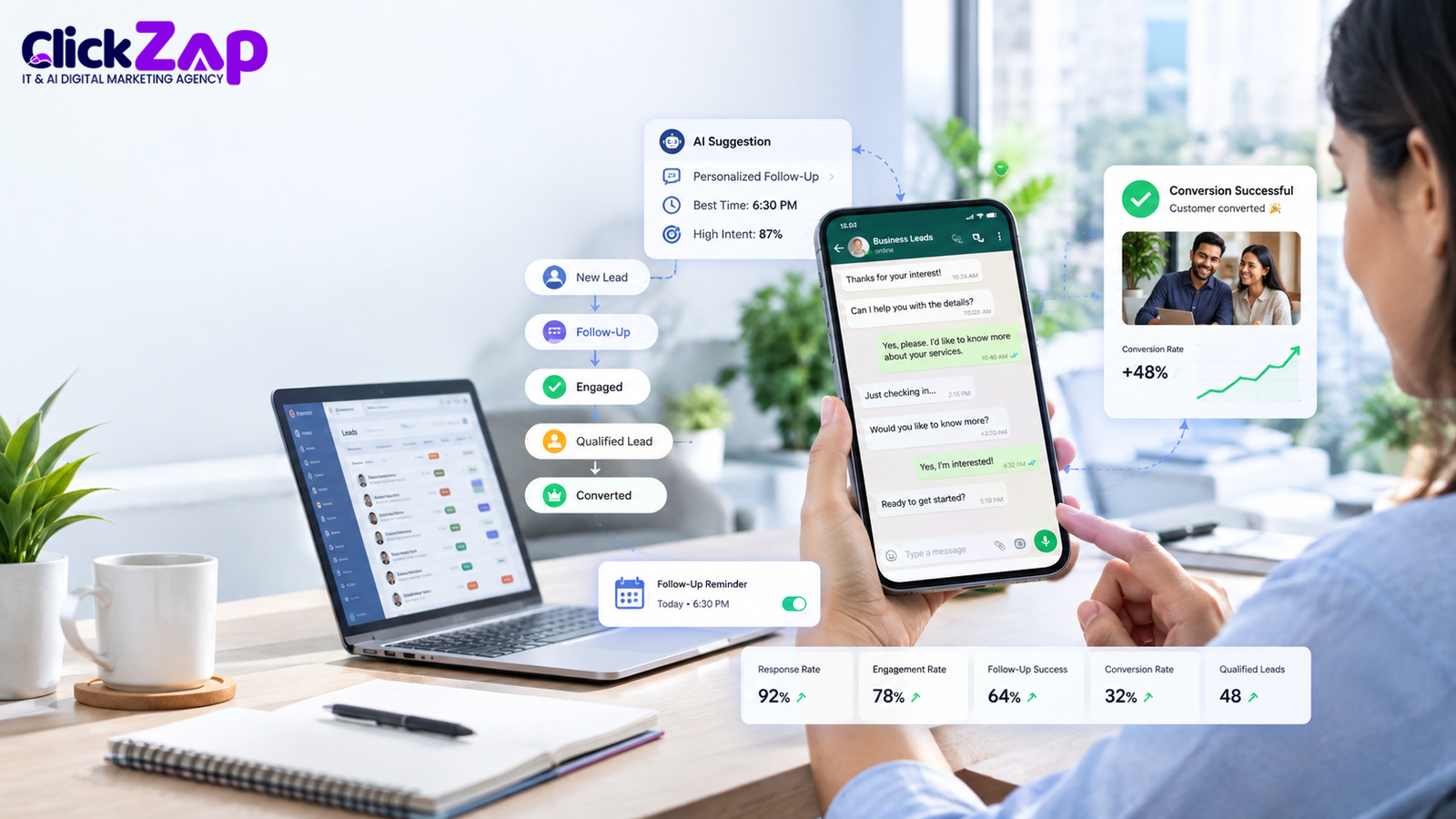
None of these guarantee results. They are practical habits that tend to improve follow up quality.
1. Respond Quickly to New Leads
What it means: Send a first message within minutes.
Why it matters: Interest is highest right after the enquiry.
Example: A lead submits a form at 7 PM. They get a WhatsApp reply by 7:01 PM asking which service they need.
2. Personalize Follow Up Messages
What it means: Reflect the lead’s service interest and previous replies.
Why it matters: Relevant messages feel helpful, not pushy.
Example: “You asked about WhatsApp marketing for your clinic. Are you targeting patients in Hyderabad only?”
3. Segment Leads by Intent
What it means: Group leads by readiness to buy.
Why it matters: A hot lead and a cold lead need different handling.
Example: Pricing enquiries go to a fast track flow. Guide downloads go to an educational flow.
4. Use Automated Follow Up Sequences
What it means: Plan a short series of messages with sensible gaps.
Why it matters: Many people reply on the second or third touch.
Example: Day 0 welcome, day 2 helpful reminder, day 5 final check in.
5. Ask Simple Qualification Questions
What it means: One easy question per message.
Why it matters: Long questionnaires kill replies.
Example: “What’s your approximate monthly budget: below ₹25,000, ₹25,000–₹75,000, or above?”
6. Prioritize High Intent Leads
What it means: Surface strong leads to the top of your sales queue.
Why it matters: Salespeople have limited time.
Example: A lead who asks “Can we start next week?” triggers an instant alert.
7. Use Human Handoff at the Right Time
What it means: Move to a person when the conversation needs judgement.
Why it matters: Price negotiation and trust building need a human.
Example: After a lead agrees to a call, the system assigns it to a salesperson and shares the chat history.
8. Track and Optimize Follow Up Performance
What it means: Review reply rates, qualified leads and conversions regularly.
Why it matters: You cannot improve what you do not measure.
Example: If the day-2 message gets no replies, rewrite it and test again.
9. Offer an Easy Next Step
What it means: End every message with one clear action.
Why it matters: Vague messages get vague results.
Example: “Reply 1 for a call today, or 2 to get details here.”
WhatsApp Follow Up Messages for Different Lead Situations
Use these as starting points. Adjust the tone to your brand.
New Lead Message
“Hi [Name], thanks for contacting [Business]. Which service are you looking for?”
Interested Lead Message
“Thanks for your reply. We help with [service] for businesses like yours. Would you like a short overview?”
Price Inquiry Message
“Pricing depends on your requirements. Could you share your goal and timeline so we can give you an accurate quote?”
Follow Up After No Response
“Hi [Name], just checking in. Do you still need help with [service]? Happy to answer any questions.”
High Intent Lead Message
“Thanks for sharing the details. Would you like to speak with our team today? We can call at a time that suits you.”
Appointment/Call Follow Up
“Hi [Name], a reminder about our call tomorrow at [time]. Reply here if you’d like to reschedule.”
Re-Engagement Message
“Hi [Name], it’s been a while. If you’re still exploring [service], we’d be glad to help. Just reply here.”
Keep every message short. If it needs scrolling, it is too long.
Tools and Platforms for AI WhatsApp Lead Follow Up Automation
No single tool does everything. Exact capabilities depend on the platform, API access, account setup, region, Meta policies and third party integrations. Never assume that every tool connects directly to every other tool.
WhatsApp Business is Meta’s free app for small businesses. It supports business profiles, labels, quick replies and basic automated messages. It works for low volumes but not for large scale automation.
WhatsApp Business Platform is the API based product for medium and large businesses. It supports scalable messaging, approved message templates and integration with software.
WhatsApp Cloud API is Meta’s hosted version of the Business Platform API. It connects WhatsApp to CRMs, chatbots and automation workflows without you managing your own servers.
Meta owns WhatsApp, Facebook and Instagram. That connection makes it easier to run ads that lead into WhatsApp conversations.
Meta Business Suite helps manage business messages, pages and inboxes across Meta platforms. It is useful for basic communication management, though complex lead workflows usually need additional tools.
Meta Ads can generate leads through click to WhatsApp campaigns and lead forms. These leads can enter your follow up workflow, subject to consent and setup.
HubSpot is a CRM that stores lead data, tracks stages and supports workflow automation. Connecting it with WhatsApp usually needs a native integration or a third party connector.
Salesforce is an enterprise CRM. Customer records and pipeline stages can be linked with communication workflows through integrations or custom development.
Google Analytics 4 (GA4) shows website behavior and campaign performance. It tells you which pages and campaigns send leads. WhatsApp conversations themselves may need extra tracking or integration to appear in GA4.
Twilio provides communication APIs, including WhatsApp messaging. Developers use it to build custom messaging solutions.
OpenAI provides AI models that can understand text, classify intent, summarize chats and draft replies. They must be integrated into your workflow and given clear instructions and guardrails.
An AI chatbot is software that holds text conversations. A CRM (customer relationship management system) stores leads and tracks their journey. Your WhatsApp automation stack usually needs both.
AI WhatsApp Lead Follow Up Automation vs Manual Follow Up
Manual follow up depends on people remembering, being available and being consistent. Automation handles the repetitive parts. Here is the comparison:
|
Factor |
Manual Follow Up |
Automated with AI |
|
Response speed |
Depends on staff availability |
Seconds to minutes |
|
Consistency |
Varies by person and workload |
Same process every time |
|
Personalization |
High, but slow to scale |
Good at scale, depends on data |
|
Lead qualification |
Done by sales, time consuming |
Initial screening automated |
|
Follow up scheduling |
Easy to forget |
Scheduled automatically |
|
Scalability |
Limited by team size |
Handles high volume |
|
Lead prioritization |
Based on gut feeling |
Based on rules and signals |
|
Reporting |
Often manual |
Trackable if set up properly |
|
Human involvement |
Throughout |
Focused on high value moments |
My view: pure manual follow up does not scale, and pure automation feels cold. The best results come from using AI for speed and sorting, and people for conversations that need trust.
How to Build an AI WhatsApp Lead Follow Up Workflow
Here is a practical process any business owner can follow.
- Define the business goal. Booked calls? Demo requests? Sales? Pick one primary outcome.
- Identify lead sources. List where leads come from: Meta Ads, website, Google Ads and others.
- Choose WhatsApp infrastructure. Small volume may suit WhatsApp Business. Larger volume needs the Business Platform or Cloud API through a provider.
- Connect your CRM where required. Store lead details and conversation status in one place.
- Define lead stages. New, interested, qualified, high-intent, sales ready, dormant.
- Create message templates. WhatsApp requires approved templates for business initiated messages outside the customer service window.
- Create qualification questions. Three to five simple questions are enough.
- Build follow up sequences. Set timing, limits and stop conditions, such as stopping when the lead replies.
- Set human handoff rules. Decide which signals trigger a salesperson, for example a call request or pricing discussion.
- Track performance. Monitor reply rates, qualified leads and conversions.
- Test and optimize. Change one thing at a time and compare results.
Start small. One lead source, one sequence, one goal. Expand once it works.
Metrics to Measure WhatsApp Lead Follow Up Performance
Choose metrics that match your funnel and tracking setup. Not every number will be available in every tool.
- Lead response time: how quickly the first message goes out.
- Message delivery rate: the share of messages that reach the recipient.
- Read rate : the share of delivered messages that are opened.
- Response rate and reply rate: how many leads reply.
- Qualified lead rate: the share of leads that meet your criteria.
- Appointment rate: leads who book a call or visit.
- Conversion rate: leads who become customers.
- Cost per qualified lead: ad and tool cost divided by qualified leads.
- Cost per acquisition: total cost divided by new customers.
- Follow up completion rate: how many leads actually received the planned sequence.
Do not obsess over vanity metrics like total messages sent. Reply rate, qualified lead rate and conversion rate tell you far more.
Common Mistakes to Avoid in WhatsApp Lead Follow Up Automation
- Sending too many messages. Too much contact makes people block you.
- Using generic messages. “Dear customer” signals zero effort.
- Following up without understanding intent. A pricing lead and a curious browser need different replies.
- Ignoring customer responses. If a lead asks a question and gets a template reply, trust drops.
- No human handoff. Leads get stuck in loops with a bot.
- Poor lead segmentation. Mixed lists lead to irrelevant messages.
- Not tracking results. You cannot fix what you cannot see.
- Using unclear calls to action. Every message should have one next step.
- Ignoring WhatsApp policies and consent requirements. This can lead to restricted accounts and legal trouble.
- Treating every lead the same. Intent differs. Your follow up should too.
Best Practices for AI WhatsApp Lead Follow Up Automation
Strong AI WhatsApp lead follow up automation rests on respect for the customer as much as on technology. These practices keep it that way:
- Consent and privacy: collect clear opt-in before messaging. State what the person will receive. Store data responsibly.
- Message relevance: every message should answer a question or move the lead forward.
- Timing: reply fast to new leads. Space later messages sensibly and avoid late night sends.
- Personalization: use information the customer gave you, and nothing creepy.
- Segmentation: separate leads by source, service and intent.
- Frequency: cap the number of messages. Stop the sequence when the lead replies or opts out.
- Human support: make it easy to reach a real person.
- Testing: test different openers, timings and questions.
- Analytics: review reply and conversion data weekly or monthly.
- Continuous optimization: update templates and rules as you learn.
Do not use WhatsApp for spam or unsolicited bulk messaging. Follow WhatsApp Business and Meta policies, and applicable local privacy and marketing laws, including India’s data protection rules where relevant. Policies change, so check the latest requirements before launch.
How ClickZap IT Can Help With AI Powered WhatsApp Marketing Automation
Tools alone do not fix follow up. Strategy, setup and ongoing tuning do. As a digital marketing agency in Hyderabad, ClickZap IT helps businesses plan, build, monitor and improve their lead generation and follow up systems.
That can include:
- Lead generation: campaigns that bring in relevant enquiries through our lead generation services.
- Meta Ads: click to WhatsApp and lead form campaigns.
- WhatsApp marketing strategy: stage based messaging, templates and consent practices.
- Lead nurturing and follow up automation: sequences designed around your sales process.
- CRM workflows: connecting lead data with your existing CRM where integrations allow.
- Conversion optimization: improving landing pages and funnels so more leads become real conversations.
- Campaign tracking: connecting ad, website and lead data so you can see what works.
- AI powered marketing workflows: using AI where it genuinely saves time or improves relevance.
- Performance optimization: reviewing results and adjusting regularly.
We do not promise instant results or fixed conversion numbers, because they depend on your offer, market, sales team and data. What we can do is build a clear, measurable system and improve it over time. If you want to explore this for your business, get in touch with our team.
Frequently Asked Questions
Can AI automate WhatsApp lead follow ups?
Yes. AI can automate replies, understand customer messages, personalize responses and schedule follow ups on WhatsApp. It works through the WhatsApp Business Platform or Cloud API, usually connected to a CRM. Humans should still handle complex questions, negotiations and sensitive conversations. Automation works best as support for your sales team, not a replacement for it.
How does AI help convert WhatsApp leads into customers?
AI helps by replying quickly, asking qualifying questions, understanding intent and prioritizing serious prospects. This reduces delays and keeps conversations moving. Sales teams then spend time on leads most likely to buy. AI cannot guarantee conversions, since results also depend on your offer, pricing, follow up quality and sales process.
What is the best way to automate WhatsApp lead follow up?
Start with one lead source and a simple workflow: instant welcome message, two or three qualification questions, a short follow up sequence and a clear human handoff. Connect it to a CRM, use approved templates and track reply and conversion rates. Expand only after the first workflow performs reliably.
Can AI personalize WhatsApp messages for different leads?
Yes. AI can adapt messages using details the lead has shared, such as service interest, location, budget and previous replies. A pricing enquiry gets a different response from a general question. Personalization is only as good as your data, so use information customers give you willingly and keep messages natural and respectful.
How often should businesses follow up with leads on WhatsApp?
There is no universal number. A common approach is an immediate first reply, a second message after one to two days, and a final check in a few days later. Stop when the lead replies, opts out or shows no interest. Test timing for your audience and avoid over messaging, which can lead to blocks.
Conclusion
Generating leads is expensive. Losing them to slow replies and forgotten follow ups is worse. AI WhatsApp lead follow up automation fixes the process side of that problem. It makes replies faster, conversations more relevant, qualification simpler and handoffs smarter.
Technology is not the hard part. The hard part is discipline: a clear goal, clean lead data, honest qualification rules and messages that sound like a helpful person wrote them. A business with a weak offer or a messy CRM will not be rescued by a chatbot. A business with a solid offer and a well planned workflow can stop wasting the leads it already pays for.
If you want help planning or setting up a WhatsApp follow up workflow that fits your sales process, contact ClickZap IT and our team will walk you through the options.
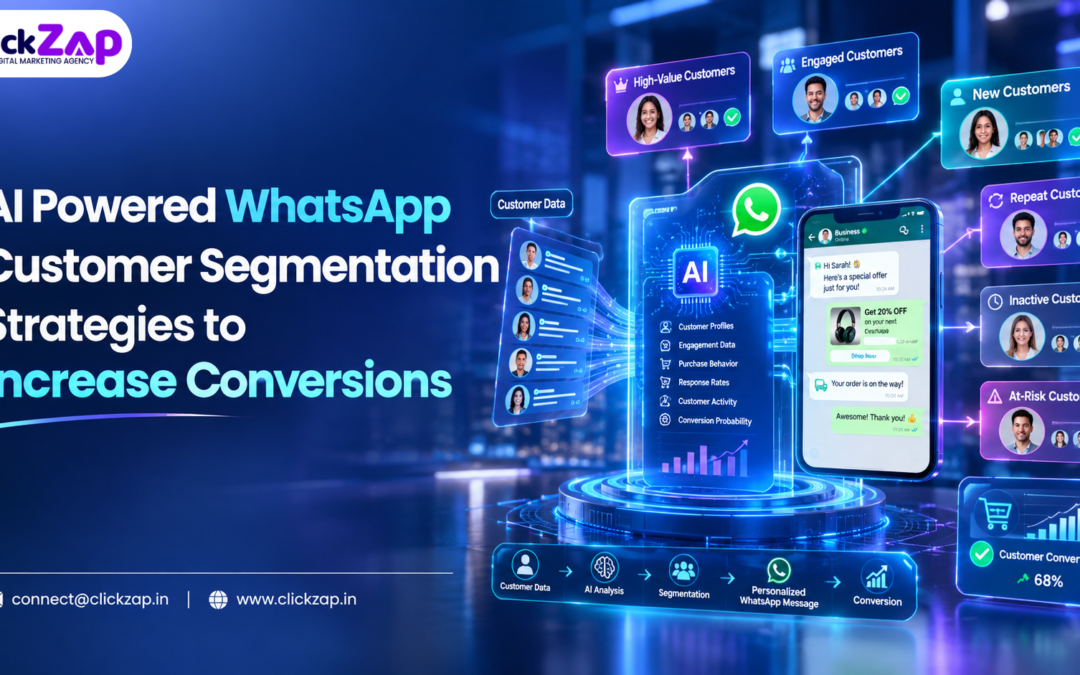
Also Read: AI Powered WhatsApp Customer Segmentation Strategies to Increase Conversions
0 Comments